
I sleep in a motorhome: When the rescuer himself has no roof over his head
A 34-year-old lifeguard in Mallorca rescues people from the sea — and has been living in a motorhome since 2022. Why a job that saves lives does not guarantee anyone a home, and which solutions could help.
A hero on the beach — yet without a permanent home
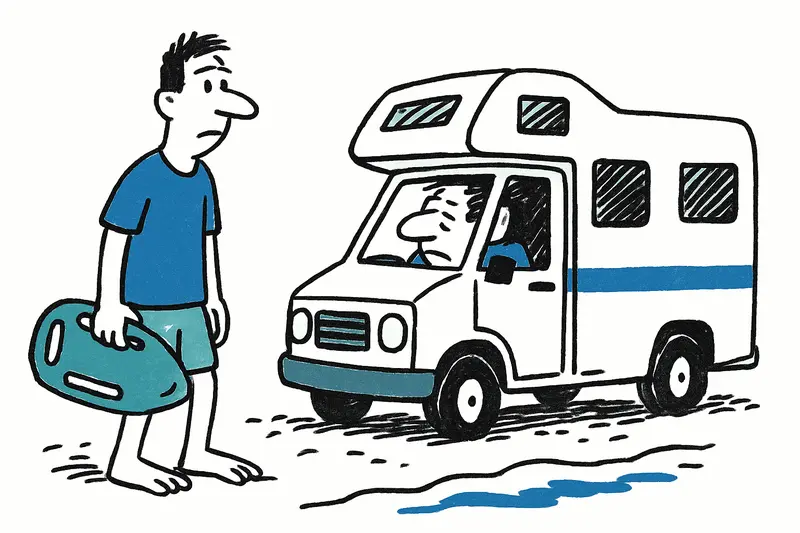
The sound of the sea, the screech of seagulls, the ambulance sirens: for many, that is the backdrop of a perfect summer day in Mallorca. For Christian, 34, these are the sounds of his work. As a lifeguard he watches over beachgoers, jumps into the water when people are in danger. And yet he has no real home. Since 2022 he has been living in a motorhome, parking on the edges of town and occasionally showering at the gym on the avenue, just to expend enough energy to be able to sleep in the hot camper.
The situation sounds paradoxical — and it is. A person who saves lives cannot afford an apartment in one of the richest tourist regions in Europe. His wife has rented a small room, around €600 a month, enough space to wash but not to live together. Seasonal work, Christian says, means: money in the summer months, only red figures on bank statements in winter. When it rains in autumn, he fears the motorhome will leak. For someone who watches the surf on windy days, that is anything but safe.
The central question: How does a life-saving job fit with precarious housing?
This is the guiding question that runs through Christian's story: How can a society allow people in system-relevant, physically demanding jobs to be without housing? We are not only talking about isolated personal misfortunes. It is a structural problem: seasonal work dominates, short-term rentals and rising rents push affordable housing away, and employers often hire only temporarily for the high season. This is consistent with analyses of seasonal work and non-standard employment.
Little discussed is what all this means for safety on the beaches. A poorly rested or freezing lifeguard in winter is not a theoretical risk. Experience and continuity matter: someone who fights for housing and livelihood every year may not stay long-term — and the island loses competence and reliability because of that. Recent incidents, like the near-drowning in Cala Vinyes, show that this is not hypothetical.
What everyday life on Mallorca teaches
In the morning you see the first lifeguard towers, the smell of sunscreen and grilled food, the voices of different languages. Sometimes visible routines have been punctuated by public actions that draw attention to working conditions, for example the early-morning collective drowning protest at Playa de Palma. In the evening, life for seasonal workers often ends early: tools and clothes thrown into the trunk, a last cup of coffee, then the way back to the camper. It is rougher than the postcard image. The island lives off tourism — but the returns often do not end up where the people live and work.
In addition: public services in winter are limited. Social housing is scarce, temporary emergency sleeping places are usually full. For many, the motorhome remains the only option to be mobile and close to work.
Aspects that are rarely illuminated
1) The connection between precarity and service quality: the island pays a long-term price if qualified staff are lost due to insecure living conditions. 2) The mental strain: constant housing insecurity affects health and decision-making. 3) The logistics: where are motorhomes allowed to park? What sanitary and storage options exist? These everyday questions hardly make it into the big political debate.
Concrete opportunities and solutions
A few pragmatic ideas that could help Mallorca — both employees and the tourist infrastructure:
Municipal parking zones with basic infrastructure: Municipalities could create designated, safe pitches with electricity, fresh water, showers and waste disposal. This would be a transitional solution that increases occupational safety.
Partnerships with hotels and municipalities: Hotels have vacancies in the low season. Cooperation models — for example rooms for staff in exchange for discounts or small jobs — are possible and have already worked elsewhere.
Extending the season and creating year-round employment models: If lifeguard stations stayed open in the off-season for training, beach maintenance or prevention work, there would be more year-round jobs.
Social funds and rent subsidies for key professions: Direct support for people in system-relevant jobs — similar to subsidies for healthcare workers — could help in the short term.
Promotion of housing cooperatives: Building groups or cooperatives can create affordable housing, long-term and oriented to the common good.
An appeal to politics and community
Christian says: "I won't leave." He loves the island, the work, the colleagues. But love alone does not replace warm walls or stable contracts. The solutions are not simple; they require cooperation from municipalities, employers, tourism industry players and the residents themselves. A little more foresight would be enough: spaces for motorhomes with showers, agreements with hotels, a winter program for lifeguards — these are not utopian demands but realistic steps.
If Mallorca continues to boast about saving lives in summer and giving guests a smile, the island should also ensure that the people behind those smiles have a roof over their heads. Otherwise the feeling remains: we save lives — and leave quality of life aside.
A glance at the sea, a breath of salty air — and the question in the mind: Who protects the protectors?
Frequently asked questions
Why do some lifeguards in Mallorca live in motorhomes?
Is it common for seasonal workers in Mallorca to struggle with housing?
What happens to beach safety in Mallorca when lifeguards face housing insecurity?
When is it hardest for seasonal workers in Mallorca to make ends meet?
Where can motorhomes usually park in Mallorca if someone is living in one?
What kind of support could help key workers in Mallorca find housing?
Are there enough emergency sleeping places in Mallorca for people without housing?
Why do some people in Mallorca say the island depends on workers who cannot afford to live there?
Similar News
Release after bloody attack in Palma: Why the court's decision raises questions
An 18-year-old who allegedly inflicted a serious neck injury on a man at Plaza Gomila using a wristwatch wrapped around ...
Kidnappings in Inca: Three young men forced into car trunks and abused in the forest – a reality check
In Inca, three 18-year-old men were forced into car trunks by masked assailants at the Plaça des Bestiar, taken to a for...
Spreading Massification: The Brake That Still Has Much Work to Do
Marga Prohens announces limits on volume tourism. The measures sound harsh — but are they enough to save everyday life, ...
Through the Keyhole onto the Party Yacht: How Daniela Katzenberger Is Planning Her 40th on Mallorca
Daniela Katzenberger turns 40 and wants to celebrate it on the island — likely with a boat, cake and her mother. A relax...
By Boat Instead of the Road: Palma's Water Bus — a Reality Check
The 'Bus Nàutic' launches in two stages — but questions remain over interim operations, fares and environmental requirem...
More to explore
Discover more interesting content

Can Cap de Bou

Townhouse Lleo 72
