
Who Protects the Rescuers? 'Collective Drowning' at Playa de Palma Sparks Debate on Working Conditions
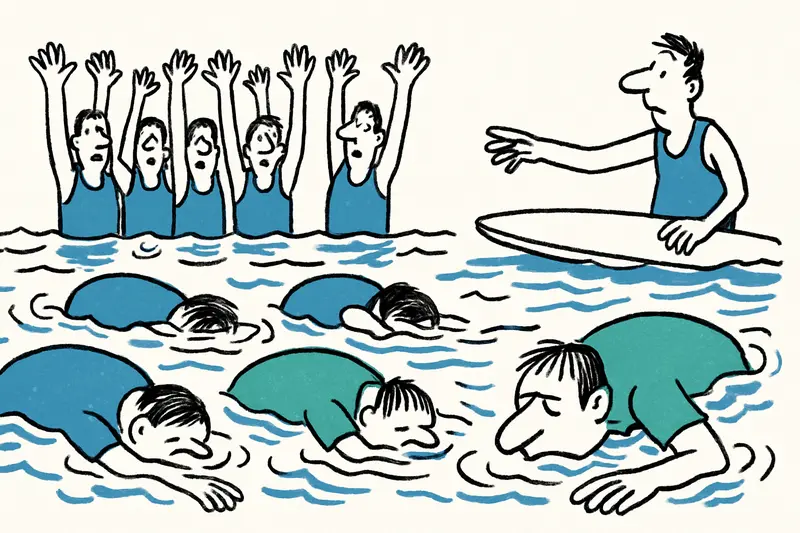
In the early morning lifeguards at Playa de Palma staged a dramatic protest image: the 'collective drowning' draws attention to seasonal contracts, minimum staffing and the question: who is responsible when the rescuers themselves are overwhelmed?
Who protects the rescuers? A morning action raising loud questions
Around 8:30 a.m., before the cafés on the Passeig Marítim were fully up and the scent of freshly brewed café cortado hung in the air, scenes unfolded at Playa de Palma that are not part of the usual morning picture. Wet hair, rescue boards and a sarcastic chorus of outstretched arms: lifeguards let themselves drift into the shallow water, motionless, until colleagues 'revived' them. They called the action 'collective drowning' — a deliberately provocative question to the public: who protects the beaches when the rescuers themselves need protection, as shown in Lifeguards in Palma: When Wooden Crosses Speak Louder Than Megaphones?
The central question and the demands
The clear demand was not for glory but for staff, reliable longer deployment periods and better employment contracts. Many of those involved work on short seasonal contracts, wages are often tight, and overtime is the rule. Between the cries of seagulls and the distant clatter of a city bus, one heard sentences like: 'We cannot be emergency personnel and constantly cover overtime at the same time.' The action was more than theater: it aimed to make visible how thin the safety net is when wind, heat or storms add pressure to beach supervision.
Analysis: Why the action is more than provocation
Behind the sarcastic choreography lies a structural problem. Mallorca lives off the summer — hotels, restaurants and beach bars hum from May to October. The result: demand for staff is extremely seasonal. Instead of planning in quiet months, short-term contracts and flexible workers are relied on. That saves money on paper but increases risk in emergencies. When heat brings more bathers or an unexpected storm knocks out parts of the beach infrastructure, experienced staff are needed — and they are often not permanently available.
Another, less noticed point is the psychological strain. Shift work under constant readiness, responsibility for hundreds of people, witnessing accidents — all of this leaves traces. Without stable contracts, regular rest regulations and psychological aftercare, the risk of errors and overload increases.
The dispute over minimum staffing — protection or undermining?
A flashpoint in the discussion are the so-called minimum staffing requirements: authorities demand 100 percent coverage on certain beach sections to avoid safety gaps. For city representatives this is a necessary tool. Trade unions, however, see it as a de facto erosion of the right to strike: if full staffing is always demanded, a central means of pressure disappears. The action at the water made clear that rescuers feel squeezed between duty and the right to better working conditions, a tension documented in Lifeguards Strike: Safety Questions and the Uncomfortable Debate Over Seasonal Work.
What is often missing
Three practical aspects are missing in the public debate: first, the question of funding — who pays for more staff? Tourism levies, the local hotel industry or the public budget could contribute. Second, there is a lack of a connected emergency reserve: cooperation with police, fire brigade or the port authority could cushion bottlenecks. Third, there are hardly any structural incentives to keep qualified staff locally in the long term — from affordable housing for seasonal workers to training opportunities.
Solutions — not just demands
Concrete proposals that should be put on the table now are practical: binding minimum contracts beyond the season, a reserve pool arrangement for peak times, regulated overtime pay and mandatory rest periods. Technically, a central operations platform with digital shift planning could help detect personnel shortages early. Much could be financed by a moderate increase in the tourism levy, used specifically for beach and rescue services. And: psychological support and regular training must become part of service agreements.
Reactions — between applause and shaking heads
Passers-by filmed, tourists watched surprised, residents applauded or called the police. The authorities arrived later, observed and did not intervene forcefully. The familiar debate flared up on social media: safety yes — but at what price? More importantly: who bears responsibility if beaches are to remain safe but the people who do it are constantly understaffed and underpaid?
Outlook: A chance for a real dialogue
The action at Playa de Palma was uncomfortable but precisely for that reason necessary. It raised a central question and at the same time pointed to ways forward: improve working conditions, create clear funding paths, and recognize the need for a reserve for peak times. Politics, the tourism industry and trade unions are now obliged to turn outrage into constructive policy — otherwise there will be only applause at the water and the risk will remain, as the island confronts Open-ended Lifeguard Strike: Island Caught Between Safety and Labor Dispute.
The morning on the beach was windy, the waves whispered against the sand and the lifeguards packed up their boards — with the firm impression that the debate has only just begun.
Frequently asked questions
Why are lifeguards in Mallorca protesting about working conditions?
How safe are Mallorca beaches when lifeguards are short-staffed?
What is the lifeguard season like in Mallorca?
Why do Mallorca lifeguards mention overtime so often?
What is Playa de Palma known for besides the beach protest?
What do Mallorca authorities mean by minimum staffing on beaches?
Could Mallorca lifeguard services be improved with more funding?
What are the main challenges for seasonal workers in Mallorca’s tourism sector?
Similar News

Release after bloody attack in Palma: Why the court's decision raises questions
An 18-year-old who allegedly inflicted a serious neck injury on a man at Plaza Gomila using a wristwatch wrapped around ...
Kidnappings in Inca: Three young men forced into car trunks and abused in the forest – a reality check
In Inca, three 18-year-old men were forced into car trunks by masked assailants at the Plaça des Bestiar, taken to a for...
Spreading Massification: The Brake That Still Has Much Work to Do
Marga Prohens announces limits on volume tourism. The measures sound harsh — but are they enough to save everyday life, ...
Through the Keyhole onto the Party Yacht: How Daniela Katzenberger Is Planning Her 40th on Mallorca
Daniela Katzenberger turns 40 and wants to celebrate it on the island — likely with a boat, cake and her mother. A relax...
By Boat Instead of the Road: Palma's Water Bus — a Reality Check
The 'Bus Nàutic' launches in two stages — but questions remain over interim operations, fares and environmental requirem...
More to explore
Discover more interesting content

Can Cap de Bou

Townhouse Lleo 72
