
Lifeguards in Palma: When Wooden Crosses Speak Louder Than Megaphones
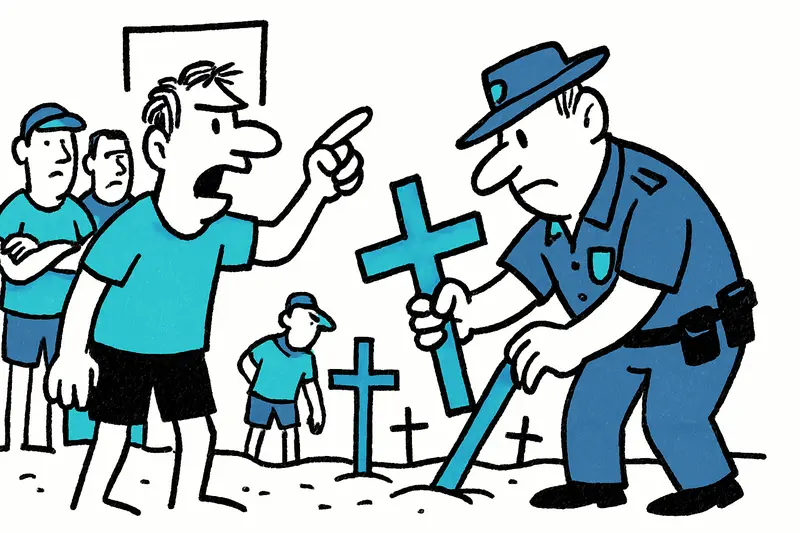
On the Paseo Marítimo, lifeguards protested against precarious contracts and staff shortages. The police removed symbolic crosses on the beach — an act that raises more questions than it answers.
Protest on the Paseo Marítimo: Between Surf and Legal Issues
It was one of those hot mornings in Palma: a light breeze from the sea, seagulls crying, traffic lights flashing green — and the voices of dozens of lifeguards loudly expressing their discontent on the Paseo Marítimo. About 28 °C, direct sun, and at Can Pere Antoni people gathered who often stand in swimwear on the planks in summer, securing the everyday life of the holiday world, as described in Lifeguards stage protest at Can Pere Antoni — a wake-up call for Mallorca's beaches.
The mood was heated but not chaotic. Signs, chants, conversations with passersby. Then the wooden crosses: several small ones neatly stuck into the sand. A symbol meant to say more than many words could, similar to the 'collective drowning' image reported in Who Protects the Rescuers? 'Collective Drowning' at Playa de Palma Sparks Debate on Working Conditions. The local police removed the crosses later that morning. The scene felt like a focal point: a brief silence, distraught faces, outrage.
The key question: Are we protecting beaches — or cutting them to pieces?
What it’s about: It’s not only wages on the list of demands, but permanent contracts, reliable duty rosters and staffing levels that ensure real safety. The union Unió Socorristes Balears (CGT) says the crosses were a warning sign for the risks caused by staff shortages. The police justified their removal for security and public order reasons. Both sides have arguments. But who is right is not the only question. More important is: what concrete risks remain when shift plans get thinner and contracts stay temporary?
Another sticking point is the so-called minimum services: when the strike was announced, a 100 percent staffing level was demanded. Result: only colleagues who were already off-duty could demonstrate. For the union this is a bad joke — or an indication that the system is already operating at its limits.
What is rarely reported on site
The public narrative often stays: applause on the beach, then vacation, then silence again. Less noticed is how seasonal employment contracts, lack of housing and high living costs on Mallorca interact. A young lifeguard on the Paseo summed it up simply: "We love the job, but it can't go on like this." He raised an issue that rarely appears on paper: mental strain, turnover and lost experience. When experienced staff do not stay, risk grows — not only in numbers but through less routine in critical situations.
The question of how funds are used also remains underexposed. Tourism revenues flow in, but how much of that actually goes into public safety? And how are responsibilities between municipalities like Palma and Calvià and the autonomous regional government organized when staff are suddenly lacking?
Concrete consequences — and what could be done
In the short term the walkout led to small traffic interruptions and demonstrations at several beaches on Mallorca and Ibiza, as reported in Lifeguards Strike: Safety Questions and the Uncomfortable Debate Over Seasonal Work. Authorities reported no major incidents. But that provides little reassurance when lifeguard stations are being drained of personnel. The union even compares possible reductions to closing a hospital — a strong metaphor that underlines the urgency.
What should be done? Some concrete proposals repeatedly came up in local discussions and among experts:
1. Stable staffing: Long-term, permanent positions and a pool for seasonal peaks instead of chains of temporary contracts.
2. Transparent financial flows: Allocate tourism levies specifically to beach and coastal safety — create publicly viewable budget lines to build trust.
3. Reserve mechanisms: A regional standby unit that can step in quickly when staff shortages occur, instead of local emergency fixes.
4. Training and retention: Incentives for continuing education and housing subsidies so experienced personnel stay on the island.
5. Rules for protests: Clear, legally sound guidelines for how symbolic actions like wooden crosses should be handled — so police interventions are predictable and proportionate.
An outcry — and the lesson
The demands extend to calls for the resignation of political leaders, notably President Marga Prohens. That is part of the political pressure. For many observers, however, the demonstration was above all a cry for help: less applause, more planning. On the Paseo Marítimo, between the sound of the waves and the smell of grilled fish, a simpler mantra lingered at the end: planning over show.
The crosses may have been removed. The questions they symbolized have not. If Mallorca really intends to save on its beaches, the island community should at least know what risks it is taking — and what costs that forbearance might one day incur.
Frequently asked questions
Why were lifeguards protesting in Palma?
Are Mallorca beaches safe if lifeguard teams are understaffed?
Why were wooden crosses placed on the beach in Palma?
What does the Can Pere Antoni beach protest mean for Mallorca residents and visitors?
What is the best time of year to swim in Mallorca?
What should you bring to the beach in Palma during a heatwave?
How do beach protests in Mallorca usually affect visitors?
Who is responsible for lifeguard staffing on Mallorca beaches?
Similar News

Release after bloody attack in Palma: Why the court's decision raises questions
An 18-year-old who allegedly inflicted a serious neck injury on a man at Plaza Gomila using a wristwatch wrapped around ...
Kidnappings in Inca: Three young men forced into car trunks and abused in the forest – a reality check
In Inca, three 18-year-old men were forced into car trunks by masked assailants at the Plaça des Bestiar, taken to a for...
Spreading Massification: The Brake That Still Has Much Work to Do
Marga Prohens announces limits on volume tourism. The measures sound harsh — but are they enough to save everyday life, ...
Through the Keyhole onto the Party Yacht: How Daniela Katzenberger Is Planning Her 40th on Mallorca
Daniela Katzenberger turns 40 and wants to celebrate it on the island — likely with a boat, cake and her mother. A relax...
By Boat Instead of the Road: Palma's Water Bus — a Reality Check
The 'Bus Nàutic' launches in two stages — but questions remain over interim operations, fares and environmental requirem...
More to explore
Discover more interesting content

Can Cap de Bou

Townhouse Lleo 72
