
Lifeguards stage protest at Can Pere Antoni — a wake-up call for Mallorca's beaches
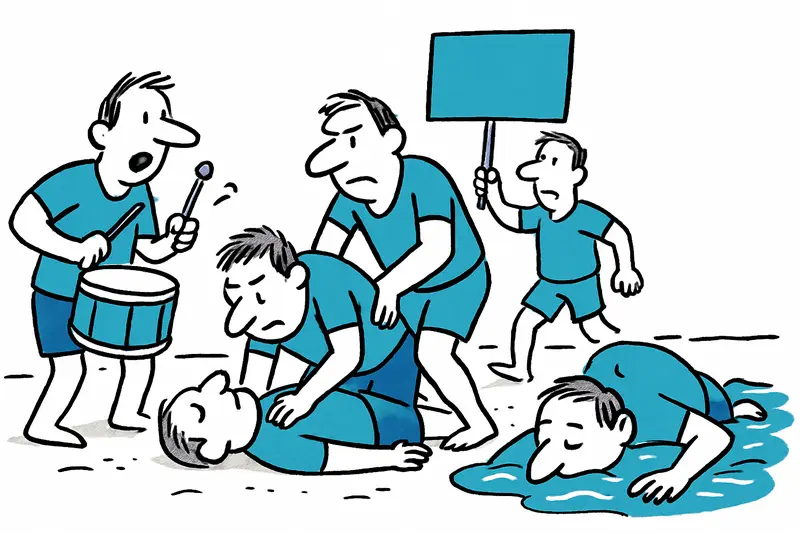
At Can Pere Antoni lifeguards staged a loud protest: drums, resuscitation drills in the sand, and clear demands for better working conditions and more staff.
Waves, drums, resuscitation: a protest that must not be ignored
Early on Saturday morning Can Pere Antoni was transformed into an unusual stage. Around thirty lifeguards entered the shallow water, pulled 'injured' people ashore, demonstrated resuscitation drills in the sand, and lay face down in the waves in a controlled manner. Accompanied by drums, placards and drone footage, the scenes almost resembled a performance, similar to Who Protects the Rescuers? 'Collective Drowning' at Playa de Palma Sparks Debate on Working Conditions — except that it was not art but a clear warning aimed at politicians.
People drinking coffee along the Passeig Marítim stopped. Many took out their phones, some shook their heads. The sounds of the city mixed with the beat of the drums: scooters, seagulls, distant construction work — and in between the rescuers' clear message.
The needle in the haystack: what is it about exactly?
The demands are unpretentious and concrete: more staff, predictable and longer shifts, fair pay, appropriate distances between towers and working conditions that make life on the island possible. The same sentence was heard again and again: not everything is about money, but without stable framework conditions the rescue service loses its effectiveness.
Particularly sensitive is the way some municipalities handle minimum services of 100 percent. Many rescuers see this as an attempt to undermine the right to strike — and as a symptom of a chronic shortage: those who demand full coverage at all times have no reserve when someone is sick or on vacation.
More than headlines: what is often missing in the public debate
The dramatic images divert attention from deeper problems. Two aspects are rarely discussed, even though they are decisive: the teams' housing situation and the organizational fragmentation of responsibilities.
Anyone who stands on a tower for nine or ten hours needs affordable accommodation afterwards. In many parts of the island this cannot be found. Short-term seasonal contracts and a lack of housing options exacerbate staff turnover — a vicious circle we could clearly feel at Can Pere Antoni, a point highlighted in Lifeguards Strike: Safety Questions and the Uncomfortable Debate Over Seasonal Work.
Secondly: municipal responsibilities are inconsistent; there is no regional standardization for staffing numbers, shift lengths or minimum equipment. This creates competitive disadvantages between municipalities — and gaps in safety.
The numbers behind the action
The indefinite strike has already affected several municipalities: Palma, Calvià and parts of Ibiza, as reported in Alarm on the Coast: Why the Lifeguard Strike in Mallorca Is More Than a Labor Dispute. According to union figures, dozens of people died this year in the Balearics — many on unguarded beaches. That is the protesters' core message: this is about concrete protection, not symbolism.
And: when rescue personnel constantly cover for others, work overtime and have no recovery time, the risk of mistakes increases. Burnout and psychological strain are not marginal problems here, but dangers for the entire beach safety system.
What would help? Concrete proposals instead of lip service
The political response should not stop at expressions of solidarity. Some solutions mentioned repeatedly on site:
1. Regional coordination: A Balearic-wide rescue coordination center or minimum standards could end unequal rules and make personnel deployment more flexible.
2. Housing programs: Short term: rental subsidies or agreed accommodation contingents in months with fewer tourists. Long term: subsidized housing for key personnel.
3. Employment models: Overcome seasonal limitations, offer more year-round contracts, build a training academy in Mallorca that also enables jobs outside the season.
4. Reserve pools and digital planning: A central personnel reserve, modern roster tools and transparent deployment statistics would make bottlenecks visible and manageable.
5. Use technology sensibly: Drones and cameras can complement but not replace. Investments in boats, jet skis and first-aid stations remain necessary.
The view ahead — and the duty to act
The protests are not a short-lived outcry: further demonstrations are announced, including in Plaza España and in front of the Consolat de Mar in October. Negotiations have often been fruitless recently; in some cases administrative representatives did not even appear for talks.
A passerby summed it up on the promenade: "We want them to stay — not just for photos." That hits the core: beach safety is not a marketing budget to be cut at will. It is a public good that requires planning, investment and appreciation.
Those who watch the sea every day know: a tower, a team and a little time can save lives. The only question is whether we are willing to organize that for real.
Frequently asked questions
Why are Mallorca lifeguards protesting on the beaches?
Is it still safe to swim on Mallorca beaches during a lifeguard strike?
What do lifeguards in Mallorca want from the authorities?
Why is Can Pere Antoni in Palma linked to the lifeguard protest?
What does a minimum service of 100% mean in a Mallorca lifeguard strike?
What are the main beach safety problems in Mallorca right now?
What should I pack for a beach day in Mallorca when lifeguard coverage is limited?
Which Mallorca areas are affected by the lifeguard strike?
Similar News

Maribel: Five Decades of Service – Housekeeper from Peguera Celebrated with a Special Honor
Over 50 years in the hotel business: María Isabel “Maribel” Molinos was honored in Palma at the Nit del Turisme by Unive...

Orange Alert over Parts of Mallorca: Are We Prepared?
Dark clouds and an announced wet spell have triggered an Orange alert in parts of Mallorca. A reality check: what's miss...

Sundair & Co.: Sale speculation and what it could mean for Mallorca
Rumors about a possible sale of the airlines Sundair and Fly Air 41, which belong to Schauinsland-Reisen — and whether b...
Anne Wünsche in Mallorca: A job offer with a catch — who fits the role of personal assistant?
Influencer Anne Wünsche has left Berlin and is urgently looking for a full-time personal assistant in Mallorca. Why the ...

Daily from New York: Palma Between Boom and Strain
United will increase the Newark–Palma route to daily flights in 2027 using Boeing aircraft (231 seats). What does the in...
More to explore
Discover more interesting content

Can Cap de Bou

Townhouse Lleo 72
