
Improvised water parks: How Palma should handle fountain bathing during heat waves
Improvised water parks: How Palma should handle fountain bathing during heat waves
With temperatures nearing 40 °C, people in Palma seek relief — often in public fountains. What are the pros and cons of spontaneous bathing, who pays the bill, and what would a smart response look like? A reality check from the city.
Improvised water parks: How Palma should handle fountain bathing
A heat reality between thirst, monument preservation and administrative offense
Key question: How should Palma react when residents and passersby use the city's historic fountains as a last refuge from the heat — and what are the consequences of fines, leniency or ignorance?
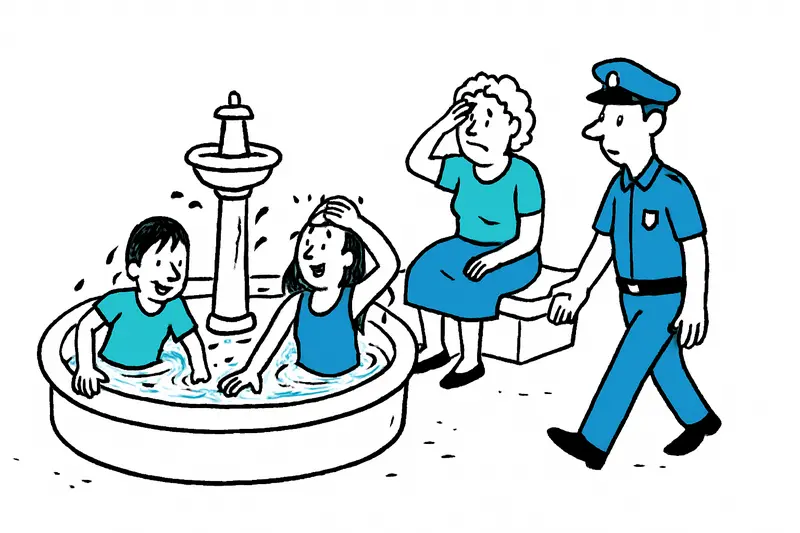
The scene is familiar: It is midday, the air shimmers above Plaça d'Espanya, the asphalt smells of rubber and sunscreen. In the distance you can hear a coffee machine clattering and a street vendor calling out. On Carrer Nuredduna people climb into a shallow, newly installed fountain with their clothes still on, hair dripping. Children splash, older residents sit at the edge and dab their foreheads. Images like these have been circulating more often recently — on Carrer Nuredduna, in Parc de Ses Fonts and in Sa Riera.
At first glance the behaviour is understandable: Not everyone on the island has access to a pool or lives on the coast. Recent heat alerts in Palma make quick, improvised cooling necessary. But fountains are not public swimming pools. They are technical installations, historical objects, or simply water features that were never designed for bathing. According to the city administration, bathing in fountains is prohibited; the new regulation specifies fines up to €750 for minor offences and €750–1,500 for more serious or repeated cases. That is fact — and a hard line.
Critical analysis: Three levels collide here. First the social: heat affects people unequally — older people, outdoor workers and families without a garden are hit hardest. Those without access to the sea or a pool look for shade and water nearby. Second the legal: the municipality has the right to protect public facilities and enforce order. Third the cultural and ecological: some fountains are listed monuments, sensitive pumps and filtration systems suffer from misuse; moreover, the infection and hygiene risk increases when many people bathe in untreated water.
What is often missing in the public debate: honest figures and priorities. There is talk about fines, less about how many people are actually affected, how strong daytime police presence is, or which alternative cooling options exist. Equally absent is the topic of urban design: more green spaces, shaded seating and public drinking fountains would reduce the temptation to climb into decorative water basins.
An everyday scene from Palma: One afternoon in Pere Garau a woman sits on a bench in front of a grocery store, next to her two teenagers who are just climbing out of the fountain. A police officer drives slowly by but does not stop; he does not wave or call out. Nearby you can hear children laughing and the hum of an air conditioner. This mixture of drift and nonchalance says a lot: there is a lack of regular control, but also a lack of offers.
Concrete solution approaches: First, short term: the city could set up cooling and drinking stations on hot days (mobile sprinklers, water troughs), clearly visible and with hygiene instructions. Second, regular measures: more drinking fountains and shaded waiting areas at bus stops as well as increased repair of the fountain at Plaça de la Reina and maintenance of sensitive fountain installations so damage from use is detected sooner. Third, legal-policy: the regulation must be clearly communicated — not only threats of fines, but graduated measures with warnings, social counselling and only then fines. Fourth, preventive: a heat action plan with cooling pop-up areas in densely built neighbourhoods, cooperation with neighbourhood associations and access arrangements to municipal pools for vulnerable groups, and pilots such as a new accessible bathing area in Cala Estància. And fifth, long term: plan urban greenery and water infrastructure so they mitigate climate extremes.
Who pays the bill? Financially, fines may bring revenue, but in practice they are a social signal: they hit those who are already short of money more often. Therefore penalties should always be part of a support package — information, social support and free alternatives.
What the city can do immediately: clear signage at historic fountains, established heat hotlines, additional patrols at midday in known hotspots and coordinated public information that does not only sanction but informs. Local initiatives can also help: neighbourhood networks that provide water bottles or shopping centres that keep toilets and cool indoor spaces open during extreme heat.
Conclusion: The images from Carrer Nuredduna, Parc de Ses Fonts or Sa Riera are symptoms of a bigger problem — adapting a city to increasingly frequent heat extremes. A mere claim to order is not enough. Palma needs a pragmatic mix of cultural heritage protection, social care and realistic cooling options. Otherwise the result will be a feeling that the city hands out fines while people keep on sweating.
Frequently asked questions
Why do people bathe in Palma's fountains during heat waves, and is it illegal?
What does Plaça d'Espanya illustrate about fountain use in Palma?
What practical cooling options should Palma offer during heat waves?
What penalties exist for bathing in historic fountains in Palma, and how are they applied?
How can Palma better protect historic fountains while keeping residents cool?
What role do neighbourhood associations play in Palma during extreme heat?
Why is urban greenery and water infrastructure important for Palma’s climate resilience?
What can visitors to Mallorca do to stay cool and respect fountains during a heat wave?
Similar News
Magaluf: Watchtower Alarm – Lifeguards Pull Unconscious Beachgoer from the Water
After a drama in the late afternoon, two lifeguards at Magaluf beach rescued an unconscious 44-year-old man. He was stab...
Turquoise in the City: How dangerous is the color play of the Sa Riera?
The Sa Riera in Palma suddenly turned turquoise — a pretty motif, but behind the effect lies a discharge of saline waste...

Jeckliner at Sunnesching: Cologne spirit sets sail from Palma
In September 2027 the Mein Schiff 2 briefly becomes a floating carnival stage: four days with Cologne bands, comedy and ...
Finally Home: Mike and Leyla Heiter Buy Villa with Sea View in Mallorca
The reality TV couple Mike and Leyla Heiter have bought a house in Mallorca with a roof terrace and sea view. An Instagr...

Arrest after series in Palma: Who protects apartments from repeat offenders?
The National Police arrested a man in Palma who investigators say may have broken into several apartments. In one incide...
More to explore
Discover more interesting content

Can Cap de Bou

Townhouse Lleo 72
