
Smoke Smell in the Cockpit – Holiday Jet Turns Back: A Reality Check for Mallorca
Smoke Smell in the Cockpit – Holiday Jet Turns Back: A Reality Check for Mallorca
A Jet2 flight from Manchester to Palma turned back shortly after takeoff because smoke was detected in the cockpit. Why passengers had to wait a long time and what can be improved on the island in handling such emergencies.
Smoke Smell in the Cockpit – Holiday Jet Turns Back: A Reality Check for Mallorca
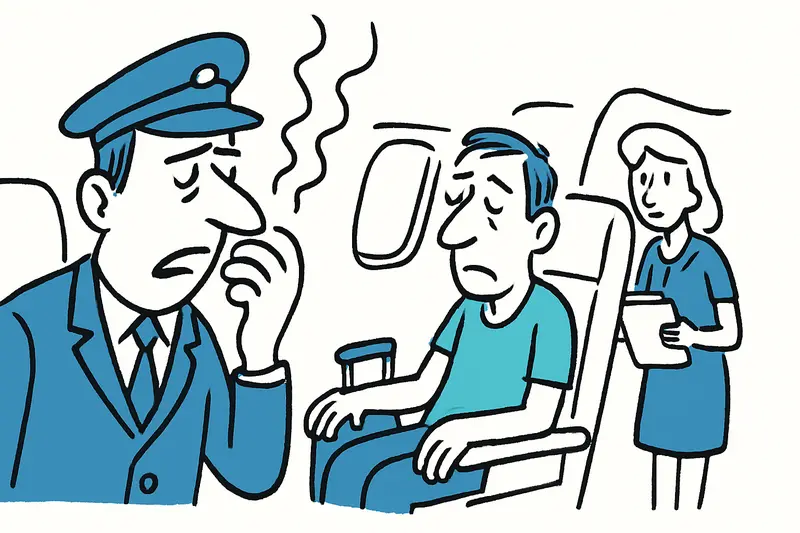
On July 11 a holiday jet departed Manchester bound for Palma. Shortly after takeoff the cockpit crew detected the smell of smoke, the transponder was set to the emergency code Squawk 7700, and the aircraft returned to the departure airport. For the affected travelers this meant: waiting through the night, a replacement flight only the next morning, and an arrival in Palma about eleven hours late.
Key question
Was the turn-back necessary and did the passenger aftercare in Mallorca meet reasonable expectations?
Critical analysis
Setting Squawk 7700 is a clear protocol signal: crew and air traffic control assume a serious on-board malfunction. In such a situation turning back is the conservative, risk-minimizing decision. What happens afterwards, however, reveals weaknesses: logistics for replacement aircraft, communication with those waiting and accommodation during the night. The delay of about 11 hours and 40 minutes suggests that no quickly available plan B existed. On the island this means not just a few restless hours in the airport, but full taxis, hotels having to rebook late, and excursion providers losing guests.
The facts: Flight LS869 set Squawk 7700, landed safely back in Palma, and was met on the ground by firefighters. The aircraft later completed a test flight and was back in service within a day. This sequence is technically plausible, but says nothing about root-cause investigation, transparency toward passengers or preventive measures in ground operations.
What is usually missing from the public debate
Discussion often revolves around minutes of delay or headlines like "emergency." Missing from the conversations is the perspective of ground logistics, hoteliers, taxi drivers and airport staff who must organize replacement services at short notice. Also rarely discussed: the psychological toll on people sitting at the baggage belt at night, and the question of how chains of errors can be prevented before a cockpit selects the emergency code.
Everyday scene from Mallorca
One can imagine the picture at the Son Sant Joan terminal: Mediterranean heat outside, a stream of exhausted passengers inside, suitcases on the floor, the smell of coffee from the small dispenser, taxi drivers with lists in hand reallocating passengers, and bars on Passeig Mallorca where staff are making do to care for late arrivals. Such scenes repeat during high season — and every hour of delay multiplies the effort.
Concrete solutions
1. Better emergency plan for ground staff: Airports and airlines should contractually agree on binding sequences for replacement aircraft and hotel services. Short-term charter capacities or pooling agreements with other carriers' bases would be a step.
2. Transparent communication: Passengers need clear, regular information — not just "we apologize." A digital information channel managed by trained ground staff reduces rumors and frustration.
3. Night supplies: Mandatory equipment for prolonged ground delays: vouchers for meals, shuttle buses to nearby hotels and coordinated taxi pools.
4. Open-ended investigations: When a jet turns back because of smoke, there should be public, comprehensible reports about the causes and measures taken — as far as safety allows. That builds trust.
5. Training and interfaces: Regular exercises between crew, air traffic control, firefighters and ground staff — practiced in realistic scenarios — reduce time loss after landing.
Why this matters for Mallorca
The island lives from tourism, but also from smooth arrivals. Every major incident leaves traces: booked excursions are lost, restaurant capacities shift, and above all a bad mood arises that quickly multiplies on social media feeds. More efficient processes not only spare nerves but also the local economy.
If you're looking for culprits: it's often a combination of technical unpredictabilities, limited resources and lack of coordination. Instead of blame, what is needed are bold, binding agreements between airlines, airports and local service providers.
Pointed conclusion
From a flight-safety perspective the jet's return was understandable. The question we all must ask is: why does an initiated emergency so easily become a logistical night for hundreds of people? Mallorca is good at welcoming guests. Now the island must get better at quickly and humanely taking care of them when something goes wrong.
Frequently asked questions
Why would a Manchester-to-Palma flight turn back shortly after takeoff due to smoke in the cockpit?
How long might passengers be delayed when a Palma-bound flight turns back to Manchester due to an onboard emergency?
What practical steps can airports and airlines take to handle ground delays more smoothly after a Palma emergency?
What kind of aftercare should travelers expect if a Palma flight returns because of smoke?
What packing tips help when traveling to Mallorca to cope with potential delays?
How do flight disruptions near Mallorca affect local tourism and businesses like taxis and hotels?
What is Squawk 7700 and why did it appear in the Mallorca incident?
How could Son Sant Joan Airport improve handling of late arrivals after an incident?
Similar News

Magaluf: Watchtower Alarm – Lifeguards Pull Unconscious Beachgoer from the Water
After a drama in the late afternoon, two lifeguards at Magaluf beach rescued an unconscious 44-year-old man. He was stab...

Turquoise in the City: How dangerous is the color play of the Sa Riera?
The Sa Riera in Palma suddenly turned turquoise — a pretty motif, but behind the effect lies a discharge of saline waste...

Jeckliner at Sunnesching: Cologne spirit sets sail from Palma
In September 2027 the Mein Schiff 2 briefly becomes a floating carnival stage: four days with Cologne bands, comedy and ...
Finally Home: Mike and Leyla Heiter Buy Villa with Sea View in Mallorca
The reality TV couple Mike and Leyla Heiter have bought a house in Mallorca with a roof terrace and sea view. An Instagr...
Arrest after series in Palma: Who protects apartments from repeat offenders?
The National Police arrested a man in Palma who investigators say may have broken into several apartments. In one incide...
More to explore
Discover more interesting content

Can Cap de Bou

Townhouse Lleo 72
