
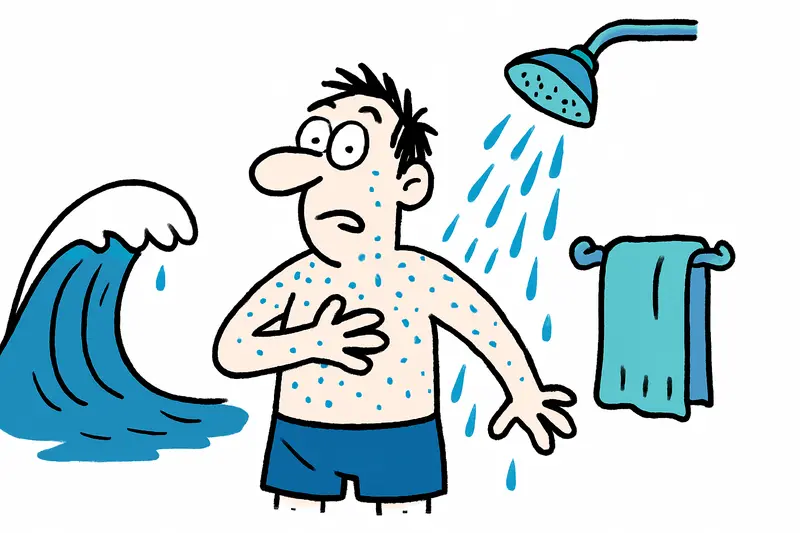
Showering After the Sea: Is It Necessary — and What Is Missing from the Discussion?
Showering After the Sea: Is It Necessary — and What Is Missing from the Discussion?
Salt has its benefits when bathing, but it shouldn't be left on the skin for long. A critical assessment for Mallorca's beaches: why showering within a few hours makes sense, what the public often overlooks and which practical rules beachgoers should follow.
Showering After the Sea: Is It Necessary — and What Is Missing from the Discussion?
Short question, important practice: why a few hours without a shower can be problematic
The simple question at the beach is often: do I need to rinse off immediately after swimming in the Mediterranean — or can the sea salt remain on my skin for a while? The answer is not dogmatic but a matter of weighing factors: while bathing can sometimes be beneficial for certain skin conditions, if the salt crystals remain on the skin for a longer time they draw moisture away. Especially on hot days at Playa de Palma or along the Passeig Marítim, when the Tramuntana wind further irritates the skin, you quickly notice a feeling of tightness. (see Can you still safely swim in the sea around Mallorca?)
Briefly: salt is hygroscopic, it pulls water from its surroundings and thus from the outer skin. While a short dip can have positive effects — including a gentle exfoliation from fine sand — the subsequent drying effect is often underestimated. Add sun, sweat and traces of sunscreen: a combination that can lead to redness, flaking or small irritations on sensitive skin. The same applies to hair: salt gives texture and more volume but leaves lengths dry and brittle if nothing is done to counteract it.
My observation from the morning: at Cala Major children often rinse off afterwards with the kiosk's handheld shower, adults stroll along the promenade with salt-crusted shoulders — voices, the hum of boat engines, the smell of sunscreen. Many think the thin film of salt belongs to the beach experience. For some skin types, however, it becomes uncomfortable over time.
Critical analysis: what is left out of the public debate? First, the state of beach infrastructure. At many coastal spots showers or drinking-water taps do not work reliably or only provide lukewarm seawater. (see Sensors on Mallorca's Beaches: Help for Self-Regulation or Creeping Surveillance?) Second, the question of water use. Mallorca has dry periods in summer — public recommendations therefore need to be practical and water-saving. Third, the target groups: older people, small children and people with skin conditions need different guidance than occasional bathers. (see Critical Bathing Incident at Arenal: Call for Better Protective Measures)
So what to do? Concrete suggestions for beach days in Mallorca:
1) Shower within a few hours: It is not necessary to take a cold shower immediately on the beach — rinsing with lukewarm fresh water within the following hours reduces salt, sand and sunscreen residues and mitigates drying.
2) The right temperature and products: Lukewarm water, not hot; mild, pH-neutral cleansing products instead of harsh soaps. Overly stripping shower gels worsen the feeling of tightness.
3) Moisture care: After rinsing, apply a light moisturizer or after-sun with soothing ingredients such as aloe, panthenol or hyaluronic acid. This helps rebuild the skin barrier.
4) Hair care: If your hair gets a lot of saltwater, treat the lengths with conditioner or at least use an intensive treatment after showering so the hair does not become brittle.
5) Practical solutions on the go: If the public shower is broken: a small bottle of drinking water for rinsing, wet wipes for face and body or a quick damp cleaning often suffice until a real shower is available.
And at the community level: municipalities could prioritize maintenance of showers at popular beaches, hotels and kiosks could offer small rinse stations, pharmacies and drugstores could sell more compact after-sun formats. All of this can be implemented without wasting excessive amounts of water.
Conclusion: a sea swim belongs to Mallorca like the scent of pine trees and the sound of ferries in the harbor. A little sea salt on the skin feels like vacation. For skin health, however, it is wise to remove salt, sand and sunscreen within a few hours and then care for the skin. This does not break the beach experience but is a small, effective step so the holiday does not end with itchy skin or brittle hair.
Frequently asked questions
Do I need to shower right after swimming in Mallorca’s sea?
How long should I wait before rinsing off salt on Mallorca beaches?
What temperature and products are best for a post-beach rinse on Mallorca?
How should I moisturize after rinsing to protect Mallorca skin from sun and salt?
What about hair after saltwater on Mallorca shores?
If a public shower is broken at Cala Major, what practical options exist to rinse off on Mallorca?
Why is beach infrastructure and water use an important factor for post-swim routines in Mallorca?
How can post-swim care be tailored for families or people with sensitive skin on Mallorca?
Similar News
Magaluf: Watchtower Alarm – Lifeguards Pull Unconscious Beachgoer from the Water
After a drama in the late afternoon, two lifeguards at Magaluf beach rescued an unconscious 44-year-old man. He was stab...
Turquoise in the City: How dangerous is the color play of the Sa Riera?
The Sa Riera in Palma suddenly turned turquoise — a pretty motif, but behind the effect lies a discharge of saline waste...

Jeckliner at Sunnesching: Cologne spirit sets sail from Palma
In September 2027 the Mein Schiff 2 briefly becomes a floating carnival stage: four days with Cologne bands, comedy and ...
Finally Home: Mike and Leyla Heiter Buy Villa with Sea View in Mallorca
The reality TV couple Mike and Leyla Heiter have bought a house in Mallorca with a roof terrace and sea view. An Instagr...

Arrest after series in Palma: Who protects apartments from repeat offenders?
The National Police arrested a man in Palma who investigators say may have broken into several apartments. In one incide...
More to explore
Discover more interesting content

Can Cap de Bou

Townhouse Lleo 72
