
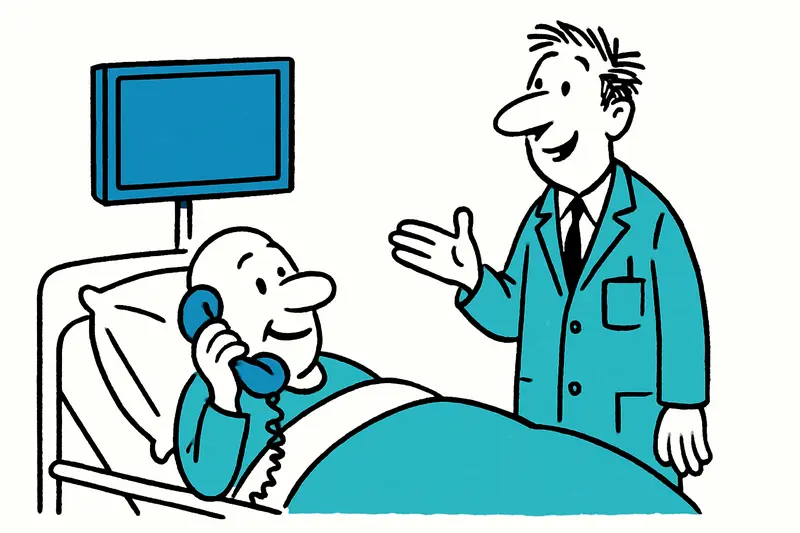
Inca hospital in 'hotel mode': More comfort — but at what price?
The Hospital Comarcal de Inca has equipped rooms with smart TVs and telephones. More privacy or an expensive gimmick? A look at logistics, liability and everyday life on the wards.
More comfort — and many questions
Last week the corridors of the Hospital Comarcal de Inca smelled of fresh paint, coffee from the cafeteria and a bit of a sense of new beginnings: the clinic has installed smart TVs and additional telephone connections in all wards and in the dialysis unit, as reported in Inca hospital in 'hotel mode': More comfort — but at what price?. For patients this means: television directly at the bedside, more privacy for phone calls and soon the possibility to log in with personal streaming accounts.
What exactly was implemented?
The hospital management speaks of "around two telephones per room" as well as flat-screen TVs in double and single rooms, in the dialysis unit and in some common areas. Health Minister Manuela García and hospital director Xisco Ferrer presented the project as a step toward a "more humane care" — less of a clinical routine, more of an everyday feeling. According to the clinic, purchase and a four-year maintenance are included in the service package; the costs are, according to management, in the low six-figure range, as detailed in Hospital de Inca activa el 'modo hotel' — teléfono y Smart TV en cada cama.
The key question: Does technology improve care — or does it replace it?
That is more than a rhetorical question. A telephone at the bedside may make family conversations easier, a personal TV may fend off boredom. But nursing staff warn that human closeness cannot be replaced by screens. On ward two an older patient half-jokingly said, "Finally I can watch my news again without someone changing the program for me." A ward nurse who wished to remain anonymous praised the practicality — and here comfort meets reality: who takes care of the technology when the connection fails or a device breaks down?
Aspects that are rarely discussed
In public perception it often remains a nice idea. On site, however, very concrete questions arise: How clean will the screens remain in times when hygiene determines infection control? Are there clear rules if patients use their own streaming accounts — and how secure is the data on these devices? Who is liable if a patient damages a brought-in tablet or if a smart TV is damaged by external influence? Guidance on infection prevention and control can be found in WHO guidance on infection prevention and control.
And then there is the social component: not all patients are familiar with streaming logins or smart TV menus. Older people or people with cognitive impairments may feel excluded if no support is available. At the same time there is a danger that technology is used as a substitute for conversations — because staff are short and a screen temporarily fills the gap.
Concrete opportunities — and how to secure them
The idea certainly has potential: more privacy, easier communication with relatives, occupation during long waits. For a nice extra to become a real benefit, accompanying measures are needed. On-site technical support or a hotline, clear hygiene and disinfection protocols, easy-to-use menus and training for staff and patients are necessary. Legal regulations on liability and data protection must also be clearly defined — ideally publicly accessible, for example at the Agencia Española de Protección de Datos.
Another pragmatic step would be measurable evaluation: patient surveys before and after the rollout, an analysis of reported malfunctions and an assessment of whether subjective satisfaction and the feeling of safety truly improve. If the clinic publishes figures one year after launch — for example on usage, technical problems and feedback from nursing staff — that would be a good indicator of sustainability.
Conclusion: Small extra, big responsibility
The new 'hotel mode' at the Hospital Comarcal de Inca shows that healthcare facilities are open to comfort improvements. But with more technology comes greater responsibility: to patients, staff and the public purse. If humanity remains the top priority — with clear rules, training and measurable results — televisions and telephones can truly ease everyday hospital life. If they remain merely a pretty facade, the chance to achieve real improvements will be missed.
Between freshly painted walls and the clatter of the trolley in the corridor, Inca is now testing whether small things make a big difference — or whether they raise more questions than they answer.
Frequently asked questions
What has changed for patients at Hospital Comarcal de Inca?
Why is Inca hospital adding more comfort features instead of only medical equipment?
Does a smart TV in a hospital room really improve the patient experience?
What are the concerns about technology in Mallorca hospitals like Inca?
Can hospital patients in Inca use their own streaming accounts on the new TVs?
Is the new hotel-style setup at Hospital de Inca meant for all patients?
How much did the new TVs and phones at Inca hospital cost?
What should patients and families know before using the new hospital technology in Mallorca?
Similar News
Mistaken identity with fatal consequences: Brutal assault in S'Aranjassa — what's missing in the follow-up?
At S'Aranjassa a visitor to a finca was tied up, beaten and thrown out of a van. Three men have been arrested, including...
High heel slips, car accelerates: accident on Camí de Son Hugo
A woman lost a high-heeled shoe on the forecourt of the sports facility at Camí de Son Hugo. The car accelerated, mounte...
Phone Scam: How Two Hotel Employees at Playa de Palma Lost Thousands of Euros
One morning in September, two reception employees at Playa de Palma were pressured by alleged alarm-company staff — in t...
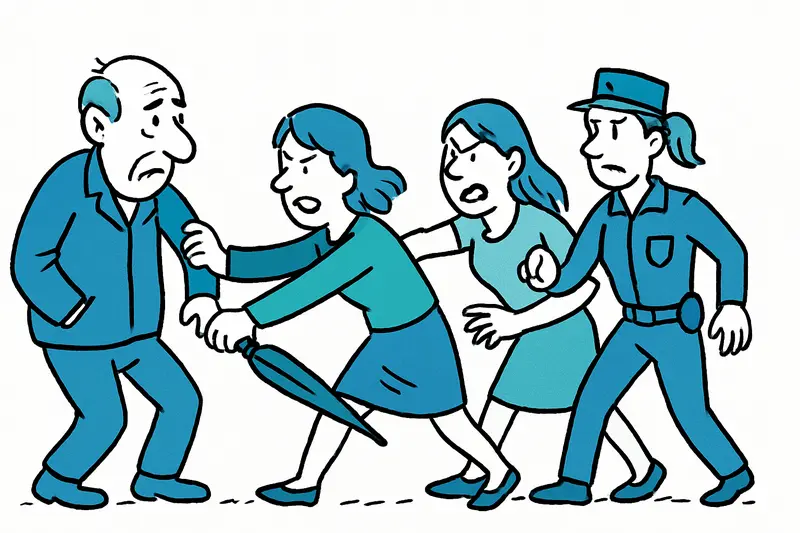
When the Wallet Becomes a Danger: Attack in Peguera and Lessons for Mallorca
In Peguera, two women are said to have stolen the wallet from a 75-year-old German couple. When the victim intervened, t...
Plata stays Plata: Young people take over, Llonguets remain
A small bar on Carrer de l'Argenteria will continue: Tolo Serra hands the place over to young Mallorcans at the end of t...
More to explore
Discover more interesting content

Can Cap de Bou

Townhouse Lleo 72
