
Sexual assault at the Intermodal: What the incident reveals about safety and accessibility in Palma
An incident at the Intermodal not only shocked those affected but also raised questions about protection, accessibility and prevention. What needs to happen now.
Sexual assault at the Intermodal: What the incident reveals about safety and accessibility in Palma
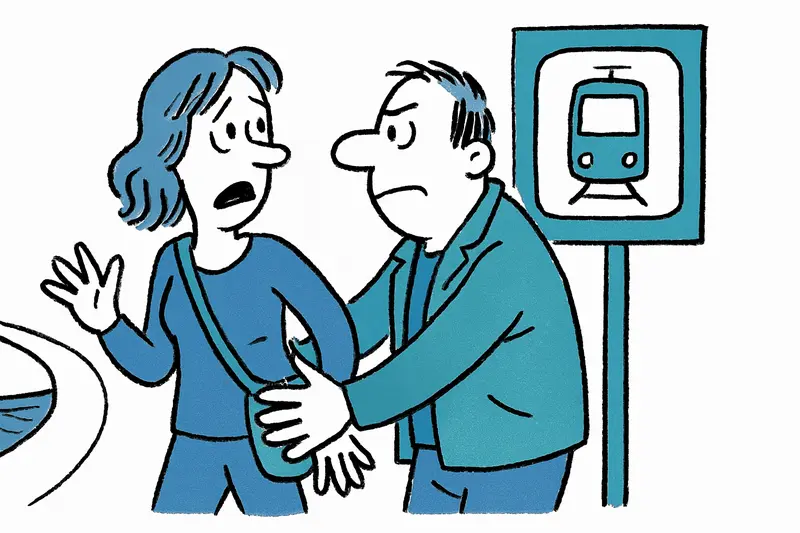
On Tuesday afternoon, shortly after 4:20 pm, a commotion broke out at the Intermodal station in Palma that for a moment drowned out the usual announcements and the rattling of trains. According to witnesses, a 70-year-old man locked a man with a disability in a single-occupancy restroom and pressured him into sexual acts. Private security personnel intervened and held the suspect until the National Police arrived — investigations are ongoing.
The scene: people with suitcases, the clacking of heels, the scent of coffee from the kiosks, then suddenly loud voices and the scraping of wheeled bags on the tiled floor. For regular visitors to the station it is a shock. "You don't feel safe anymore when something like this happens at an ordinary station," said a traveler who was waiting for a regional train.
The central question for us is: how could the spatial and organizational conditions at the Intermodal allow such a vulnerable moment to occur — and what lessons must Palma draw from this? It's not just about an isolated case, but about the interplay of infrastructure, staff and the protection of people with disabilities.
What often remains: invisible weaknesses
Stations are noisy, busy places in everyday life. Yet retreat areas like single-occupancy restrooms are designed to provide privacy — which in this case was abused. Less often discussed is that people with disabilities more frequently need assistance and are therefore particularly vulnerable in such niches. Missing sightlines, sparse security presence at certain times and gaps in video surveillance are problems that have already led to incidents such as Magaluf: Escalation at the Bus Stop — What the Incident Reveals About Safety and Civil Courage and Assault at Palma Station: Why Visibility Alone Doesn't Protect.
Another point: reporting culture and assistance. Not all victims feel able to file a report or seek help immediately — out of shame, because they cannot communicate confidently, or out of fear of stigmatization. In a loud station a cry for help can easily be lost.
Concrete courses of action
The operators of the Intermodal have announced a review of security patrols. That is a start, but it is not enough. We see several sensible steps:
1. Increase staff visibility: Greater presence in sensitive areas, including mobile patrols during peak times. Security personnel should regularly conduct visible checks of restroom areas.
2. Emergency infrastructure in restrooms: Emergency buttons or audible alarm systems in single-occupancy restrooms that can be triggered discreetly and in an accessible manner. These systems must be designed so they function intuitively in a stressful situation.
3. Training for staff: Specialized training for security staff and station employees on interacting with people with disabilities, trauma awareness and de-escalation, aligned with WHO guidance on preventing violence against women. Only then can rapid, appropriate help be provided.
4. Improved reporting channels: Clearly visible instructions on how and where to get help — not just phone numbers but also QR codes that lead to chat or text support. Some people may need to seek help silently.
5. Weighing data protection and technology: Video surveillance along access routes and corridors can be a deterrent and facilitate investigations — at the same time privacy in restrooms must be respected. One solution could be cameras at the approaches to the restroom areas, not inside the stalls themselves.
What politics should do
At the municipal level a coordinated concept is needed: accessible security concepts at transport hubs, coordinated emergency plans between operators, police and social services, and better funding for preventive measures. It's not enough to increase presence hurriedly after an incident; sustainable investment in training and technology is necessary.
Civil society services must also be strengthened: counseling centers for victims, easily accessible medical and psychological care, and Actions for the International Day Against Violence Against Women in Palma. A station is not a lawless space — and the more visible the help available, the higher the barrier for perpetrators.
Looking ahead
The incident at the Intermodal has shown how quickly everyday life can be shaken: from the soundscape of announcements and rolling suitcases to a moment that echoes for those affected. The police are investigating, witnesses are being interviewed, medical help was offered — but the real task begins now: designing the protection of public spaces so that vulnerability cannot be exploited.
For the people who pass through Palma's transport hub every day, this means concrete improvements instead of soothing words. More visible help, better equipment and a culture that believes and supports victims — these are the measures by which the city must be judged.
Frequently asked questions
How safe is Palma's Intermodal station for daily travellers?
What should I do if I feel unsafe at a station in Mallorca?
Why are disabled travellers more vulnerable in public transport spaces?
What changes could improve safety at Palma's Intermodal station?
Are single-occupancy restrooms in stations safe for vulnerable people?
How can someone report an incident at a Mallorca station if they cannot speak up easily?
What support is available for victims of sexual violence in Palma?
What does the incident at Palma Intermodal mean for accessibility planning in Mallorca?
Similar News
The End of the Cheap Ride? Why Mallorca Is Hit Harder by the Fuel-Price Shock
Gasoline and diesel average close to two euros per liter. What this means for commuters, supply chains and renters in Ma...
Relaxed liquid rules in Munich: What Mallorca travelers will notice
At Munich Airport the 100-milliliter rule will be lifted at all checkpoint lanes — thanks to new CT scanners passengers ...
For 45 Years on Mallorca — and Then This: How a Market Visit in Santa Ponsa Became a Lesson
A woman who has lived on the island for decades lost money and important documents at the Mercat Setmanal in Santa Ponsa...
10 percent surcharge on the beach: How legal and transparent is the extra charge at Playa de Muro?
A German part-time resident noticed days after a restaurant visit in Playa de Muro that the bill included a flat ten per...
Body near the Llevant Market: What this death says about our city
A man was found dead on Sunday afternoon near the Llevant Market. Police say the death appears natural. The scene raises...
More to explore
Discover more interesting content

Can Cap de Bou

Townhouse Lleo 72
