
New Interpretation Centre for the Talayotic Settlement in s'Illot
New Interpretation Centre for the Talayotic Settlement in s'Illot
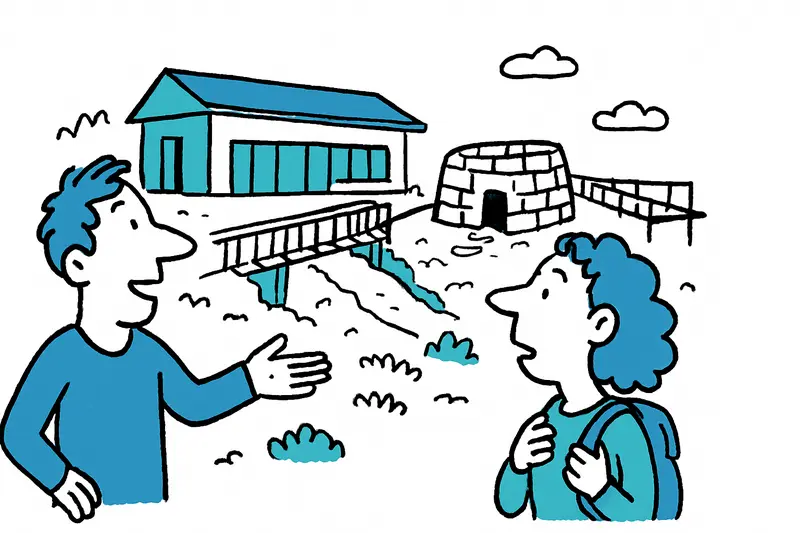
Sant Llorenç plans to build a centre for Talayotic culture in s'Illot: an open building of natural materials, a pedestrian bridge and a viewpoint to connect the place with the archaeological site.
New Interpretation Centre for the Talayotic Settlement in s'Illot
An open building made of natural materials aims to make place and past more visible
The sea smells of salt, the boats rock gently, and morning strollers with coffee in hand pass one another along the promenade of s'Illot. Right here, on the edge of the town in eastern Mallorca, the municipality of Sant Llorenç des Cardassar is planning a new interpretation centre for the Talayotic culture. The reason is close at hand: on the plot the municipality purchased in 2022 there are remains of an early settlement that should now be made more visible and better explained.
The plan is for a building with open interiors, plenty of daylight and materials that blend into the landscape — wood, coarse lime plaster and local stone. That sounds like a place where people stop rather than just pass through: shaded exhibition areas, clear sightlines to the finds and rooms where schoolchildren can move around. A pedestrian bridge and a viewpoint are intended to connect the site directly with the centre and make the ensemble legible from the beach to the historic area; this kind of approach echoes municipal investments in public heritage projects such as Calvià's Galatzó open-air museum.
Mayor Jaume Soler sees the project as a step towards enhancing the local cultural heritage. If implemented sensitively, this kind of infrastructure can serve several purposes: a meeting place for residents, a learning space for schools and a discovery stop for visitors off the beaten path.
What is commendable here: the centre does not aim for a closed museum atmosphere but for openness. In a place like s'Illot, where fishermen mend nets in the morning and families head to the small beaches in the afternoon, a friendly, open building fits better than a heavily secured repository. At the same time, a well-designed connection — the pedestrian bridge — will make the facility more accessible and invite walks that could economically benefit local cafés and shops.
A small, positive everyday scene: in the morning an older woman sits on a bench in front of the new square, feeds pigeons and tells her grandchild what grandparents often know — old stories about stones and people. In this way the centre links everyday life and history without high admission fees, simply through presence and information.
Why this is good for Mallorca: many municipalities struggle with archaeological finds that either remain unused or end up only in urban museums; similar adaptive reuse is seen in Sóller's textile museum project. An on-site interpretation centre strengthens the relationship between the community and its history. It distributes cultural benefits more evenly, brings visitors to less crowded areas and fosters awareness for the protection of smaller sites, as discussed in coverage of Illetes Fort conservation challenges.
A few concrete, low-effort ideas that could enrich the project: evening talks during the summer season under reduced lighting, simple didactic tours for school classes with hands-on stations, collaborations with local craftsmen for small markets at the viewpoint and signage that tells short, lively stories in Catalan and German as well. It would also be important to plan lighting that protects the nocturnal ecosystem while keeping the viewpoint safe.
The centre is still in an early planning stage, but the foundations are in place: a purchased plot, a clear architectural concept with natural materials, and the idea to connect the place and the excavation via a pedestrian bridge. If the implementation remains locally anchored — involving craftsmen, schools and associations — s'Illot could become a small, independent cultural destination that enriches both neighbours and visitors.
Outlook: a well-executed interpretation centre does not have to be a monument. It can take on the quiet, steady remembering of a long history while respecting the rhythm of the place. In a season when the promenade becomes calm again, guided tours, afternoon programmes for children and small concerts could enliven the square in front of the building. In the end, not only the stones benefit from the attention but also the people who live here and pass the stories on.
Frequently asked questions
What is being planned in s'Illot for the Talayotic settlement?
When is the best time to visit archaeological sites in Mallorca like s'Illot?
Can you combine a beach walk in s'Illot with a cultural visit?
What kind of building is planned for the new centre in s'Illot?
Why is an interpretation centre useful for Mallorca’s smaller archaeological sites?
Will the new centre in s'Illot be accessible on foot?
What role could the s'Illot centre play for local schools?
What does the planned centre mean for everyday life in s'Illot?
Similar News
When Ryanair's fleet grows: What Mallorca's travelers should know
Ryanair will soon receive 737 Max 10 jets. The larger aircraft offer potential savings — but also new risks for flight o...

Rising fuel and housing costs: Why Mallorca's overland buses are suddenly overcrowded
More and more people are leaving Palma — and boarding TIB buses: Between January and August 2026, the network recorded o...

Carriages Without Horses: Palma Plans E-Carriages – a Reality Check
Palma plans to switch to electric carriages in 2027. The prototype was shown near the cathedral. What is the technology ...

Record season, empty coffers: Who really benefits from the tourism boom?
Full hotels and more flights: the numbers sound impressive — yet many locals feel no benefit. A reality check with an ev...

Pool ordered for €46,000 – €23,000 paid, no work carried out: A fraud case in Palma
A homeowner in Palma transferred €23,000 for the construction of a pool. Weeks later it emerged that no building applica...
More to explore
Discover more interesting content

Can Cap de Bou

Townhouse Lleo 72
