
Krekovic Park in Nou Llevant: When the public garden becomes a problem area
Krekovic Park in Nou Llevant: When the public garden becomes a problem area
Residents report nocturnal intruders, drug use and vandalism in Krekovic Park in Nou Llevant. A reality check: what is missing, what helps?
Krekovic Park in Nou Llevant: When the public garden becomes a problem area
A reality check from the neighbourhood
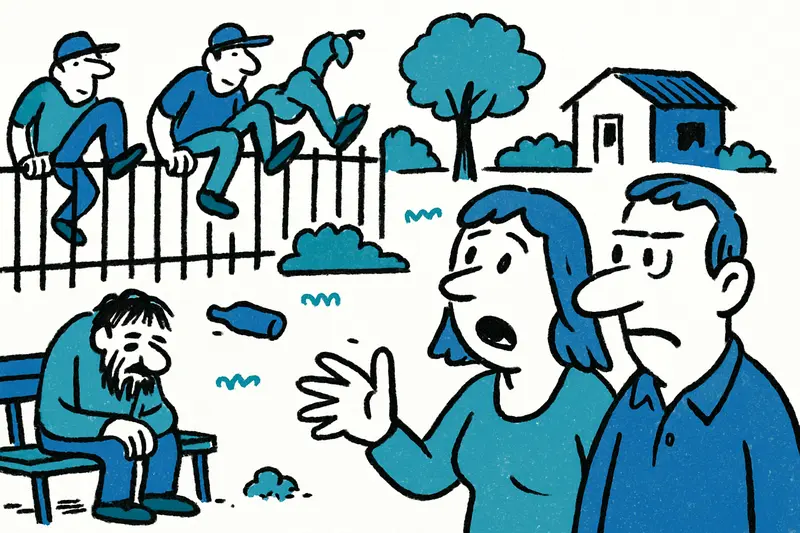
Reports from Krekovic Park sound familiar: groups climbing over the fence at night; bottle remains in the grass; spots that show signs of drug use; and the former bar, now occupied by people who are not local residents. The park sits between the streets Caracas, Manuel Azaña, Ciudad de Querétaro and Avenida de México. It used to be a place where families with children and retirees came to sit. Today neighbours look out of their windows — often towards the apartment blocks on Avenida de México — and watch the scene change with concern.
Key question
How can a public park that is a daytime oasis for many residents become a place that neighbours fear at night? We are not asking for who is to blame, but for solutions: why doesn't public oversight work permanently, and which measures are practical, legal and socially viable?
Critical analysis
First the facts: the park has set opening hours (usually 8 a.m. to 8 p.m. in winter, longer in summer). Still, groups climb the fences at night. This is not an isolated "youth problem" — it is the overlap of several social issues: poor lighting and broken fences make intrusion easier; persistent homelessness leads people to seek shelter in green spaces; in some places the timely repair of playground equipment and paths is missing, which reinforces a feeling of neglect. Visible police presence can help in the short term, but it does not solve the deeper causes.
Another point is perception: when individual places in a city become stigmatized, that tends to create more problem areas. Until now the Krekovic Park was less criticised than, for example, Nighttime Noise and Speeding in Nou Llevant: German Residents Demand Quiet, and that is why the current complaints surprise many residents.
What is missing in the public debate
There is a lot of talk about safety, often with immediate calls for more police. That is understandable but incomplete, as recent reporting such as Sleepless Nights in Nou Llevant: When the Street Keeps You Awake shows. Barely visible is the debate about preventive measures: regular maintenance, good lighting, evening activities for young people and formalised routes for social services to regularly make contact with homeless people. Also under-discussed is the question of sustainable solutions for abandoned buildings like the former bar in the park — vacancy attracts problems.
An everyday scene from Nou Llevant
In the early morning Avenida de México looks different: delivery vans stop, a neighbour with a dog waves, the kiosk sells the first café con leche. Children with school backpacks pass the park entrances, and an older man sits on a bench under the pine trees. These quiet moments show what is at stake: a place you need to start the day. Nighttime darkness removes those scenes and replaces them with insecurity.
Concrete solutions
1. Short term: repair the fences and add targeted lighting along paths. Well-placed, glare-free lamps are more effective than sporadic patrols because they return the space to the public. 2. Medium term: a maintenance plan from the city administration (Ajuntament) with defined response times for vandalism, litter and defective infrastructure. 3. Socially integrated: regular evening rounds by street outreach workers, cooperation with charities for homeless people, guaranteed contact points instead of evictions without perspective. 4. Youth prevention: nearby offers (sports, cultural workshops) during later hours, coordination of youth centres with the neighbourhood. 5. Resident involvement: a local network that documents problems and, in organised meetings, names concrete locations and times when the city must act. 6. Legal clarity for video surveillance: only as a supplement and with transparency; no blanket cameras, but targeted, legally secure solutions following ICO guidance on video surveillance.
What this means for the neighbourhood
It is not about criminalising park visitors, but about keeping public spaces safe and usable for everyone. When lighting, repairs and social work come together, the dynamic changes. A clean, well-maintained park sends the signal: this place belongs to the community.
Concise conclusion
Krekovic Park is not fate — it is the result of decisions. A bigger toolbox of maintenance, coordinated social work and transparent communication between city, police and neighbourhood would help. The clear question remains: do we want our park to again allow the small things of everyday life in the morning — children's play, sitting on the bench, talking with a neighbour — or do we continue to accept nightly problems as inevitable? The answer shows how seriously we take our city.
Frequently asked questions
Is Krekovic Park in Mallorca safe to visit during the day?
Why do public parks in Mallorca sometimes become problem areas at night?
What are the opening hours of Krekovic Park in Nou Llevant?
What is being done to improve safety in Krekovic Park, Mallorca?
Where exactly is Krekovic Park in Palma?
What should residents report if they see problems in Krekovic Park?
Do cameras solve safety problems in Mallorca parks like Krekovic?
What kind of maintenance does a Mallorca neighbourhood park need to stay usable?
Similar News
Magaluf: Watchtower Alarm – Lifeguards Pull Unconscious Beachgoer from the Water
After a drama in the late afternoon, two lifeguards at Magaluf beach rescued an unconscious 44-year-old man. He was stab...
Turquoise in the City: How dangerous is the color play of the Sa Riera?
The Sa Riera in Palma suddenly turned turquoise — a pretty motif, but behind the effect lies a discharge of saline waste...

Jeckliner at Sunnesching: Cologne spirit sets sail from Palma
In September 2027 the Mein Schiff 2 briefly becomes a floating carnival stage: four days with Cologne bands, comedy and ...
Finally Home: Mike and Leyla Heiter Buy Villa with Sea View in Mallorca
The reality TV couple Mike and Leyla Heiter have bought a house in Mallorca with a roof terrace and sea view. An Instagr...
Arrest after series in Palma: Who protects apartments from repeat offenders?
The National Police arrested a man in Palma who investigators say may have broken into several apartments. In one incide...
More to explore
Discover more interesting content

Can Cap de Bou

Townhouse Lleo 72
