
Limits for Incoming Rental Cars: How Realistic Is the Debate About Ferries to Mallorca?
Limits for Incoming Rental Cars: How Realistic Is the Debate About Ferries to Mallorca?
The island council and ferry companies want to share data and form a working group. A good idea — but will restrictions at the ports be enough to prevent traffic chaos and a flood of rental cars? A reality check with practical proposals.
Limits for Incoming Rental Cars: How Realistic Is the Debate About Ferries to Mallorca?
Key question: Will restricting vehicles arriving by ferry solve Mallorca's traffic problem — or merely shift it?
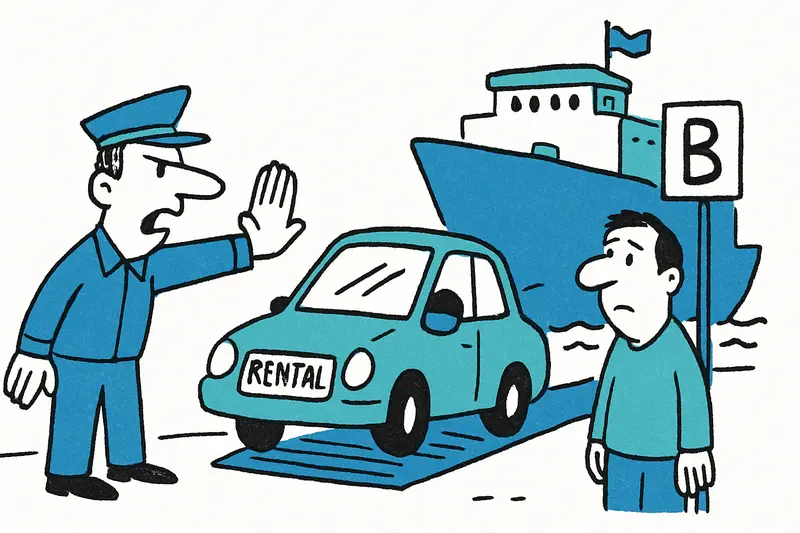
At Palma's quay, where ferries push deep into the bay in the morning and lorries mix short beeps with the clatter of containers, the debate can be easily observed. Rental car stickers gleam in the sun, young drivers search for their tickets, and nearby locals wait for the bus. The island administration has now opened talks with the three major ferry operators — Baleària, GNV and Trasmed — and wants to jointly analyse data, as discussed in Rental Car Cap: Between Traffic Calming and Holiday Stress – What Mallorca Must Consider Now. That sounds like careful work, not a hasty decision. Still, caution is warranted.
Critical analysis: On paper the idea is simple: fewer cars, less congestion. In practice, however, the numbers and transport logic are more complicated. Ferry companies and the island council want to exchange data; the operators doubt that vehicles arriving by ship are the main part of the problem. Weekend peaks have intensified the debate, as noted in Mallorca at the Limit: Will This Weekend Break the Visitor Maximum?. The rental fleet is growing, yes. See also Why Rental Cars in Mallorca Have Become Noticeably More Expensive — and What You Should Know. But how many vehicles come on the Barcelona–Palma route, how long do they stay on the island, and how many operate in urban areas versus rural zones? Without detailed data, measures remain crude and could miss their targets or have side effects.
What is often missing in the public debate is the perspective of destinations and everyday life. A father driving from Alcúdia to the airport on a Saturday afternoon, a hotel manager in Cala Millor who suddenly needs more cars, or a ferry worker juggling between container terminals and the car deck — their behavior patterns determine how traffic emerges. Relying solely on controls at the point of entry ignores internal mobility dynamics: commuting flows, short-term rentals, delivery traffic, construction sites and lack of parking capacity. This public concern aligns with findings discussed in The Island Says No to Overcrowding: What the Survey Really Means.
Missing elements in the discourse: first, a transparent, shared data basis with standardized metrics (number of arriving rental cars per route, length of stay, destination region). Second, an honest accounting of economic consequences: who pays compensation if a rental company is suddenly allowed to ship fewer cars? Third, clear sanctions and operational mechanisms — mere declarations of intent will not prevent jams around Son Servera or Andratx.
Everyday scene: In front of the old customs building on the Paseo Marítimo a minibus stands, the driver smokes, guests wheel suitcases. On Plaça Gomila tourism professionals discuss with taxi drivers while residents repair a parking meter. These small scenes show: mobility is not a single program at the pier but a network of people, work and space.
Concrete solutions that go beyond simple entry restrictions:
1) Pilot phases with clear indicators: Time-limited trials on one or two routes, accompanied by measurement points for traffic density, parking occupancy and rental car usage. Only then can effects be empirically demonstrated.
2) Digital entry management: A mandatory online reservation system for rental cars arriving by ferry, linked to an electronic toll or fee. This allows dynamic control by time of day and capacity.
3) Cooperation with rental companies: Incentives for longer rental periods, fleet rotation instead of continuously increasing vehicle numbers, mandatory aggregated reporting of vehicle destinations to the administration — privacy-compliant and anonymised.
4) Strengthen local infrastructure: Park-and-ride facilities near the ports, P+R with transfers into urban areas, improved bus and rail connections so rental cars do not appear as the default solution.
5) Link environmental and resident protection: Fee systems that favour electric vehicles and make peak times more expensive; revenue earmarked for noise protection and local traffic calming.
6) Transparent cost accounting: Clear breakdown of who bears administrative and control costs — island council, ferry companies or the industry — and how revenues are reinvested.
Cooperation between the administration and ferry companies is the right step. What will be decisive, however, is whether the working group prepares data so that decision-makers and citizens can make a real assessment. It's not just about the entry lane at the harbour gate, but what happens afterwards: parking, bus lines, street design, short-term rental rules.
Punchy conclusion: Those who now look only at the quay edge overlook the island. A ferry restriction can be part of a toolbox — but it's no panacea. Better: start small, measure, adjust. Otherwise we will merely trade one construction site for another, and the everyday scenes on the Paseo Marítimo will remain the same: cars, suitcases, bewilderment.
Frequently asked questions
Will limiting rental cars arriving by ferry actually reduce traffic in Mallorca?
Why is Mallorca debating rental cars on ferries now?
What is the best time of year to visit Mallorca if you want less traffic?
Do ferry restrictions in Mallorca affect holidaymakers or just rental companies?
What other transport measures could help Mallorca besides limiting rental cars?
What should you know if you're driving from Palma to other parts of Mallorca in peak season?
What data does Mallorca need before changing rules for ferries and rental cars?
Can electric rental cars help reduce traffic pressure in Mallorca?
Similar News

Carriages Without Horses: Palma Plans E-Carriages – a Reality Check
Palma plans to switch to electric carriages in 2027. The prototype was shown near the cathedral. What is the technology ...

Record season, empty coffers: Who really benefits from the tourism boom?
Full hotels and more flights: the numbers sound impressive — yet many locals feel no benefit. A reality check with an ev...

Pool ordered for €46,000 – €23,000 paid, no work carried out: A fraud case in Palma
A homeowner in Palma transferred €23,000 for the construction of a pool. Weeks later it emerged that no building applica...

Summer greetings from the Pitiusas island: Gottschalk and Krüger enjoy the sun on Ibiza
A friendly photo of Thomas Gottschalk and Mike Krüger on Ibiza evokes memories of their shared film years and shows that...

Occupied in a Few Days: When Property in Mallorca Turns into a Dispute
Six young men were arrested in Palma after homeowners returned and could no longer open their own door. A case that rais...
More to explore
Discover more interesting content

Can Cap de Bou

Townhouse Lleo 72
