
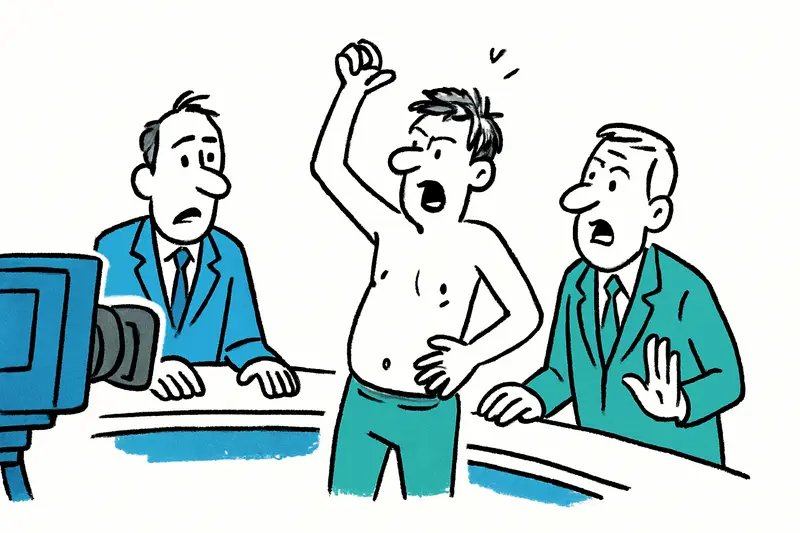
Live mishap on regional television: How could a caller break control of the broadcast?
A caller identifies as part of a niche community, insults the prime minister and exposes himself live on regional television. How could this happen, and what needs to change?
Live mishap on regional television: How could a caller break control of the broadcast?
Guiding question: What gaps in technology, editorial processes and social handling made this public incident possible?
Late Monday morning a regional magazine show unexpectedly turned into a social flashpoint. A guest who identified as part of the so‑called Therian community used the live connection to hurl crude insults at the Spanish prime minister and exposed himself on camera. The image was quickly cut, but the clip spread within minutes through messenger groups and platforms.
If you walk through Palma on a rainy day, you feel those waves immediately: conversations at the bus stop, agitation in the café on Carrer de Sant Miquel, the low hum of televisions in shop windows. These scenes show how quickly a single incident becomes a public debate, as local coverage such as Turmoil on Palma's Runway: What to Know About the Air‑Arabia Incident reflects.
Critical analysis: live broadcasts have a particular vulnerability. Editorial routines that work smoothly in calm times collapse in the face of unforeseen provocations. Technically, a simple emergency mechanism is often missing: a delay buffer that could intercept obscene or unlawful content. Editorially, guests are not always sufficiently vetted or briefed on rules of conduct. Staff in the studio—presenters, sound technicians, control room—suddenly face a situation no one has rehearsed for.
Another point: the legal dimension is rarely fully considered in the discussion. Public exhibitionism can have civil and criminal consequences, and broadcasters also bear responsibility toward regulators and advertisers. At the same time there is a balancing act: not every provocation should lead to massive stigmatization of a group that is often already marginalized. The interplay of criminal prosecution, broadcasting law and public debate is mostly missing from public discourse.
What has been neglected so far in the debate is the perspective of staff who must cope with shock, public pressure and continuous coverage after such an incident. It is also often left out that the platforms where clips are shared bear some responsibility: rapid resharing can create additional victims and intensify aftereffects.
A local view from the island: in the supermarket, on the Paseo Marítimo or at the weekly market people talk for days about the moment the television went silent and the studio froze, echoing other recent disturbances reported in pieces like Riot in Magaluf: TV out the Window, Room Like After a Storm — What Now?. This makes clear that such incidents reach neighborhoods—not just comment sections.
Concrete solutions: first, immediate technical measures—many broadcasters should implement delayed live feeds (a delay), at least for phone-ins and outside broadcasts. Second, editorial standards—mandatory briefings for guests, clear codes of conduct, and a checklist for producers on how to respond to provocations. Third, staff training—regular emergency drills for presenters, control room and technicians so responses are controlled rather than panicked.
Fourth, legal steps and clarity—broadcasters should set up standardized reporting mechanisms with legal counsel to file charges for criminal acts and to submit takedown requests to platform operators. Fifth, prevention and support—media organizations can establish cooperation agreements with counseling services so affected employees and viewers receive psychological support.
Finally, a nuanced public debate about niche identities and the limits of public space is missing. Blanket condemnation helps little; at the same time sexual self-determination must not be a free pass for criminal behavior. Therefore a third way is recommended: education instead of exclusion, combined with clear rules about what must never be shown on air.
Conclusion: the incident was a wake-up call. It exposed not only technical and editorial weaknesses but also societal deficits in dealing with provocation, digital aftereffects and the protection of staff. Practical measures—technical delays, stricter guest protocols, legal options and psychosocial support—would make island media more resilient. And practically speaking: next time the studio lights flash and the coffee in the control room is cold, there should be a plan so everyone knows what to do.
Frequently asked questions
How can a live TV interview go wrong so quickly?
Do TV stations in Mallorca need a delay for live calls and outside broadcasts?
What should a broadcaster do after a shocking live TV incident?
How do live TV incidents spread so fast online in Mallorca?
What kind of training do Mallorca TV presenters and control room staff need for live emergencies?
Can a shocking live broadcast lead to legal consequences in Spain?
How should Mallorca media talk about marginalized groups after a broadcast scandal?
Why do people in Palma talk about live TV scandals for days?
Similar News
Carriages Without Horses: Palma Plans E-Carriages – a Reality Check
Palma plans to switch to electric carriages in 2027. The prototype was shown near the cathedral. What is the technology ...
Record season, empty coffers: Who really benefits from the tourism boom?
Full hotels and more flights: the numbers sound impressive — yet many locals feel no benefit. A reality check with an ev...
Pool ordered for €46,000 – €23,000 paid, no work carried out: A fraud case in Palma
A homeowner in Palma transferred €23,000 for the construction of a pool. Weeks later it emerged that no building applica...
Summer greetings from the Pitiusas island: Gottschalk and Krüger enjoy the sun on Ibiza
A friendly photo of Thomas Gottschalk and Mike Krüger on Ibiza evokes memories of their shared film years and shows that...
Occupied in a Few Days: When Property in Mallorca Turns into a Dispute
Six young men were arrested in Palma after homeowners returned and could no longer open their own door. A case that rais...
More to explore
Discover more interesting content

Can Cap de Bou

Townhouse Lleo 72
