
Naked Guests in the Neighbor's Pool: What Llucmajor Teaches Us Now
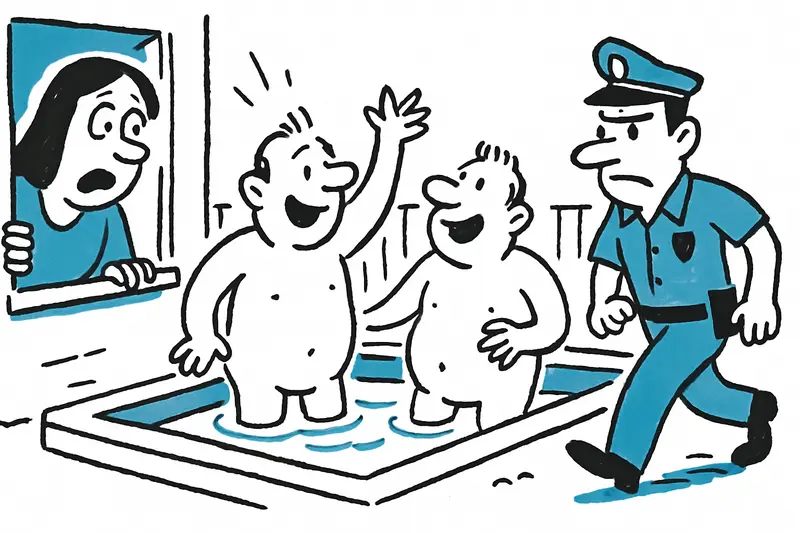
Two apparently drunk holidaymakers were splashing naked in the pool of a house in Llucmajor. The Policía Local is investigating trespassing. An incident that raises questions about safety, hosts' duties and the protection of residents.
Naked holidaymakers in the pool: When privacy suddenly becomes porous
It was an ordinary Thursday afternoon at 4:30 pm: the heat hung heavy, cicadas chirped in the pines, children's laughter echoed from the driveways — and then the crash: voices, splashing water, the siren of the Policía Local. A mother looked out of her kitchen window in Llucmajor and could hardly believe her eyes: two men were standing completely unclothed in their neighbor's pool. Thus begins a small story with great unease.
The central question: Who protects private spaces when guests cross the line?
At first glance the answer seems simple: the police. Officers from the Policía Local removed the two men from the water, took statements and opened an investigation for trespassing, as reported in Turistas desnudos en la piscina del vecino: la policía investiga en Llucmajor. But the matter has another layer: how safe are neighbors, families and children from such intrusions — and what responsibility do hosts, rental platforms and the local authorities bear?
The two suspects, later identified as 28-year-old German holidaymakers, appeared intoxicated and probably unannounced, according to witness statements, as recounted in Naked in the garden, drunk and grinning: Two arrests in Llucmajor raise questions. Whether additional charges for public indecency will follow remains open. For residents, the prevailing feeling is discomfort: the property boundary, the gate, the pool cover — suddenly as full of holes as an old sail.
Often overlooked: the role of hosts and rental agreements
In debates about party tourism the focus quickly falls on loud parties or vandalism. This incident sits within broader tensions around short-term private pool bookings, as discussed in From Designer Pouch to Chlorine Bath: How Hourly Pool Rentals Are Changing Everyday Life in Mallorca. But in many cases the problem starts one level down: in communication between host and guest. A clear house rules notice in the rental agreement, a short handover explaining permitted areas and times, as well as notes on alcohol rules can prevent many misunderstandings. Hosts who accommodate people in holiday homes are not just service providers — they are the first line of protection for the neighborhood.
There is also the language barrier: short information in Spanish, English and German is not a luxury but everyday life in Llucmajor. Practically speaking: a sign on the driveway reading "Private property — no entry" in several languages often works better than a verbal reprimand at three in the morning.
Underexposed: the responsibility of the neighborhood and municipal measures
Neighbors often take on informal control: a watchful eye, a message in the estate WhatsApp group, quick phone calls. But that requires commitment and cannot be the sole responsibility of residents. The municipality can improve matters: mandatory information sheets for holiday rentals, standardized fines for unauthorized entry and support for neighborhood networks would strengthen prevention.
Visibly practical measures are equally important: better locks on gates, pool alarms, motion detectors and, where appropriate, surveillance cameras at access points — always with respect for data protection. For families with small children, physical protective measures and lockable pool covers are no longer optional but a safety standard.
How residents should act in an emergency
If something like this happens, panic is not a good advisor. Useful steps: stay calm, take photos or a short video as evidence (without further violating anyone's privacy), note the license plate, describe the persons, call the police and gather witnesses. Better to call once too often — the officers will come and decide on the spot.
It is also important that those affected know their rights: trespassing is taken seriously in Spain. Complaints and fines are possible, and the police can issue immediate removal orders.
A short guide for hosts and neighbors
Our practical checklist: 1) Clear signage at the property in several languages; 2) A short house rules note at check-in; 3) Lockable gates and pool covers; 4) Share emergency contacts within the neighborhood; 5) Keep photos and case numbers if the police were involved; 6) If you suspect alcohol abuse, address guests early or cancel the booking.
These measures may sound bureaucratic, but they are simple steps against a feeling of insecurity that can quickly spread through a quiet street — among the pines and the distant tolling of a church bell.
Conclusion: The incident in Llucmajor is more than a curious anecdote. It is a wake-up call to hosts, rental platforms and municipal politics: privacy and safety in residential areas must be protected more proactively. For the neighborhood this means staying vigilant — and for guests, respecting the basic rules of living together.
We will keep following the story and report should the Policía Local release new details.
Frequently asked questions
What should I do if strangers enter my private pool area in Mallorca?
How can holiday home owners in Mallorca prevent guests from entering neighboring properties?
Are pool alarms and lockable covers worth having for family homes in Mallorca?
What are the usual signs that a holiday rental guest in Mallorca may be causing problems?
Why is trespassing taken seriously in Llucmajor and across Mallorca?
Should house rules for Mallorca holiday rentals be available in more than one language?
What are the best steps for neighbors in Mallorca if they see suspicious behaviour near a private home?
What practical safety measures do Mallorca homeowners use to protect pools and gates?
Similar News
Who Gets Left Out? Why Overbookings Will Hit Many Mallorca Travelers This Summer
On hot check-in days at Son Sant Joan, frustrated travelers pile up. New figures from Reclamador.es show that a large sh...
When the Handyman Came: How an Engagement Ring Disappeared in Mallorca and What It Says About Trust
During a repair in Andratx a highly personal engagement ring went missing — a case that calls not only for punishment bu...
How Burglars Test Fincas in Mallorca — and What You Can Do About It
The Spanish National Police warn of a simple but effective trick: small markings on doors reveal whether a finca is occu...
Palma doubles blue zone: What this means for residents, tourists and narrow streets
From 1 January 2027 Palma's ORA area will grow from around 12,000 to 24,000 spaces. Key question: Will the expansion bri...
Engagement ring disappears during repair: court upholds prison sentences for plumber and partner
During a heating repair in an apartment in Andratx an engraved engagement ring disappeared. After a trace to a pawnshop ...
More to explore
Discover more interesting content

Can Cap de Bou

Townhouse Lleo 72
