
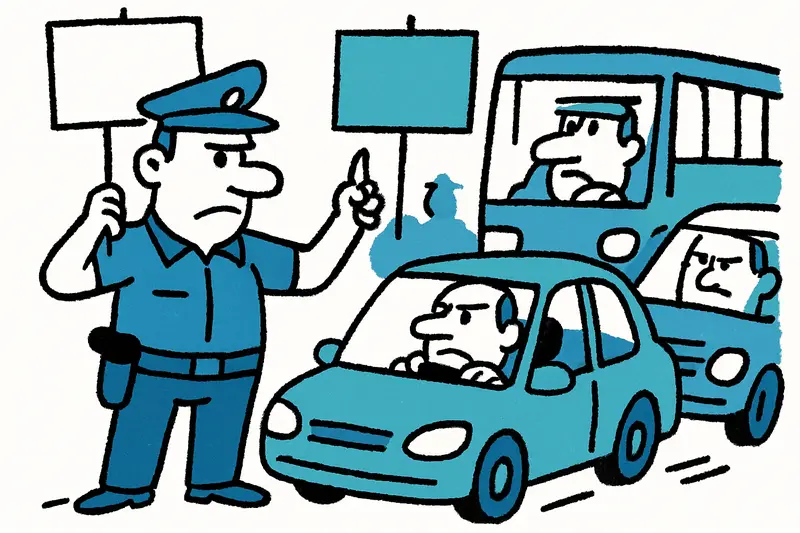
Local police demonstration paralyzes Palma: Who pays for the traffic jam?
Local police demonstration paralyzes Palma: Who pays for the traffic jam?
On Wednesday a protest march by the local police blocks key access routes in Palma. The Avenidas, the old town and several parking garages are affected. A reality check: what was missing in the planning, how are commuters and tourists coping — and which immediate solutions help?
Local police demonstration paralyzes Palma: Who pays for the traffic jam?
Key question: How can Palma protect both the right to protest and mobility at the same time — without the city getting stuck in between?
Midday in Palma: a cup clinks on a café table on Avinguda del Born, a bus horns in the distance, and the bells of Sa Seu hum above the noise. Today, Wednesday, this soundscape is different. A demonstration by the local police moves along central axes of the city. The Avenidas are affected, Avenida Alemania is closed to surface traffic, vehicles are diverted into the tunnel, and in the old town access roads such as Eusebio Estada from Francisco Sancho are no longer usable. The parking garages at Plaça d’Espanya and Comte Sallent report blocked exits. Similar disruptions have been detailed in Evening Road Closures in Palma: Between the Right to Protest and Traffic Chaos.
The right to demonstrate is indisputable. The question is whether the planning of this action showed enough consideration for everyday life and the economy. In the current situation three groups are hit particularly hard: commuters, shop owners in the old town and visitors with rental cars who can no longer enter or exit parking garages as usual. The result: detours, crowded side streets, confused tourists with suitcases in narrow lanes.
Critical analysis: there are signs of good intentions — EMT and TIB have announced alternative routes and detours — but that is not enough. Real-time information alone is no substitute for clear, visible diversions on site and coordinated temporary parking guidance systems. Many drivers only learn about the closures when they reach a blocked intersection. The consequence is traffic jams, risky U-turns and additional exhaust exposure in residential streets. Practical guidance for detours can be found in Detours in Palma: Self‑employed demonstration disrupts city center traffic – what to do?.
What is missing from the public debate: the perspective of truck drivers, care services and suppliers, who often do not have flexible time windows. There is no clear plan for how ambulances, waste collection and supply vehicles can be given priority passage. Also insufficiently considered are the roles of landlords and car rental companies, who today must give guests last-minute instructions and mostly unsatisfactory alternative routes. A related local case is covered in Who pays when the police direct drivers into a residents-only zone?.
An everyday scene: In front of a small fashion shop at Plaza de la Reina, two elderly women with shopping bags ask a taxi driver if he can take them to the hospital. The taxi driver shrugs; his regular route is blocked. In a side alley a delivery van tries to reverse while pedestrians step aside — the atmosphere nervous but not aggressive.
Concrete, immediately implementable solutions: 1) Mobile directional signs and temporary staff at key intersections so drivers are redirected early. 2) Temporary, free parking areas at the city outskirts with shuttle buses to the old town — signposted and supported by communication campaigns. 3) Prioritized passage rights for emergency and supply services, made visible through radio cooperation between organizers and emergency services. 4) A joint hotline and an easy-to-find info website where EMT/TIB, the town hall and parking garage operators offer live coordination. 5) Require rental car companies in advance to inform their drivers and customers by SMS and suggest alternative parking options.
A mid-term idea: For announced protests the city could offer a binding framework protocol that defines routes, time windows and critical supply axes. This would preserve the right to demonstrate without blindsiding residents and the local economy.
Conclusion: Protests are part of urban life. But they should not turn normal life in Palma into chaos. Organizers must think ahead: visible diversions, clear communication and protection for critical services. In the short term pragmatic measures like shuttle parking and mobile signage help. In the long term Palma needs binding rules so the city can breathe — and demonstrators can be heard.
Frequently asked questions
How badly can a demonstration affect traffic in Palma?
What should drivers do if roads in Palma are suddenly closed?
Can buses still run during a protest in Palma?
What should rental car drivers know before going into Palma center?
Is it still possible to reach Palma old town during a protest?
How should visitors in Palma plan for a day when there is a protest?
Who is most affected when traffic stops in Palma?
How can Palma handle protests without causing total traffic chaos?
Similar News

Four goals, heart-stopping moments, a message: Germania Mallorca takes three points in Consell — questions remain
The new German club on the island won its first away game in Consell 4:3. Celebration, a 4:0 lead, then a nervous finish...

Mueller continues expanding in Mallorca: Artà in 2026, Can Picafort in early summer 2027
The drugstore chain Mueller is opening two new stores in Mallorca: a 1,400 m² shop in Artà on 5 November 2026 and a bran...
The Painter Who Lived Mallorca: Franz Taussig and His Century-Old Secret
A hundred years ago a young Viennese arrived in El Terreno, sketched the island and called himself Francis Caron. Today ...

Airport dispute: Bridge, forecasts and the question of responsibility
A video by the Spanish transport minister has ignited the dispute over DORA figures, capacities and local governance pow...

The Painter Who Invented Himself: How a Young Viennese Drew Mallorca
A hundred years ago a 19-year-old draftsman arrived in El Terreno. His diary and sheets, long known under the pseudonym ...
More to explore
Discover more interesting content

Can Cap de Bou

Townhouse Lleo 72
