
Loud Music on the Bus, Knife in the Arm: What the Attack in Palma Reveals About Safety in Local Transit
Loud Music on the Bus, Knife in the Arm: What the Attack in Palma Reveals About Safety in Local Transit
A dispute over loud music on a city bus in central Palma escalated: a passenger was stabbed twice in the arm and the suspected attacker was arrested. A reality check: how safe are our buses really — and what is missing from the debate?
Loud Music on the Bus, Knife in the Arm: What the Attack in Palma Reveals About Safety in Local Transit
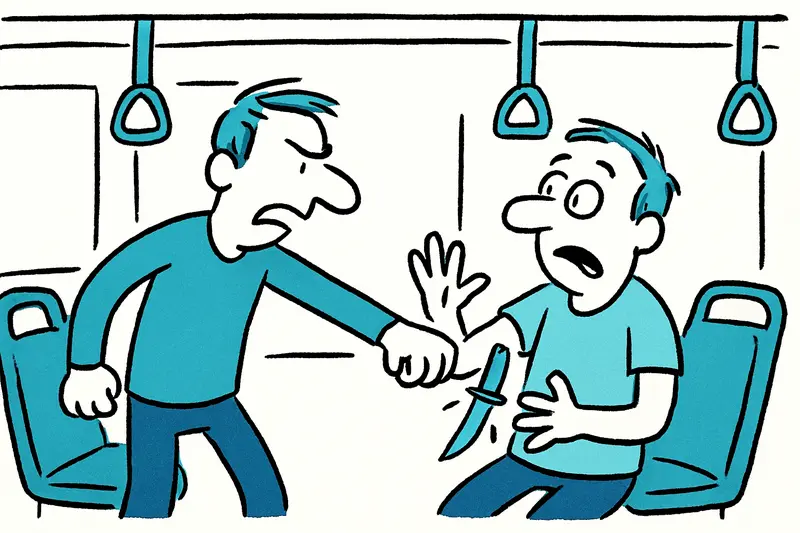
How could an argument over loud music on a city bus in Palma so quickly turn into a knife attack? This question hangs in the air as investigators from the National Police reconstruct the events and an injured passenger is treated in hospital. The facts are sparse but clear: on a Tuesday morning in the city center two men got into an ongoing dispute while the bus was running. The injured person reports being stabbed twice in the arm; the suspected attacker was arrested.
On the scene it sounds more banal than it was: a bus, a mobile phone, a playlist that was too loud — and suddenly chaos, screams, doors opening, people rushing to the stop. In Palma, between Passeig Mallorca and the Cathedral, EMT buses are part of everyday life, with the smell of diesel, the rattling of doors and the driver's announcements. That such a cut was made into the palpable calm of the morning ride shows: conflicts in public space have a high potential to escalate.
Critical Analysis: Patterns, Gaps, Risks
The case bears features we already know from other incidents: a minor trigger, rapid escalation, the presence of a sharp weapon and an attempted escape. Police later found the suspected weapon — evidence suggests it was hidden. Such scenarios indicate that the presence of sharp objects in everyday life is not isolated. Why is it so often possible for a verbal disagreement to turn into a dangerous bodily injury within minutes?
Initial gaps lie in prevention: bus drivers are not police officers; they are meant to transport people from A to B. Many drivers are alone in the cab, with a weak public-address volume that suffices for announcements but not to calm a tense situation. CCTV cameras on buses help with investigations but only deter to a limited extent. Even more important are clearer emergency protocols, easily accessible alarm buttons and better training for staff in dealing with aggressive passengers.
What Is Missing from the Public Debate
The discussion often remains superficial: who is behind the act? What nationality? Such questions polarize but distract from two fundamental points. First: violence in public spaces affects everyone — residents, commuters, employees. Second: there is a blind spot in aftercare for victims and in offers for de-escalation aimed at those at risk of committing violence. We talk about arrests, often not about immediate psychological care, witness support or prevention programs.
It is also rarely discussed how much joint responsibility municipal transport companies, public order services and the police must bear. Individual interventions are not enough; coordinated concepts are needed that act preventively and can intervene immediately.
Everyday Scene from Palma
Imagine the situation: it's half past seven, the sun already warm over the city, the streets full of delivery vans and students with backpacks. A queue of passengers is forming at a stop, two young people argue over headphones, an elderly woman boards, a man with shopping bags looks nervous. The bus drives off, the music is loud, volume rules are ignored and nobody says anything — until one word too many is spoken. Such small moments are everywhere in Palma; they are the fabric from which dangerous incidents are woven.
Concrete Solutions
1) Emergency and prevention plans for EMT buses: Every driver should have quick access to an alarm and location system that directly notifies the local police patrol or the public order service. Visible notices on the bus, such as behavioral rules and information about alarm options, can reduce aggressive behavior.
2) De-escalation training and more staff: Drivers and inspectors need regular training in verbal de-escalation and simple technical aids — for example, a secondary communication line to the operations center. Relief through trained staff or accompanying personnel on problematic routes during peak times could make a big difference.
3) Visibility of order forces for prevention: Greater presence of police or municipal security services at busy stops reduces the threshold for violence. Not as a constant paramilitary presence, but targeted and coordinated on sensitive routes.
4) Support for victims and witnesses: Quick medical care is important — as is structured support through victim services, legal advice and psychosocial offers. This prevents injured people from being left alone and witnesses from going silent.
5) Social prevention measures: Violence prevention starts locally. Community centers, low-threshold services for people in precarious situations and conflict resolution programs can reduce risk in the long term.
Key Takeaway
The attack on a Palma bus is not an isolated event but a warning signal. It shows how quickly everyday situations can tip over when technical, personnel and social layers of protection are missing. The response must not remain wishful thinking: better equipment on buses, targeted training, rapid help for victims and coordinated presence of security forces. Then the next dispute may again be only a dispute — loud, annoying, but without blood on clothing.
Investigations are ongoing. The National Police have arrested a man and the victim is being treated. For the rest of the city this means: listen, act and adjust — so Palma remains a place where people can ride the bus without fear.
Frequently asked questions
How are safety measures on Palma's EMT buses designed to prevent violence?
What steps can Palma take to prevent public transit violence in the future?
What should a passenger do if they encounter aggressive behavior on a Palma bus?
Why can a minor trigger like loud music on a bus lead to violence in Palma?
How is victim and witness support handled after transit violence in Palma?
Will there be more police or security presence at Palma bus stops?
What concrete measures are suggested to improve Palma bus safety?
Is the Palma bus incident a warning about public transit safety in the city?
Similar News
From Deposit to Arson: How a Dispute over Jet Skis in El Molinar Escalated
After a nighttime fire in El Molinar a detainee is in pretrial detention. How could a conflict between a rental company ...

Lying Instead of Standing: How Prone Paddling Is Conquering Mallorca's Waters
On your belly across the sea — prone paddling is bringing fresh energy to Mallorca's watersports. Where to start, which ...
Housing Shortage in Mallorca: Assessment, Questions, Proposals
Over 2,000 new housing units through repurposing and special rules – sounds like a success. But do they really help peop...
Garbage, Stench, Fire Risk: What Is Really Going Wrong in Son Bauló
An apartment ensemble illegally built for years near Son Bauló is falling into disrepair, largely occupied and creating ...

Legat on Mallorca: Between Football Dreams and Political Alarm
The former pro is intervening in German politics from Mallorca – loud, emotional, without much detail. What does that br...
More to explore
Discover more interesting content

Boat Tour with BBQ along Es Trenc Beach

Private transfer from Mallorca Airport (PMI) to Pollensa
