
Reality Check in Port de Soller: What Does a Humanoid Robot's Stroll Really Mean?
Reality Check in Port de Soller: What Does a Humanoid Robot's Stroll Really Mean?
At the weekend a humanoid robot caused a stir on the promenade of Port de Soller. Between amazement and unease: what do such scenes reveal about technology, safety and everyday life on the island?
Reality Check in Port de Soller: What Does a Humanoid Robot's Stroll Really Mean?
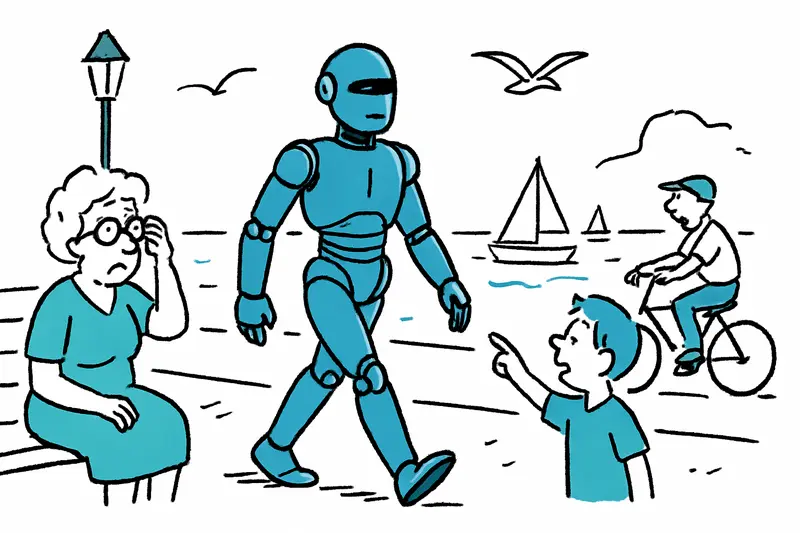
Last Saturday evening, the sun still hung warm over the harbor, the Esplanaça smelled of fresh coffee and grilled fish, a few seagulls circled above the colorful boats – and in the middle of it all a humanoid robot strolled along the promenade. Passersby paused, flip‑flops clicked, children’s voices, phones went up: short scenes that could be from a tech film, but happened for real in Mallorca.
Key question
What does the presence of a self‑driving, humanoid robot in a busy coastal spot like Port de Soller say about our preparedness for new technology in public spaces?
Critical analysis
The footage shows: the robot moved in a controlled way, was apparently accompanied, and there was no incident. Still, the feeling remains that something is happening for which the island has few rules and even less routine. Technology itself is not the challenge; the interfaces are: how is supervision arranged? Who is responsible if something goes wrong – for example a fall, a collision with a bicycle or a technical malfunction? What data are collected when passersby are filmed, and how long are these recordings kept (see Digital Eyes on Mallorca's Beaches: Protection or Surveillance?)? Such questions cannot be answered by a single walk, but they are matters of public interest.
What is missing from the public debate
The conversation about “fascination versus fear” is only the tip of the iceberg. Rarely is there a concrete discussion about mandatory labeling for demonstration robots, liability rules for operators, data protection for outdoor recordings (see Sensors on Mallorca's Beaches: Help for Self-Regulation or Creeping Surveillance?), technical reliability standards and emergency shutdowns, and the role of municipalities in permitting. The perspective of workers is also missing: are there plans for how robots could complement or replace jobs in tourist areas? Without these debates, the impression remains that technology simply “happens” – and that is the wrong mode for a live island community.
A scene from everyday life
Imagine: at Café Es Moli, tables close together, waiters call orders across the street, an elderly woman sits on the bench by the harbor, pushes her glasses up and asks aloud, “Is that real?” A boy, probably a local, nudges his mother and points at the robot; a few cyclists brake briefly. This is not a lab, this is everyday life – and that is precisely what makes it complicated. On normal streets and promenades there is no staff routinely dealing with such machines.
Concrete solutions
Pragmatic rules are needed that can take effect quickly: 1) Short term: local regulations requiring demonstration robots to display visible identification, have a responsible contact person on site and be registerable at short notice. 2) Mid term: introduction of simple liability obligations for operators, plus basic technical standards (emergency stop, obstacle detection, audible and visible signals). 3) Data protection: transparent notices about whether and which cameras are active, and retention periods for recordings containing private individuals. 4) Communication: municipalities should provide information leaflets and a hotline for reports. 5) Participation: tests and pilot projects only after prior public information and with feedback rounds so residents can share their experiences.
Why these proposals are practical here
Port de Soller is a typical example: a narrow promenade, many tourists (see Sóller in Autumn: Everyday Life Between Tramuntana Idyll and Visitor Surge), pedestrians, bicycle traffic, small businesses. Rules that work here can be transferred to other holiday destinations. Visible identification reduces uncertainty. Liability protects victims and provides clarity for operators. And citizen participation prevents technology from being introduced over people’s heads.
Pointed conclusion
The robot on the promenade is more than a viral video – it is a wake‑up call. Not against technology, but for rules that help us as an island community deal with it sensibly. If we react before the next incident happens, Port de Soller remains a place where everyday life continues as usual: with the smell of coffee, the clatter of boats and yes, perhaps the occasional futuristic surprise – as long as it is clear who controls it and who is responsible.
Frequently asked questions
When is the best time to visit Mallorca for a beach holiday?
Are Mallorca's beaches suitable for families with children?
What should I pack for a trip to Mallorca?
Is it easy to get around Mallorca without a car?
What are some must-see natural spots in Mallorca?
What water activities are popular in Mallorca?
How is Mallorca's weather and sea temperature throughout the year?
Are there easy day trips from Palma that showcase Mallorca’s highlights?
Similar News
From Deposit to Arson: How a Dispute over Jet Skis in El Molinar Escalated
After a nighttime fire in El Molinar a detainee is in pretrial detention. How could a conflict between a rental company ...

Lying Instead of Standing: How Prone Paddling Is Conquering Mallorca's Waters
On your belly across the sea — prone paddling is bringing fresh energy to Mallorca's watersports. Where to start, which ...
Housing Shortage in Mallorca: Assessment, Questions, Proposals
Over 2,000 new housing units through repurposing and special rules – sounds like a success. But do they really help peop...
Garbage, Stench, Fire Risk: What Is Really Going Wrong in Son Bauló
An apartment ensemble illegally built for years near Son Bauló is falling into disrepair, largely occupied and creating ...

Legat on Mallorca: Between Football Dreams and Political Alarm
The former pro is intervening in German politics from Mallorca – loud, emotional, without much detail. What does that br...
More to explore
Discover more interesting content

Boat Tour with BBQ along Es Trenc Beach

Private transfer from Mallorca Airport (PMI) to Pollensa
