
Luggage chaos at Balearic airports: Why complaints are rising so sharply in 2026
This year an unusually high number of travelers at the Balearic airports report damaged, delayed or missing baggage. The General Directorate for Consumer Protection records significant increases – time for a reality check and concrete tips for passengers.
Luggage chaos at Balearic airports: Why complaints are rising so sharply in 2026
Key question: What are the causes of the sharp increase in baggage complaints at Balearic airports – and what concrete measures can be taken locally?
At the baggage belt in Son Sant Joan you can hear more sighing travelers than rolling suitcase wheels on some days. People stand there, pulling at zippers, taking photos of dents and tears. The regional government, through its General Directorate for Consumer Protection, has registered: by August 2026, complaints about luggage accounted for 130 of a total of 250 submissions – around 52 percent. With regard to damage, the number this year is already significantly higher than in 2025: 50 cases up to August versus 37 for the entire previous year; 2024 also had 37 and 2023 had 57. These are hard figures that don’t match any sunny beach story.
Short-term, the number of delayed baggage deliveries is also increasing: 22 cases up to August 2026 compared with 20 in all of 2025; earlier the figures were even higher (35 in 2024, 42 in 2023). Complaints about hand luggage fees point to another irritation: 26 claims up to August 2026 compared with 66 in 2025. And lost suitcases? By August consumers reported 11 lost suitcases, versus 23 in 2025.
Critical analysis
The numbers alone indicate: this is not just a single outlier month, but a pattern. Possible reasons visible in everyday operations include: more flights and tight connection times, staff turnover and outsourcing among ground handlers, differing baggage rules across airlines and inconsistent handling of fragile contents. Technical causes also play a role: baggage tracking systems have not been modernized across the board, RFID tags are not mandatory, and mechanical stress can occur quickly when loading in cramped halls.
What is often missing in public debate is the operational day-to-day on the ground: on the aprons and in storage halls staff under time pressure often handle hundreds of pieces of luggage per hour. On hot August days in Palma – asphalt glowing, air-conditioning struggling with hot air – these are not ideal conditions for careful handling. And supply chains are long: an airline contracts handling to service provider X, service provider X subcontracts parts to local firms. Who is liable in the end is legally complicated and frustrating for those affected.
What is missing from the public discourse?
First: Transparent data from airports and ground handling companies on the causes of damage are largely missing. Second: A clear presentation of how many cases actually resulted in compensation. Third: Practical rules for travelers that go beyond tips like "take photos." Fourth: mandatory labeling of particularly fragile contents and binding minimum standards for baggage tracking.
Everyday scene in Mallorca
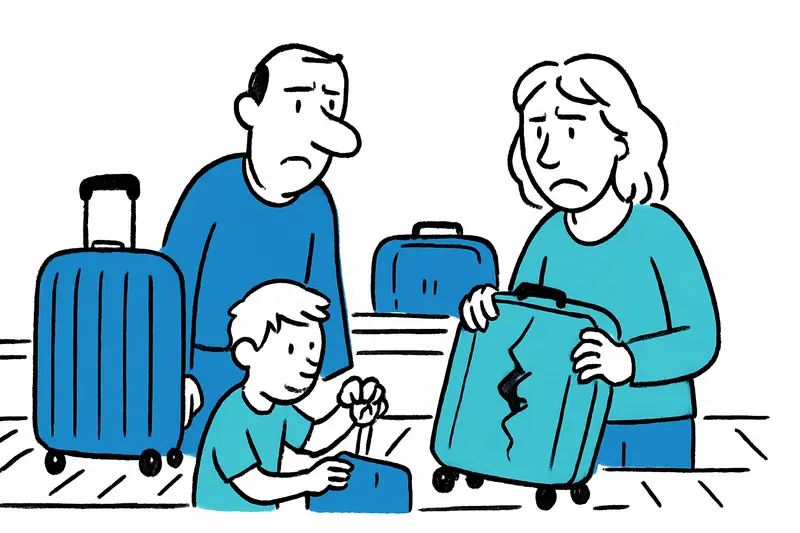
Imagine: it's early summer warm, the buses to Can Pastilla arrive full, holidaymakers with sun hats push trolleys up the escalator. A young family waits at the belt that has just stopped; a child plays with a luggage tag, an older woman holds up a damaged zippered compartment. Such scenes repeat on many days, and the resignation about it is growing.
Concrete solutions
For authorities and airports:
- More transparency: Regular, publicly accessible reports on the number and types of baggage damage and losses per month.
- Audits of ground handlers: Spot checks and stress tests, especially during peak times.
- Technical upgrades: Promotion of RFID or similar trackers at gates and during transfers; improved interfaces between airlines and airports.
For airlines and handling companies:
- Unified standards: Clear SOPs (standard operating procedures) for fragile goods, training and minimum staffing for peak periods.
- Shorter liability chains: Structure contracts so responsibilities do not disappear into a subcontractor maze.
For travelers:
- Act immediately: Report damage at the airport in writing (Property Irregularity Report), take photos, keep receipts for damaged contents.
- Keep valuables in carry-on: Never put electronics, expensive cosmetics or medications in checked baggage.
- Use trackers: Small Bluetooth or GPS trackers in the suitcase can help locate it more quickly.
Concise conclusion
The numbers from the General Directorate for Consumer Protection show: the problem is real and tangible. In Mallorca this means not only annoying hours at the baggage claim but often financial losses and ruined holiday plans. If airports, airlines and authorities do not take concrete steps now – with better data, clear responsibilities and technical solutions – many travelers will be left to deal with their losses alone. And anyone who regularly watches the arrivals area in Palma senses: travelers' patience at the end of the escalator is running out.
Consequence: Anyone flying now should document, prepare and know their rights. And locally those responsible must show they can turn numbers into real improvements.
Frequently asked questions
Why are luggage complaints rising at Mallorca's Balearic airports in 2026?
What concrete measures are being discussed to reduce baggage damage at Mallorca airports like Son Sant Joan?
How should travelers report damaged baggage and protect their rights in Mallorca?
What practical tips can help minimize luggage damage when visiting Mallorca?
Does Mallorca’s heat and peak-season conditions affect baggage handling?
How could RFID tracking help reduce lost or damaged luggage at Mallorca airports?
What data exists publicly about baggage incidents in Mallorca, and what is missing from the discussion?
What should airlines and ground handlers in Mallorca do to improve baggage handling during peak season?
Similar News

Cala Varques: After another accident – which questions remain open?
An eleven-year-old fell while climbing in the remote bay of Cala Varques and suffered a deep laceration. The response ra...

Why Children at Mallorca's Pools Become Endangered in Seconds – A Reality Check After Two Emergencies
Two nearly simultaneous swimming accidents in the Balearics – a four-year-old in Port de Pollença and a toddler in Ibiza...

Nine Months of Construction at Palma Airport: Who Pays the Price — Travelers or the Environment?
Beneath the apron lies a deteriorated sewer pipeline of about three kilometres, contract sum €1.3 million (excluding tax...

Workplace Becomes Crisis Site: Woman in Cala Major Collapses and Dies – What’s Missing in an Emergency?
A 61-year-old woman collapsed in Cala Major in the afternoon; resuscitation attempts lasted nearly an hour. The circumst...

When the Goat Stole the Chips: Why Mallorca's Wild Goats Are Becoming a Problem
A wild goat strolls through Cala Sant Vicenç among beach bags and coolers, pulls a bag of chips from a bag and nibbles o...
More to explore
Discover more interesting content

Boat Tour with BBQ along Es Trenc Beach

Private transfer from Mallorca Airport (PMI) to Pollensa
