
Luxury in Mallorca: Why a 13 Percent Tax Doesn't Stop Buyers — and What That Means for Us
Luxury in Mallorca: Why a 13 Percent Tax Doesn't Stop Buyers — and What That Means for Us
The Balearic Islands charge a top tax rate on purchases of expensive homes — yet international buyers remain. How resilient is this market, who benefits, and who pays the price in town and village?
Luxury in Mallorca: Why a 13 Percent Tax Doesn't Stop Buyers — and What That Means for Us
Guiding question: Why do wealthy buyers continue bargain-hunting even though the property transfer tax here is among the highest in Spain?
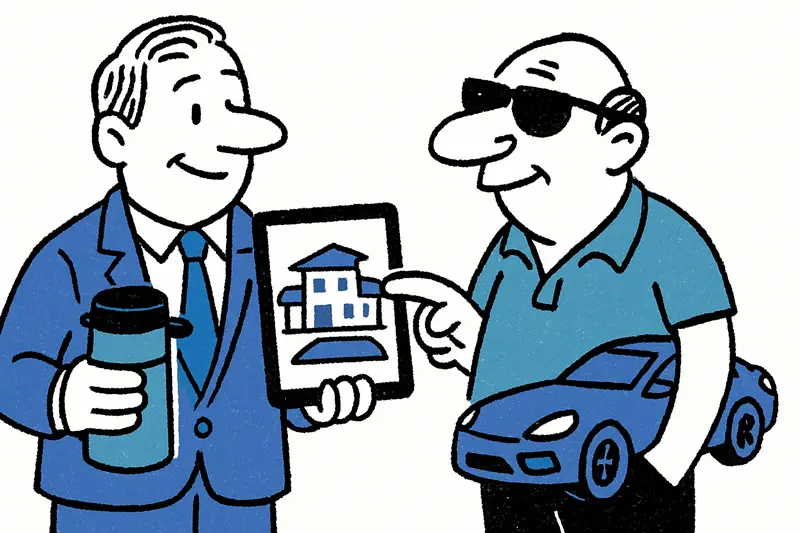
Early in the morning on Passeig Mallorca, before the cafés are fully open, real estate agents already stand on the pavement with thermoses and tablets. In the shop windows there are listings for white villas, sea views and prices many locals only know from television. Alongside the clink of espresso you hear the city's hum, occasional birdsong from a palm tree — and the buzzing debate: Is taxation enough to slow the buying frenzy?
The fact is: the Balearic Islands levy a top property transfer tax of 13 percent for particularly expensive real estate. On the island this rate applies to houses above two million euros; between one and two million euros a twelve percent rate applies. Catalonia introduced a similar top rate and it is already due there from one million euros. Despite this burden, wealthy buyers continue to enter the market — purchase figures show a high share of foreign buyers: in the last quarter around 31.5 percent of purchases were by non-locals, noticeably more than in regions like Valencia with about 27 percent. In the province of Alicante the share was even above 40 percent.
From an economic policy perspective the government explains that this tax brings additional revenue to offset losses elsewhere (Balearic Islands in the Price Squeeze: Who Can Still Afford Mallorca?). The finance department under Antoni Costa views the income as compensation for concessions granted to taxpayers in other areas, for example in rules on wealth or inheritance taxes. The Balearic government under Marga Prohens has adopted the high rate and has not altered it so far. At the same time, additional measures are being considered, such as extending exemptions for buyers under 30 to a higher price threshold of 380,000 euros.
Critical analysis: numbers alone don't tell the whole story. That the super-rich buy despite 13 percent doesn't mean the tax is ineffective. Rather, it changes the nature of the deals. Large developers, foundations and investors use complex structures, often with international advice, to optimize burdens. A buyer with a multi-country wallet evaluates Mallorca not only by tax percentage but by infrastructure, When luxury addresses come into focus – Son Vida and Andratx on Spain's top list, discretion and transport connections. Those with money calculate differently — for them a few percentage points on a purchase price of several million are often bearable.
What is missing in public discourse is the perspective of locals: How is the housing market shifting for people who work here? Where do vacancies appear, in which neighborhoods do long-term rental relationships disappear, as seen in The 60-percent villages: How foreign buyers are changing Mallorca's neighborhoods? The raw figure “31.5 percent foreign buyers” sounds stark but says nothing about the type of purchases; recent coverage such as Fewer Foreign Buyers — Mallorca between Price Boom and a Breather highlights how the picture is more complex. Are houses bought as second homes, used as income properties via short-term rentals, or inhabited long-term? Such differences have direct consequences for schools, bus lines and neighborhood life.
An everyday scene near Palma illustrates the problem: In Portals Nous a convoy of luxury cars parks early; on the way to work a teacher at the school across takes two bus lines that now run less often because routes have been adjusted. At the market on Plaça Major vendors discuss declining regular customers — because holiday apartments pull the neighborhood apart. These small shifts add up.
Concrete solutions could be formulated as follows: First, more transparency in ownership structures. If beneficiaries are more clearly identifiable, targeted measures such as second-home levies can be more effective. Second, a two-track tax policy: higher rates for speculative forms aimed at short-term rentals, lower thresholds for permanent occupation by local workers. Third, earmark revenue from luxury taxation for affordable housing and transport services — visible, local and controlled. Fourth, consider temporary purchase restrictions in especially pressured municipalities instead of blanket bans; and fifth, expand complementary measures for young buyers so that recognition of exceptions is not mere symbolic politics.
Some of these ideas are politically contested, but they can be thought through more practically than the simple narrative “raise the tax = problem solved.” Those who live in Mallorca see the divide not abstractly but on the street corner: a villa with a security fence next to a house whose residents have paid for bread and electricity for generations. That is not a postcard holiday motif.
Conclusion: The top rate of 13 percent does not act as a dam against international demand; it shifts power and resources — often in favor of large buyer structures. Anyone aiming for effective policy must combine several instruments: transparency, targeted levies, investment in infrastructure and flexible rules for young locals. Without such measures Mallorca risks losing its social fabric in the image of the luxury property. That would cost the island more than any tax surcharge.
Frequently asked questions
Does Mallorca’s 13% property tax stop wealthy buyers from purchasing luxury homes?
How much property transfer tax do buyers pay in Mallorca for expensive homes?
Why do foreign buyers keep buying property in Mallorca?
What does luxury property demand in Mallorca mean for local residents?
Is Palma’s Passeig Mallorca still a major area for luxury real estate?
Why are Son Vida and Andratx often mentioned in Mallorca property news?
Are there tax breaks or exemptions for young property buyers in Mallorca?
What measures could help cool Mallorca’s overheated housing market?
Similar News
Injured captain, big plans: Germania Mallorca before the away match in Consell
The newly founded FC Germania Mallorca travels to Consell on Saturday. Captain Bastian Müller is out injured, but coach ...
Palma, Palma de Mallorca, Palma‑Mallorca: What is it really about?
The debate over the city's name is more than grammar: it concerns identity, law and branding policy. A sober reality che...
Warning to Bathers: Nipping Fish in Cala Major and Other Coves — a Reality Check
In Cala Major and several beaches around Mallorca, bathers report painful “nips”. Who are the animals, why are they gett...

Rental Car Theft in El Arenal: What This Incident Reveals About Our Gaps
A teenager steals a running rental car in El Arenal, flees on foot, climbs over walls and is caught by the Guardia Civil...

Red Rope in Palma's Library: What Helps Against Selfie Tourism — and What's Missing
Palma's city library cordoned off an area with a red rope to keep selfie tourism away from reading and working activitie...
More to explore
Discover more interesting content

Can Cap de Bou

Townhouse Lleo 72
