
Ma-4030 under pressure: Ten injured in 24 hours – who will protect the road?
Ma-4030 under pressure: Ten injured in 24 hours – who will protect the road?
On the Ma-4030 between Sant Llorenç and Son Servera there were two serious crashes within 24 hours, injuring ten people. Key question: Is the road becoming a new accident hotspot — and who will act?
Ma-4030 under pressure: Ten injured in 24 hours – who will protect the road?
Key question: Will the Ma-4030 country road between Sant Llorenç and Son Servera soon be officially classified as a danger spot — and who will take responsibility before something worse happens?
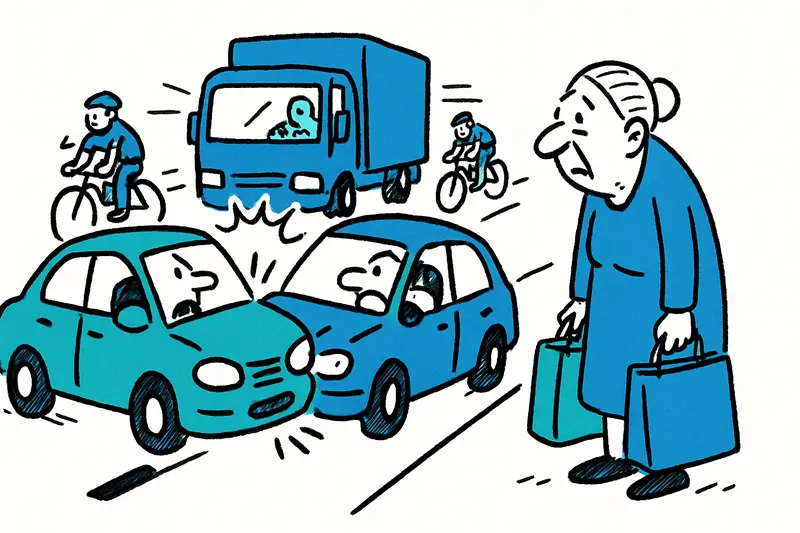
Within a single day this short stretch saw two serious collisions: on Saturday at around 11:30 a.m. there was a head-on crash at about kilometre 3, in which an elderly couple and a roughly 40-year-old driver were injured; one car overturned and came to rest across the carriageway. Almost 19 hours earlier a truck and four cars collided, leaving seven people with minor injuries. In total ten injured, one of them seriously.
The facts are clear and the mood in the villages is tense. There have been similar head-on collisions on other island roads, including Head-on Crash on the Ma-11: Three Injured — and the Uncomfortable Question of Greater Safety, MA-10 under scrutiny: Head-on collision between intercity bus and delivery truck near Esporles, and a serious bus collision near Porto Cristo reported as Serious accident near Porto Cristo: Head-on collision on the Ma-4010 – several tourists injured. At the weekly market in Sant Llorenç the word "Punto Negro" is heard more often now. Market sellers who set up their stalls in the morning talk about more metal, more noise and more frayed nerves on the road: buses and delivery vans, tourists driving unfamiliar routes, cycling groups, farmers with tractors. Added to this are the detours since work has been carried out on the nearby storm channel. What was intended as a temporary measure has made the Ma-4030 more visible in the flow of traffic.
Critical analysis: the accidents have several causes that come together. The road is a typical single-lane rural link with two-way traffic, narrow shoulders and stretches without guardrails. When traffic volumes increase due to detours, the risk multiplies. There are also well-known behavioural factors: excessive speed in some sections, risky overtaking maneuvers and the presence of cyclists sharing the same space. A truck involved in the series of accidents underlines that heavy vehicles further burden an already narrow road.
What is often underrepresented in public debate: first, the role of the road layout itself — poor sightlines, a lack of pull-outs and narrow side strips play a technical role that influences speed and driving behaviour. Second, the planning of the detours: are they routed so that local side roads like the Ma-4030 are not overloaded? Third, there is a lack of transparent figures and rapid communication about how long additional traffic is expected and which temporary safety measures apply.
A scene from everyday life: on a hot morning an elderly woman stands on the corner in Son Servera with her shopping bags beside her. Cars roar past, some honk because a cyclist appears around a bend. The woman looks worried at the road — she consciously takes a longer route because the Ma-4030 "seems dangerous again today." Such observations are not isolated; they show how uncertainty creeps into daily life.
Concrete solutions, short- and medium-term:
Short-term: temporary speed reduction to 60–70 km/h, especially during the day; mobile speed checks and increased presence of local police; clear, highly visible detour signs and digital information points for drivers; temporary speed bumps at the most dangerous sections; provisional guardrails or guide posts at spots with frequent run-offs.
Medium-term: structural measures such as safe pull-outs, widened shoulders and continuous guardrails where vehicles otherwise slide into ditches; separate, marked cycle paths or safe side routes for cycling groups; review of traffic distribution in construction planning so that residential roads are not permanently used as detour routes; evaluation by the Consell de Mallorca and prioritisation of the Ma-4030 in regional road programmes.
Who pays? Responsibility is distributed: the road authority, the site manager for the storm channel works, municipal councils and the island administration must coordinate. Short-term measures can usually be implemented with available resources; more complex reconstructions require planning and financing — this must now be put on the agenda.
Conclusion: the recent accidents are not a coincidence but a warning signal. So far there have been no fatalities; that is fortunate and should not lead to a lack of action. If Sant Llorenç and Son Servera are not to become trapped in a waiting loop, concrete steps are needed now: visible traffic management, targeted police checks and structural upgrades to the Ma-4030. Otherwise the word "Punto Negro" will soon become a sad reality.
Frequently asked questions
Why is the Ma-4030 between Sant Llorenç and Son Servera considered dangerous?
What should drivers know when using Mallorca’s rural roads during detours and roadworks?
What is the best way to drive safely on the Ma-4030 in Mallorca?
Are cyclists safe on the road between Sant Llorenç and Son Servera?
What changes would make the Ma-4030 safer in Mallorca?
Who is responsible for road safety on the Ma-4030 in Mallorca?
Why are locals in Sant Llorenç worried about the Ma-4030?
What should I expect when driving near Son Servera if there are traffic detours in Mallorca?
Similar News

Nine-year-old rescued after cliff fall at Cala Murada — How safe are Mallorca's coastal paths?
A boy fell roughly five meters down the rocks near Cala Murada. The dusk rescue was elaborate; a helper also had to be r...

How safe are tourists in the luxury marinas? After arrests: a reality check
The Guardia Civil arrested two men in Calvià who are suspected of stealing luxury watches in Port d'Andratx and Puerto P...

Palma Chases Wealthy US Tourists — The Key Question: Who Should the City Actually Serve?
The city is investing more than €200,000 to attract high-paying visitors in several US cities. A good idea — but what is...

Enough swimming: Why Port de Pollenca is louder than the sea
More than 200 people formed a human chain in Port de Pollenca — not only as a protest but as a wake-up call. Guiding que...
Mysterious disappearance in Alcúdia: Where is 24-year-old Lisa B.?
Since August 3 there has been no trace of 24-year-old German Lisa B. The family has traveled to Mallorca and urgently re...
More to explore
Discover more interesting content

Boat Tour with BBQ along Es Trenc Beach
Private transfer from Mallorca Airport (PMI) to Pollensa
