
Safety Ranking 2025: What the Placements Really Mean for Mallorca Travelers
An international ranking counts several airlines that regularly fly to Mallorca among the safest in the world. What the numbers hide — and what travelers and Palma Airport should really pay attention to.
More than a ranking position: How safe is flying to and from Mallorca?
When in the morning at Palma Airport the aprons still carry the night's dew, the loudspeakers make the usual announcements in four languages and ground staff in reflective vests sort suitcases, flying here feels like a well-oiled routine. A recent ranking showing several airlines that fly to Mallorca among the world's safest has now placed several of the frequently operating airlines here among the world's top 15. The news is reassuring — but it also raises questions: Does such a ranking really say anything about our daily connections between Palma, Berlin or Munich?
The central question: rating vs. everyday experience
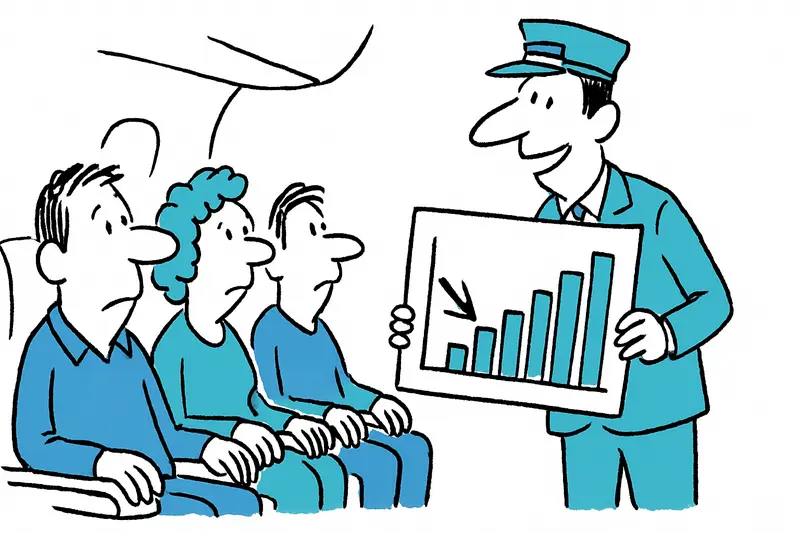
The study underlying the ranking combines technical incidents, fleet age structure, operator practices and similar indicators. In theory 100 points are achievable. But a high score does not automatically reflect the everyday experience at the gate. Hearing the steady hum of the engines, seeing the crew on the walk-around and smelling the early coffee from the airport kiosk — that calms more than a score. Still: rankings help build trust. When EasyJet or Lufthansa appear on the list, commuters breathe a little easier. But: which data remain in the fog?
Less noticed is often how seasonal routines affect Mallorca. In summer the island brings an increase in flights, in winter aircraft and crews are deployed differently. A carrier that performs very well on an annual average can, in a seasonally driven region like Mallorca, suddenly face different challenges: shorter turnaround times, wet-leased aircraft with a different maintenance history or external ground and catering service providers that alter operations. All of this influences safety practice without leaving direct traces visible in the ranking.
What rankings fall short of
First: subsidiary operators and codeshares. A well-known brand can operate a plane of a subsidiary or a wet-lease partner — and maintenance, crew standards or operating practices may differ. Second: local infrastructure. Palma has good facilities, but also days with strong Tramuntana winds, occasional handling delays and challenges with night operations. Third: human factors. Crew rotation and working hours are hard to measure in open data, but they significantly affect daily safety.
These aspects often fade into the background in a pure points list. That is why it is important to see rankings as one piece of the puzzle, not as the sole proof of truth.
Concrete opportunities and approaches for Mallorca
How can authorities, airport operators, airlines and travelers benefit concretely? First: more transparency. Airlines could clearly indicate on their Mallorca routes whether the aircraft is operated by a subsidiary or wet-leased. From the airport side, regular monitoring of ground and catering service providers would be worthwhile. A quality label for local ground handling — verifiable and visible at the terminal — would create trust.
For Mallorca as a destination, partnerships are promising: training for local ground crews, joint disaster scenarios with the Guardia Civil, airport police and airlines or investments in weather-proof procedures for Tramuntana days. It costs, but pays off in the long run — fewer delays, better passenger satisfaction and a real gain in safety.
Practical tips for travelers
What can passengers do? A quick look at rankings helps, supplemented by information on fleet structure (which aircraft type, age), details about the operating company and punctuality statistics. Those who value maximum routine choose the earliest connections possible: in the mornings technical faults and air traffic congestion are statistically rarer. When standing at the gate, look at the ground staff, listen to the crew's announcements and ask politely if something seems unclear. A bit of attentiveness costs nothing and is very reassuring.
In the end, a realistic conclusion remains: a good ranking is reassuring and useful — but it does not replace practical experience on the ground. In Mallorca, between almond trees and the marina, the combination of data, local will to check and the calming routine sound of starting turbines helps most to arrive safely.
Frequently asked questions
Are flights to Mallorca safe in 2025?
What do airline safety rankings actually tell Mallorca travelers?
Is Palma Airport considered a safe airport to fly through?
Do the safest airlines for Mallorca routes also use the same crews and aircraft every time?
Does summer make flights to Mallorca less safe?
What can Mallorca travelers check before booking a flight?
How do strong Tramuntana winds affect flights in Mallorca?
What should I look for at Palma Airport if I want peace of mind before flying?
Similar News

Release after bloody attack in Palma: Why the court's decision raises questions
An 18-year-old who allegedly inflicted a serious neck injury on a man at Plaza Gomila using a wristwatch wrapped around ...
Kidnappings in Inca: Three young men forced into car trunks and abused in the forest – a reality check
In Inca, three 18-year-old men were forced into car trunks by masked assailants at the Plaça des Bestiar, taken to a for...
Spreading Massification: The Brake That Still Has Much Work to Do
Marga Prohens announces limits on volume tourism. The measures sound harsh — but are they enough to save everyday life, ...

Through the Keyhole onto the Party Yacht: How Daniela Katzenberger Is Planning Her 40th on Mallorca
Daniela Katzenberger turns 40 and wants to celebrate it on the island — likely with a boat, cake and her mother. A relax...
By Boat Instead of the Road: Palma's Water Bus — a Reality Check
The 'Bus Nàutic' launches in two stages — but questions remain over interim operations, fares and environmental requirem...
More to explore
Discover more interesting content

Can Cap de Bou

Townhouse Lleo 72
