
How Mallorca Feels in February — Almond Blossom, Markets and Hot Soups
Those who experience Mallorca in February encounter a quiet island: almond trees in bloom, peaceful streets and authentic cuisine. A walk through villages, a plate of calçots and the scent of Sopa Mallorquí reveal how close everyday life and landscape are here.
How Mallorca Feels in February — Almond Blossom, Markets and Hot Soups
Why the cool season reveals a different, very secret side of the island
If you leave the Passeig or Born promenade on a clear February morning and cross the narrow streets toward the old town, you notice immediately: the island breathes differently. The constant roar of tourist buses is missing; instead dishes clatter in small bars, a delivery van brings fresh vegetables to the Mercat de l'Olivar, and the wind carries a fine, sweet-almond scent over the roofs.
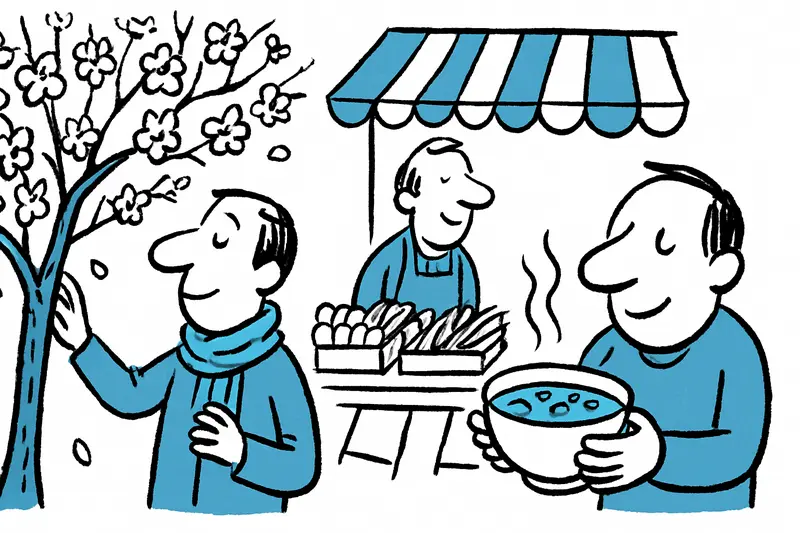
The almond blossom is not just a pretty photo motif; it changes the land. Especially in the east and the interior of the island, around Es Capdellà, the Galatzó, Puigpunyent or Peguera, fields and avenues suddenly brighten — pink and white mix with the blue sky. Early risers encounter mist in the valleys and farmers clearing leaves from their paths. The Serra de Tramuntana appears clear; the view is unusually far.
On February 2nd Son Servera fills its small Fira for the almond blossom. Not an overloaded fair, but a village meeting: stalls with honey, cheese, almond pastries and crafts, conversations in Mallorquí, a glass of local Moscatel as a greeting. The celebration feels made for locals — that's exactly the charm; events like this are akin to Autumn Festivals in Mallorca: Sweets in Esporles, Botifarró in Sant Joan, Crafts in Alaró. You can watch how harvesting was done in the past without being pressured by souvenir sellers.
And the food at this time of year? Heartier, rustier. The menu now features dishes that warm: Sopa Mallorquí, a hearty bread soup with herbs and vegetables, is back. In some places Calçots are served — long spring onions grilled over an open fire, eaten with the fingers and without much concern for table manners. You bite into the soft onion, it splashes, you laugh. This is not staged show cooking; this is food culture.
Those who compare Mallorca's winter with northern Europe notice a subtle difference: there are days with cool wind and rain, but also many sunny hours when the air is crystal clear. That means: hikes along the coast or through the Tramuntana are comfortable, paths are clear, parking spaces easier to find. Driving feels more relaxed; you stop more often to take a photo or greet a farmer with his dog — similar mild spells are reported in Pre-Christmas Mildness: A Sunny Weekend on Mallorca.
The markets are another chapter. Markets like those in Inca, Sineu or Santa Catalina can be visited without crowds; there is time to talk to vendors about the origin of the cheese, to taste oranges or to drink a cup of strong café con leche in a corner, and these scenes are also highlighted in Autumn Festivals in Mallorca: Olive Oil, Honey & Wine — Three Reasons to Head Out This Weekend. Often you hear Mallorquí in conversation; the language here is not a tourist device but everyday speech.
Practical tips for the spontaneous traveler: put on a light windproof jacket, take sturdy shoes for the gravel paths of the Tramuntana and plan for a handful rather than many activities. A free parking space, an unobstructed view from a mirador, an impromptu meal in a small tasca — these are the moments that remain.
Why is this good for the island? Less haste means more mindful encounters. Small producers regain space, traditional festivals are not overshadowed by giant events, and visitors learn Mallorca as it lives — not just as it is sold. For the islanders this means: the season extends not only in summer but there are corners where what is important here is carefully preserved even in winter.
In short: those who come in February find an island with clear light, full scents and a daily life that requires no posing. Try a Sopa Mallorquí, go to the Fira in Son Servera, take a walk in Puigpunyent — and leave enough time simply to listen to how Mallorca sounds in this season.
Frequently asked questions
What is Mallorca like in February?
Can you see almond blossom in Mallorca in February?
Is February a good time to hike in Mallorca?
What should I pack for Mallorca in February?
Are Mallorca markets open and worth visiting in February?
What is the Fira in Son Servera during almond blossom season?
What foods are typical in Mallorca in February?
Is Mallorca quiet in February compared with summer?
Similar News

New trick at Palma Airport: suitcase stolen from the belt — a reality check
On September 28 a 36-year-old allegedly stole a suitcase from the baggage belt of a 51-year-old German passenger at Palm...
Urgent Clearing of Palma's Torrents: Flood Prevention or Symptom of Short-Sighted Planning?
The city of Palma is responding to storm forecasts and has cleared several torrents. We ask: Is the short-term clearing ...
Evaneos and Mexico: A Reality Check for Sustainable Travel
Travel advertising often reads like a promise: local, sustainable, unique. But how deep do these promises really go? A c...

From Megapark to the Altar: Party Singer Now Offers Weddings in Mallorca
A well-known party artist combines partying and marriage: instead of a traditional church there are ceremonies at the Me...

The Maricarmen Case: Why an Eviction Is Forcing Spain's Housing Debate
Images of an 87-year-old woman on a stretcher have sparked a debate in Spain that also runs deep in Mallorca. Who protec...
More to explore
Discover more interesting content

Can Cap de Bou

Townhouse Lleo 72
