
Mallorca Becomes a Water-Weather Station: Can Probes Really Tame the Drought?
Mallorca Becomes a Water-Weather Station: Can Probes Really Tame the Drought?
The island is getting a €2.7 million network of groundwater probes and smart meters. A step forward, but without political decisions the technology remains a measuring device rather than a rescue plan.
Mallorca Becomes a Water-Weather Station: Can Probes Really Tame the Drought?
Key question: Are data alone enough to master a new era of drought?
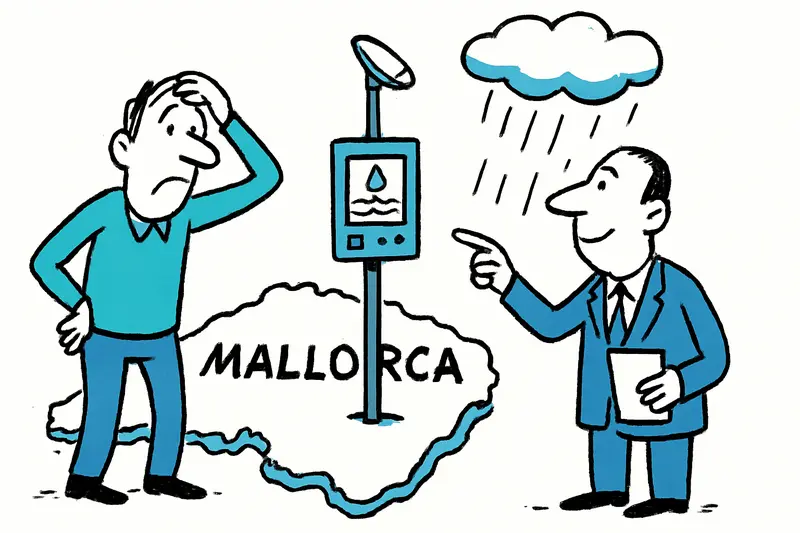
On Passeig Mallorca it is still cool in the morning, taxis glide by, and the first café con leche steams in the cafés. Under the paving stones, however, invisible reservoirs lie beneath the surface and are now in focus: a new monitoring system with a network of groundwater probes and smart meters is intended to turn the island into a kind of water control center. Cost: €2.7 million for the Balearic government's real-time digital water map. The idea sounds modern: see in real time how much groundwater remains, how quickly storages recover and where action is required.
The system comes at a precarious time. Recent footage shows reserves at around 44 percent and 15 municipalities already at alarm level. Historically, the underground storages would actually be above 50 percent by now. At the same time, about 74 percent of drinking water in Mallorca comes from these very groundwater sources. Whoever measures is right—or at least has faster numbers. The central question remains: what happens to the figures once they are available?
Critical analysis: More sensors, but what politics?
Probes that deliver data by the second are not an end in themselves. Their effectiveness depends on three things: who sees the data, who is allowed to act on it, and what measures are available. Technically, it is now possible to pinpoint which wells are being overused and where storages are filling more slowly. Politically, however, decisions have to be made: priority for urban supply, farmland, or tourist facilities? Who pays the extra costs if more seawater has to be desalinated? Sensor technology without clear rules of action risks fading into a digital pile of alarms.
Desalination infrastructure is a double-edged sword. Plants in Palma, Andratx and Alcúdia stabilize supply, but they consume energy and make the island dependent on complex processes. High-pressure networks and larger groundwater reserves such as Sa Marineta and S'Extremera, as well as reservoirs like Cúber and Gorg Blau, are important buffers. But if more and more municipalities—especially inland—remain dependent on their own wells, the problem merely shifts spatially.
What is missing from the public discourse
The debate currently revolves around measurements and technology. Those who barely appear in the contributions are small farms, municipal administrations without connection to the cross-connection, and the people who depend on water for household use and irrigation in very confined spaces. Also rarely discussed are the ongoing costs and the energy source for desalination, legal ownership issues surrounding groundwater, and mechanisms for fair distribution during dry periods.
Transparency is another issue. Live data are of little use if they are not accessible and understandable for mayors, farmers and citizens. A dashboard only for experts does not help the farmer in Binissalem who would need to adjust his irrigation.
Everyday scene from the island
I often see it in the morning at the fountain square in Inca: an older woman fills her small watering can, soft programming from Palma plays on the radio, children trudge off to school. For her, the dramatic percentage figures are abstract. More concrete is the pipe that has little pressure in summer or the neighbor who waters with a lawn sprinkler. Such everyday experiences create political pressure moments—and they are what ultimately enforce measures.
Concrete solutions
Technology must be accompanied by rules and investments. Proposals that can be implemented immediately: 1) Open, locally accessible data platforms that explain alert levels to municipalities and provide recommended actions. 2) Prioritization of connecting unconnected inland municipalities to the cross-connection so that supply bottlenecks do not escalate locally. 3) Subsidy programs for water-saving irrigation in agriculture and rainwater harvesting systems for private homes. 4) Pilot projects for managed aquifer recharge where geology makes sense. 5) A tiered pricing structure that rewards frugal consumption and makes wasteful use more expensive, accompanied by social compensation for low-income households.
In the long term, the agenda should include energy-efficient desalination, expansion of wastewater treatment and reuse for agriculture, protection of catchment areas and binding operating rules for well operators based on the new data.
Pointed conclusion
The probes are a tool, not a promise. They make visible what previously took place out of sight, but visibility alone does not fill reservoirs. If Mallorca turns measurements into consequences—binding rules, fair distribution and investments in efficiency—then the island can manage the coming drought years more intelligently. If not, the new control centers remain showcase technology: interesting to look at, but lacking the political muscle that really matters.
Frequently asked questions
Why is Mallorca installing groundwater probes and smart water meters?
Is Mallorca running out of water during drought years?
Can smart sensors actually solve Mallorca’s drought problem?
What happens to Mallorca’s water supply if groundwater keeps falling?
How does desalination help Mallorca during dry weather?
What should farmers in Mallorca know about the new water monitoring data?
What are the main water sources for Mallorca’s drinking water?
What water-saving measures make sense for Mallorca households?
Similar News

After Being Admitted to Hospital Again: Heinz Hoenig and the Questions We Should Ask in Mallorca
Long-time Mallorca resident Heinz Hoenig was admitted to hospital again. A clear “what next?” is missing from the covera...
Yellow Alert: Is Mallorca Prepared for the Next Rain Band?
Aemet has issued a yellow alert for the south, southwest and the island's interior. Thunderstorms and heavy rain are for...
Kegel brothers trial postponed: Why Mallorca must wait for a verdict
The trial of 13 German holidaymakers will not begin until May 2028. The long wait raises questions — for victims, defend...

Chaos on Palma's Runway: Why the Summer at the Airport Was So Disrupted
This summer laid bare where Palma airport is faltering: only just over half of departures were on time and seven percent...

Cocaine Offer on Ham Street: Why the Open Trade Should Ring Alarm Bells
In the middle of Pare Bartomeu Salvà a tourist was offered a packet of cocaine as part of a sunglasses deal. A short int...
More to explore
Discover more interesting content

Can Cap de Bou

Townhouse Lleo 72
