
New Mandatory V16 Warning Light: Who Risks an Expensive Surprise in Mallorca
New Mandatory V16 Warning Light: Who Risks an Expensive Surprise in Mallorca
If you're traveling in Mallorca, you should not only buy the new V16 warning light — you should also know how to operate it. A small mistake can cost up to €80. A reality check with everyday tips.
New Mandatory V16 Warning Light: Who Risks an Expensive Surprise in Mallorca
Key question: Is mere possession of a V16 lamp enough, or can the island already impose a fine for the smallest mistake?
On the Paseo Marítimo the sound of traffic barely registers anymore: scooters hum, tourists pull suitcases, and on the MA-20 the morning commuter traffic pushes toward the center. It is exactly here, on the short stretches between exits and roundabouts, that the little breakdowns happen — and they can now become surprisingly expensive. The Spanish traffic authority DGT has made the new V16 warning light mandatory — and according to motorists' associations the police have already issued fines of up to €80 for violations. But what exactly should we pay attention to?
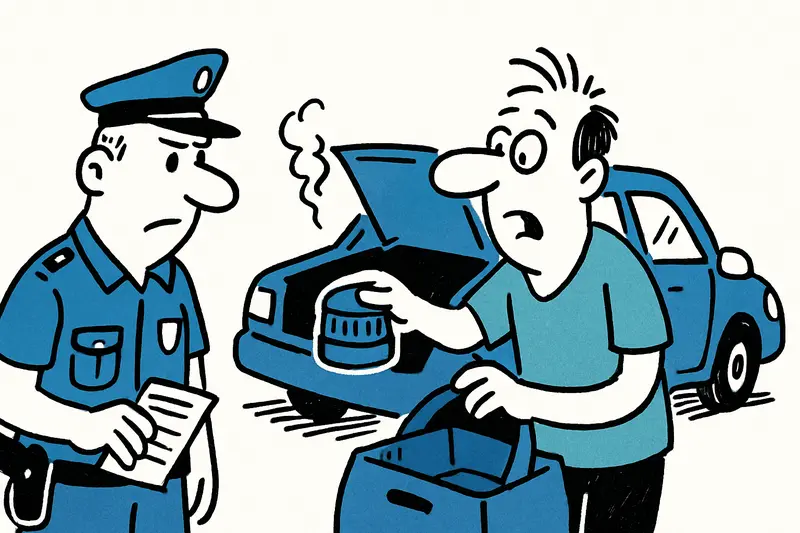
The facts make it clear that the actual offence is not just failing to own a device. Common mistakes currently recorded by officers on patrol include: storing the device in the trunk instead of having it ready in the passenger compartment, failing to switch on the hazard lights, or carrying a V16 with dead batteries. Legally, a device without a functioning battery is effectively treated as if it were not present — and that can trigger an 80-euro fine on the spot.
Another pitfall is cheap imported models: only V16 devices that are officially approved, listed in the DGT register and offer an integrated connection to the DGT 3.0 system via a SIM card are considered compliant. According to the regulations, it is also important that the minimum connection period of 12 years is included in the purchase price — additional payments or secondary contracts are therefore problematic. Many discount models available on the market do not meet these conditions.
Critical analysis: the regulation clearly aims at greater safety. Preventing drivers from having to step onto the carriageway to place a warning triangle saves lives. But the current enforcement appears schematic: police not only punish gross negligence but also small, easily avoidable oversights. For holidaymakers who pick up a rental car at the airport and for island residents who rarely had to deal with breakdown lights, this creates a feeling of uncertainty and additional bureaucracy.
What is missing in the public discussion: clear, easily accessible information in German and other languages at the most important contact points. At Son Sant Joan airport, in rental car offices on Avinguda de Gabriel Roca, and at petrol stations along the coast there should be clearly visible notices and short checklists. There is also a lack of a simple visual guide showing how to attach the device from inside the car to the roof without leaving the vehicle.
Everyday scene from Mallorca: imagine on the MA-13 between Manacor and Palma: a small tear in the tyre, hiss — and the driver, a holidaymaker, stands at the side of the road. The sun beats down, voices on the radio, children in the back ask for ice cream. He reaches into the trunk, gets the lamp — and a checkpoint at the next exit is already in sight. An officer inspects and issues a fine because the device was found in the trunk. The scene is not fiction; such checks are reportedly increasing locally, according to motorists' associations.
Concrete solutions:
1) Check before driving: Test battery or charge level, verify presence in the DGT list (official website or app). When buying, check for approval, integrated SIM and the 12-year rule.
2) Place inside the vehicle: The glove compartment or door pocket are recommended places. A small sign on the rearview mirror can serve as a reminder.
3) Raise rental car awareness: Have rental customers given a brief demonstration when picking up the car: Where is the V16? A five-minute function test. Renters should document that they informed the customer.
4) Practical exercise: Practice attaching it by slightly extending your arm through the open window — the magnetic base holds. Never leave the car and expose yourself to oncoming traffic.
5) Local public information: Municipalities such as Inca, Alcúdia or Llucmajor should provide multilingual notices at parking areas, ferry terminals and tourist information points.
Simple extra tips: keep spare batteries or a small power pack in the glove compartment; switch the lamp on once a year briefly to check function; when buying, pay attention to the official model number, not just the language on the packaging.
Concise conclusion: the V16 is a sensible technical response to a real safety problem. But the change will only be accepted if it is made practical and understandable. In Mallorca that means: clear notices at rental stations, visible information at common checkpoints and a bit more pragmatism in education instead of immediate fines. For drivers the rule of thumb is: prepare, don't improvise — otherwise you'll pay more than just your next tank of petrol.
If you are still unsure: at the next coffee on Plaça Major, briefly test the device, take a photo of the approval number and check the rental agreement papers. One minute of preparation can save €80 and a long conversation at the police station.
Frequently asked questions
What is the best time of year to visit Mallorca for mild weather?
Can you still swim in Mallorca outside the peak summer season?
What should I pack for a trip to Mallorca in spring or autumn?
Is Mallorca a good destination if I want both beach time and sightseeing?
What is Sòller like for a day trip in Mallorca?
Why do people visit Pollença in Mallorca?
Is Andratx a good base for exploring southwest Mallorca?
How should I plan a slower-paced holiday in Mallorca?
Similar News
Magaluf: Watchtower Alarm – Lifeguards Pull Unconscious Beachgoer from the Water
After a drama in the late afternoon, two lifeguards at Magaluf beach rescued an unconscious 44-year-old man. He was stab...
Turquoise in the City: How dangerous is the color play of the Sa Riera?
The Sa Riera in Palma suddenly turned turquoise — a pretty motif, but behind the effect lies a discharge of saline waste...

Jeckliner at Sunnesching: Cologne spirit sets sail from Palma
In September 2027 the Mein Schiff 2 briefly becomes a floating carnival stage: four days with Cologne bands, comedy and ...
Finally Home: Mike and Leyla Heiter Buy Villa with Sea View in Mallorca
The reality TV couple Mike and Leyla Heiter have bought a house in Mallorca with a roof terrace and sea view. An Instagr...
Arrest after series in Palma: Who protects apartments from repeat offenders?
The National Police arrested a man in Palma who investigators say may have broken into several apartments. In one incide...
More to explore
Discover more interesting content

Can Cap de Bou

Townhouse Lleo 72
