
Sea off Mallorca: When the Underwater Meadow Disappears
Warmer water, vanishing Posidonia seagrass, new fish species and jellyfish — what this means for fishers, beaches and everyday life in Mallorca and how we can act locally.
The sea we knew is changing
Early in the morning on the beach, the air still salty, the streets shining from the evening rain: the water feels different. Warmer, not just by one degree — noticeably warmer. The temperature curves show it, and local coverage even recorded that sea temperatures off Mallorca briefly fell after a heatwave, but it is the feeling when you dip in that wakes people on the island. And with the warmth something disappears in places that for decades held the sea together: Posidonia seagrass.
Seagrass is more than decoration. It binds sand, creates niches for juvenile fish, stores carbon and keeps the water clear. Without these underwater meadows, beaches erode more easily, pebbles and sand get stirred up, and the ecosystem loses its structure. What many do not have on their radar: when the roots disappear, currents and sediment movements change — entire bays can transform over the long term.
Fishermen who no longer know what to sell
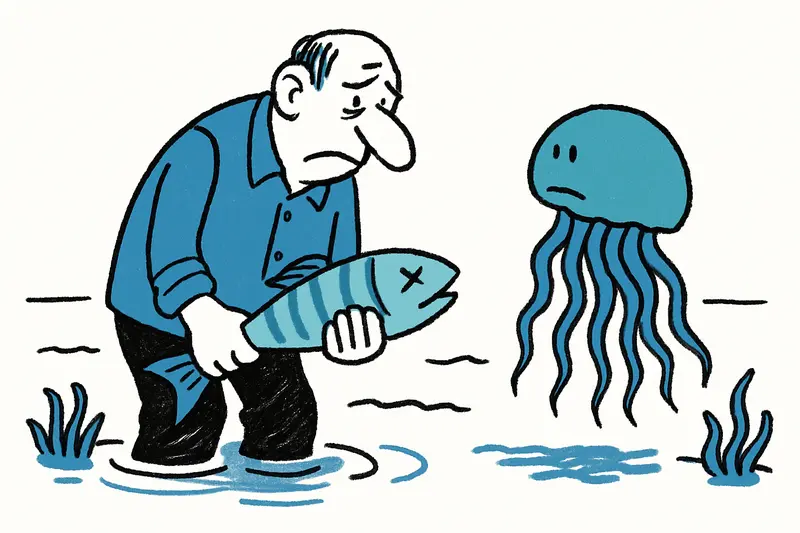
In the port of Port d’Andratx I meet a fisherman sorting his nets. He laughs briefly, looks at the sea and says: "Our nets are full, but much of it is new — and not what people want at the market." Gilthead bream and sea bream, once reliable, appear less often. Instead, more colorful, tropical-looking fish and jellyfish end up in the baskets.
This shift is more than an ecological curiosity. Families who live off fishing feel it at the checkout. Restaurants have to change their menus, consumers get used to new species, and the traditional fishing economy comes under pressure. On paper, catch numbers may appear stable, but quality and market structure are changing.
Science warns — and points out blind spots
Marine researchers warn that the Mediterranean is warming faster than the global average, and local measurements showed record heat at 500 meters depth around Mallorca. Temperature peaks damage Posidonia, oxygen-poor zones can form, and species migrate in — or vanish. Less often noticed is the cumulative effect: plastic, nutrient runoff from agriculture and unchecked anchoring practices increase the vulnerability of seagrass meadows.
Another blind spot is the data situation along our coast: many small coves and private moorings are not monitored regularly. This means local early-warning systems for invasions or sudden seagrass losses are missing; recent reporting on a brief cooling of the sea surface shows how quickly conditions can change. Without a finer measurement network, planning remains piecemeal.
Concrete opportunities instead of mere warnings
The good news: there are proven levers that go beyond Sunday speeches. Several approaches make sense and can be combined:
1. Protection from anchor and boat damage: Buoy fields in sensitive areas, stricter rules for anchoring and education for boat operators. One careless anchor can destroy hectares of seagrass in a single season.
2. Reintroduction with local responsibility: Pilot projects north of Palma show how young Posidonia can be used. These actions, however, require local care, protected zones and long-term funding — not just one-off planting events.
3. Reduce wastewater and land-based inputs: Clean water starts on land. Improved treatment plants, targeted rainwater management systems and less nutrient runoff from agriculture reduce algal growth that can suffocate seagrass.
4. Adapt fisheries and use knowledge: Catch limits, closed seasons and the inclusion of traditional fishing knowledge help stabilize food webs. Fishers must become partners in monitoring, not just those affected.
5. Research, monitoring, citizen participation: Fine-meshed monitoring, early-warning systems for jellyfish and invasive species, and citizen-science projects can close gaps and raise awareness. Hotels, dive schools and local schools could get involved.
What this means for tourism and everyday life
For the island economy, clean water is a resource. Beaches, diving, boat trips — all of this depends on a healthy sea. Jellyfish blooms, eroding coves and changed fish stocks are therefore not a distant environmental problem but a local economic risk. Solutions require money, yes, but above all a change in thinking: less short-term patchwork, more active sea stewardship.
That also means acting locally and setting priorities. Small protected areas can serve as nuclei to stabilize larger areas. And it means involving people here — from fishers to hoteliers to children on the beach.
I leave the beach, put my shoes on and watch a child holding a tiny piece of Posidonia between their fingers. The scene is unremarkable. But perhaps that small holding is the key: if we are willing to protect and tend the roots of the sea again, then the work begins to ensure a sea we can show our grandchildren.
Frequently asked questions
Why is the sea off Mallorca getting warmer?
What is Posidonia seagrass and why does it matter in Mallorca?
Can you still swim in Mallorca when the sea is unusually warm?
How does warming sea water affect fish around Mallorca?
What does the sea around Port d’Andratx look like for local fishers now?
Why is anchoring a problem for Posidonia in Mallorca?
What can Mallorca do to protect its underwater seagrass meadows?
Does warm sea water in Mallorca affect tourism?
Similar News
Failed before the first flight: How Fischer Air's plans for Palma were ground down
Announced routes, repeated postponements and now apparent insolvency: Why the Fischer Air project for Mallorca is not me...

Seconds in the Water: 19-year-old Fights Her Way Out of Flooded Car in Palma
A 19-year-old managed to rescue herself from her half-submerged car after sliding under the Verge de Lluc underpass. Res...

Between Dream and Reality: Thorsten Legat and the Challenges of FC Germania Mallorca
The former Bundesliga pro has assembled a colorful squad in a short time. But how realistic is the grand plan for promot...

Arrest warrant at check-in: Why two travelers at Cologne/Bonn Airport suddenly had to pay
At Cologne/Bonn Airport, federal police in mid-September found two German passengers subject to enforcement measures. Bo...
Balearic Islands as a New Route: A Reality Check on Rising Boat Migration
For the first time the Balearic Islands are ahead of the Canary Islands in boat arrivals. What do the numbers really say...
More to explore
Discover more interesting content

Can Cap de Bou

Townhouse Lleo 72
