
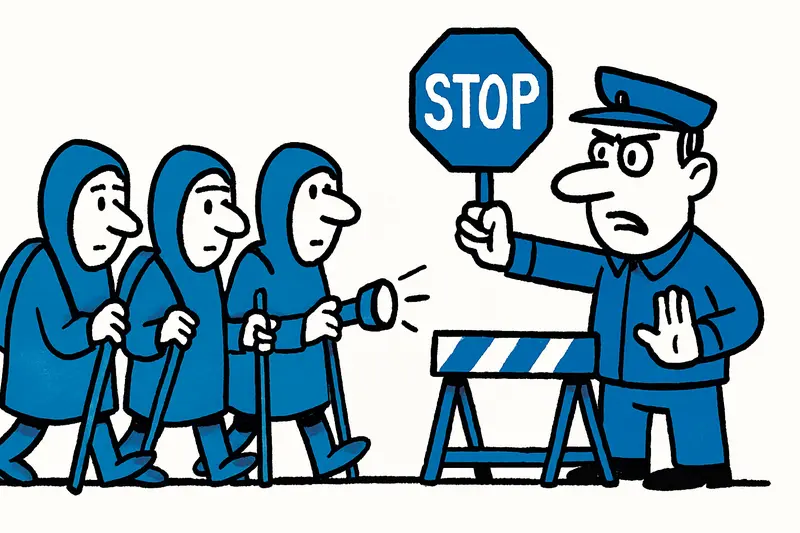
Pilgrim March to Lluc: Tradition Meets Traffic Chaos – How Does That Fit Together?
Around 5,000 people head in the evening toward the Lluc monastery — an atmospheric but logistically demanding ritual. Why is planning insufficient, and how can tradition and traffic safety be better reconciled?
Pilgrim March to Lluc: Tradition Meets Traffic Chaos – How Does That Fit Together?
Around 5:00 p.m. the air fills with soft chants, the rustle of backpacks and the flicker of flashlights. About 5,000 people are on their way to the Lluc monastery — an impressive tradition that connects Palma, Sóller, Inca and many small villages, as described in Night Pilgrimage: "Lluc a Peu" Connects Mallorca's Communities. At the same time the consequences become apparent: closures on the MA-10, stationary traffic on access roads and annoyed commuters. The central question is: How can this lived culture be reconciled with the demands of modern mobility and safety?
What is going well — and what is faltering?
On the positive side: according to organizers the procession is mostly peaceful. There are short devotions between towns, an occasional communal song, and locals offering water bottles and warm words. Such scenes belong to an evening in the Tramuntana as much as the smell of pine and the distant roar of the sea.
But the logistics have limits. More than 60 affected road sections mean detours and waiting times for drivers; in Palma the Paseo Marítimo and areas around the cathedral are temporarily impassable. Anyone hoping to attend a concert or do late shopping has to allow extra time today. The problem is not only inconvenience: delayed emergency services, blocked bus lines and overstretched volunteer teams can have serious consequences, as reported in Night Pilgrims and Motorcycle Ride: When Festive Spirit Meets Traffic Bottlenecks.
Which risks are hardly discussed?
First: emergencies. An accident in a remote mountain section requires rapid access for rescue vehicles. Temporary road closures must be coordinated so they do not block these routes. Second: communication. Not all drivers or visitors know the current closure times — the result is congestion and dangerous turning maneuvers on narrow mountain roads.
Third: the safety of volunteers and participants. Dark, winding sections, mixed pedestrian and bicycle traffic, and some groups with little lighting increase the risk. Fourth: economic consequences. Local events, restaurants and concerts in Palma suffer from short-notice traffic restrictions. And last but not least: the environment and quiet. Thousands of lights, motorcycles and additional traffic alter the normally silent mountain landscape for one night.
What is discussed too rarely?
Political responsibility for coordination between the island council, municipalities, police and event organizers often remains diffuse. Who approves which route, who monitors compliance with safety standards? Also: the perspective of commuters and the local economy is often only marginally mentioned in coverage. Equally important is the question of whether traditions need to be adjusted to changed conditions — and how that can be done respectfully.
Constructive proposals: How tradition and traffic can fit together
1. Better advance information: reliable maps with temporary closures, shown in navigation apps and on municipal websites. A simple, clearly visible hotline or WhatsApp channel for real-time information would prevent many misunderstandings.
2. Staggering and route management: instead of one massive movement, staggered start times or several clearly separated routes could reduce the burden. This preserves the atmosphere while reducing traffic impact.
3. Cooperation with public transport: night buses or shuttle services to central meeting points (e.g. Sóller, Inca, Palma) would avoid car trips. Temporary park-and-ride areas on the city outskirts and extra ferry or bus capacity could absorb transport flows.
4. On-site safety: high-visibility vests for marshals, escort vehicles with flashing lights to keep rescue routes clear, yellow markings at particularly narrow stretches. Lighting concepts that protect participants without over-illuminating the mountains.
5. Transparent responsibilities: a joint crisis team made up of the island council, municipalities, police and organizers with clear duties and an annual debriefing process, a topic explored in Night Pilgrimage to Lluc: Tradition, Traffic and the Exposed Problems.
A practical everyday tip
If you are on the road tonight: check your route in advance (MA-10, access roads to mountain villages), park your car outside the reported zones and allow an extra 30–60 minutes. As a pedestrian: lights and reflective clothing are not a fashion question but a lifesaver — especially if fog settles in the valleys. And a final tip for those standing by the roadside: a friendly smile and a little space often help more than loud criticism.
The pilgrims want to arrive, and the island must carry on. One does not exclude the other — if we plan far enough ahead and meet each other halfway. That may sound bureaucratic. But an orderly, safe pilgrim march can be just as beautiful and impressive as the spontaneous sight of 5,000 lights moving through the dark Tramuntana.
Frequently asked questions
What is the Lluc pilgrimage in Mallorca?
Why does the Lluc pilgrimage cause traffic problems in Mallorca?
How should I plan a car trip during the Lluc pilgrimage in Mallorca?
Is it safe to join the Lluc pilgrimage at night?
Can emergency vehicles still get through during the Lluc pilgrimage?
What parts of Palma are affected by the Lluc pilgrimage?
How can the Lluc pilgrimage in Mallorca be better organized?
What should I bring if I walk to Lluc from Sóller or Inca?
Similar News
Cafetería San Siro: A Meeting Place on Schinken Street Since 1966
In the middle of Schinken Street, Cafetería San Siro has been offering Mallorcan hospitality for more than six decades —...
From Ballermann to Prison: What the Verdict Against the Femina Operator Means for Palma
The Munich Regional Court convicted a German operator for subsidy fraud. What does the verdict mean for the Femina Club,...
Underpass Verge de Lluc: 19-year-old fights her way out of flooded car – a warning sign for Palma
A 19-year-old recently escaped swimming from her car after the Verge de Lluc underpass held up to one and a half meters ...
When the Floodgates Open Again: Why Palma's Floods Aren't a Coincidence
A sudden heavy downpour around 5 p.m. brought Palma to a standstill: flooded streets, full basements, panicked commuters...
Playa de Palma: Life-saving at Balneario 11 – Lifeguards Act Quickly
A German holidaymaker suffered cardiac arrest at Playa de Palma. Lifeguards resuscitated her on the beach; emergency ser...
More to explore
Discover more interesting content

Can Cap de Bou

Townhouse Lleo 72
