
How did the lab continue unnoticed? Marijuana lab in Marratxí raises questions
How did the lab continue unnoticed? Marijuana lab in Marratxí raises questions
Residents and a nearby school reported a sweet smell for months. The Guardia Civil found plantations in Marratxí, 50 kg of dried buds and a lab for producing hashish. How could this happen — and what is missing to prevent a repeat?
How did the lab continue unnoticed? Marijuana lab in Marratxí raises questions
Key question: How could an industrial-looking production of hashish resin exist for so long within sight and smelling distance of homes and a school?
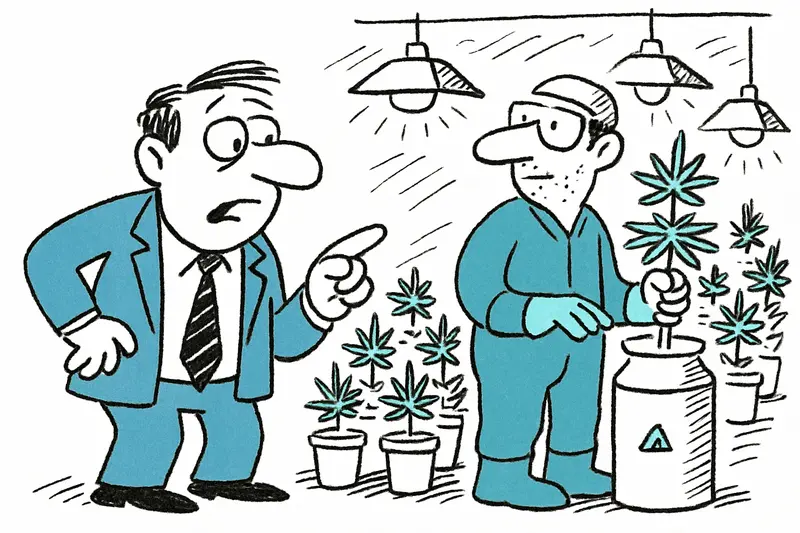
The Guardia Civil discovered an elaborate laboratory for producing hashish resin during a raid in an industrial area of Marratxí. According to investigators, around 50 kilograms of dried cannabis buds were ready, and there were several cultivation areas, chemicals for processing and small quantities of finished hashish. The alleged operator of the premises was arrested; investigations are ongoing. Similar large-scale raids have been reported elsewhere, notably Drugs, Millions and Suspected Abuse of Office: What the Major Operation in Mallorca Reveals.
The incident makes two things clear: First, production on this scale leaves traces — usually in the form of significant electricity demand and odor nuisance. Second, such traces do not automatically lead to a rapid intervention: Complaints from residents and reports from the management of a nearby school did lead to observations of the property, but only a police operation stopped the activity. A separate case where a package emitting a strong smell prompted an investigation is covered in Hashish Package in Palma: When Delivery Workers Become Investigators.
A central finding of the investigation was the manipulation of the power supply. Experts from the energy provider found that no valid contract existed and the meter had been tampered with. According to them, the daily consumption corresponded roughly to that of 15 households. That is a clear signal — and yet not an automatic cause for action, because legal and technical checks take time.
Where there is light, there is often a lack of shadow: authorities, energy companies and residents are often not sufficiently networked to quickly verify such tips. Complaints end up with the police, who conduct observations; energy companies check meter readings but must take legal steps when manipulation is suspected. In the meantime, the installations keep running.
What is often missing from the public debate is the everyday situation of the neighborhood. Imagine the avenue of an industrial estate in Marratxí on a spring day: delivery vans being loaded and unloaded, the coffee machine humming in the bakery next door, children crossing the footpath to school, and occasionally a sweet smell settling over the street. For parents it is unsettling and worrying; for authorities it is an indicator, not proof of a crime.
Preventive measures should start here. Technically sensible would be the earlier use of smart consumption analyses by energy providers: sudden, sustained high load peaks should trigger automated verification processes and be reported quickly to the responsible police station and the municipality. That would not be a cure-all, but it would help close timing gaps.
There also needs to be low-threshold reporting channels for residents and schools. A central municipal reporting system that collects and prioritizes smell, noise and traffic patterns could make trends visible. Such data would complement observations by the local police and the Guardia Civil and help explain why a specific location requires more frequent checks.
Legal levers can also be adjusted: speeding up suspension checks by energy providers when electricity theft is suspected and clear regulations for cooperation with investigators would save time. Stricter inspections in industrial areas, such as recurring inspections of rented halls, could also reveal illegal uses earlier.
Another topic rarely discussed openly is the border between private cannabis clubs, medical use and criminal production. As long as the legal framework requires interpretation in practice, niches arise that organized groups can exploit. Transparent documentation of legal uses and regular authority inspections could reduce these gaps; incidents like Fire in Moscari Uncovers Professional Marijuana Cultivation and Weapons Arsenal and smaller arrests such as Plants in the trunk: Arrest in Colonia de Sant Jordi raises questions illustrate the range of scenarios authorities face.
Concrete proposals for Marratxí and similar places: 1) Energy providers and the police agree on standardized alert chains for unusually high consumption; 2) municipalities create an anonymous reporting platform for neighbors and school staff; 3) local inspections of halls and storage spaces are systematically documented; 4) lawmakers review where interpretation leeway in cannabis matters leads to criminal structures.
Conclusion: The find in Marratxí is more than a headline. It is a warning that technical tricks like tampered meters and the gap between reporting and intervention can become a business model for criminals. If we want schools, residential areas and industrial estates to be safer, the response to such reports must be faster, better connected and more practical.
Frequently asked questions
Why do illegal cannabis labs in Mallorca sometimes go unnoticed for so long?
What are the usual signs of an illegal drug lab in Mallorca?
Can a marijuana lab in Mallorca be detected through electricity use?
What happened in the marijuana lab case in Marratxí?
What should residents in Mallorca do if they suspect a drug lab nearby?
Why are industrial areas in Mallorca sometimes used for illegal cannabis production?
How close was the Marratxí drug lab to homes and a school?
Can energy providers in Mallorca help uncover illegal cannabis labs?
Similar News

When the Wallet Becomes a Danger: Attack in Peguera and Lessons for Mallorca
In Peguera, two women are said to have stolen the wallet from a 75-year-old German couple. When the victim intervened, t...
Plata stays Plata: Young people take over, Llonguets remain
A small bar on Carrer de l'Argenteria will continue: Tolo Serra hands the place over to young Mallorcans at the end of t...
Unnoticed in the Luggage Compartment: How a Boy Traveled More Than 100 Kilometers in a Team Bus
A minor traveled in the undercarriage of a team bus for more than 100 kilometers until his cries for help were heard. A ...

Cap Vermell Grand: Second Michelin Key – a Gift for the East
The Cap Vermell Grand in Capdepera has been awarded its second Michelin key. For the region this elevates the luxury off...

Eurowings lets four aircraft carry names – a friendly idea that also reaches Mallorca
Eurowings is launching a campaign: four Airbus A320s are to carry the first names of people who help others in everyday ...
More to explore
Discover more interesting content

Can Cap de Bou

Townhouse Lleo 72
