
Mini-tsunamis on Mallorca: Where and How the Sea Suddenly Rises
Mini-tsunamis on Mallorca: Where and How the Sea Suddenly Rises
"Rissagues" — sudden, air-pressure-triggered sea fluctuations can cause problems for the harbors in Portocolom, Port de Soller and Porto Cristo. A critical assessment for holidaymakers, port operators and local policymakers.
Mini-tsunamis on Mallorca: Where and How the Sea Suddenly Rises
Key question: How great is the danger from so‑called "rissagues" on Mallorca's coasts really — and what should residents, port operators and holidaymakers know now?
What are "rissagues" — briefly explained
Rissagues are meteotsunamis: not earthquakes, but atmospheric disturbances — rapid changes in air pressure — that make the sea rise and fall noticeably within minutes or hours. Unlike ordinary wind waves, they affect the entire water column and can suddenly amplify in narrow bays or shallow harbor basins. Observations by the University of the Balearic Islands and the Spanish Institute of Oceanography show: at certain locations the probability is measurably higher.
Critical assessment of the study
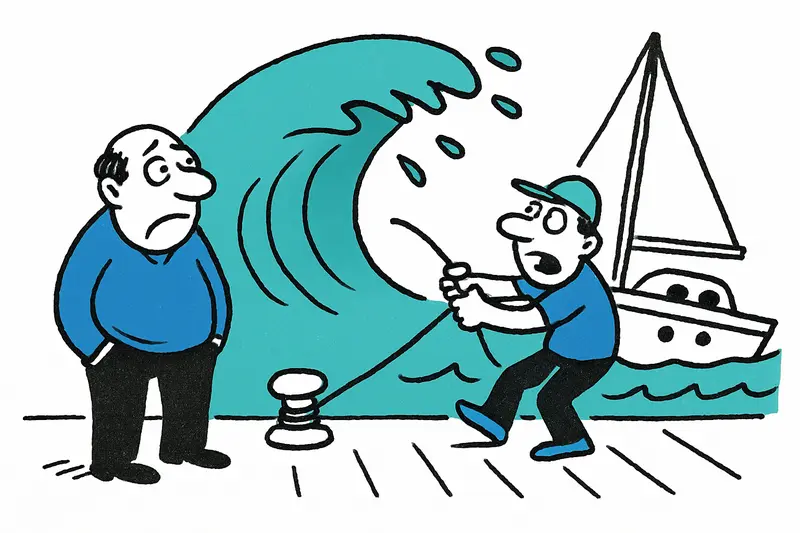
The research identifies Portocolom, Port de Soller and Porto Cristo as Mallorcan "hotspots" — locations where harbor shape and seabed favor resonances. On Menorca, in the port of Ciutadella, the effects are even better documented. Important: the initial amplitude on the open sea can be small; only inside harbor basins does the wave grow to considerable heights. For people on piers and boat ramps this is a real risk — flooded quays, abruptly swinging moored boats, damaged bollards.
What is often missing from public debate
There is a lot of reporting about the phenomenon, for example Sudden autumn in Mallorca: Are harbors and coasts prepared for short storms?, but rarely concrete information: Which harbors have alarm systems? How secure are berths? Which measurement data feed into daily harbor advisories? These practical questions are rarely answered. Equally invisible is how harbor construction and urban planning could reduce the risk. The note that large ports like Palma are comparatively little affected, as shown in Sudden Storm in Palma: A Weather Shock and the Question of Protecting Mallorca, is helpful — but does not replace local risk analyses for smaller harbor facilities.
A scene from everyday life
Early morning in Portocolom: fishermen sort nets, cafés pump espresso, the seagulls screech. Suddenly sailors nervously tug at fenders, an older boat owner furrows his brow because his dinghy is rocking unusually at the quay. Such moments are not only unpleasant; they are what keep local operators and leisure skippers awake at night.
Concrete solutions
1) Strengthen measurement and warning chains: link barometric measurements (e.g. AEMET stations) with harbor alarm systems (see Storm Alert: Is Mallorca Prepared for the Deluge?). A simple automated SMS or loudspeaker alarm can save lives.
2) Train harbor management: skippers, harbor masters and fishermen should have training on rissagues — how to secure lines safely, when to release boats or make additional moorings.
3) Adapt infrastructure: inspect bollards, ramps and access ways for flood resistance; consider resonance analyses in new constructions.
4) Public information: clear warning signs at vulnerable quays, simple multilingual brochures for holidaymakers and charter customers.
5) Link research with practice: local measurement campaigns in Portocolom, Port de Soller and Porto Cristo to refine model calculations and produce annual risk reports.
Who is responsible?
It is a three‑part task: science provides data, municipalities must implement protection concepts, and harbor operators organize daily measures. Holidaymakers and boat owners, in turn, should take warnings seriously and not step onto the quay out of curiosity when unusual water movements occur.
Concise conclusion
Rissagues are not an apocalyptic scenario — but real, localized hazards. There are clear hotspots on Mallorca; what is often missing are tangible local precautions and visible communication. A small, well‑networked early warning and safety system would be sufficient to prevent most damage. Until then: if the water in the harbor suddenly "shivers", keep your distance and call the harbor office.
Frequently asked questions
What are rissagues in Mallorca, and are they the same as a tsunami?
Which harbours in Mallorca are most affected by sudden sea surges?
Is it safe to stand on a harbour quay in Mallorca during a rissaga?
When are rissagues in Mallorca most likely to happen?
How can boat owners prepare for a rissaga in Mallorca?
Are rissagues in Mallorca dangerous for holidaymakers?
Does Palma in Mallorca have the same rissaga risk as smaller harbours?
What can Mallorca do to reduce damage from rissagues?
Similar News

Fewer Airlines, Fewer Destinations: What Palma's Winter Flight Schedule Means for Mallorca
Analysis shows: Winter at Son Sant Joan Airport will be quieter, with significantly fewer airlines and destinations. Who...
German tourist dies in Sa Calobra – a reality check for emergencies on Mallorca's beaches
A 40-year-old tourist died at the Torrent de Pareis. The emergency call, a doctor who happened to be present, a defibril...
Deadly Tractor Accident in Bunyola: What Needs to Be Done Now
In a work accident on an estate near Bunyola, a roughly 40-year-old man lost his life. His wife and a small child were o...
Head-first dive into the shallow part of Cala Fonoll: An accident and the unresolved question of responsibility
A young tourist dove into Cala Fonoll and was seriously injured. Key question: Why are clear warning signs missing at da...

Mistaken identity with fatal consequences: Brutal assault in S'Aranjassa — what's missing in the follow-up?
At S'Aranjassa a visitor to a finca was tied up, beaten and thrown out of a van. Three men have been arrested, including...
More to explore
Discover more interesting content

Can Cap de Bou

Townhouse Lleo 72
