
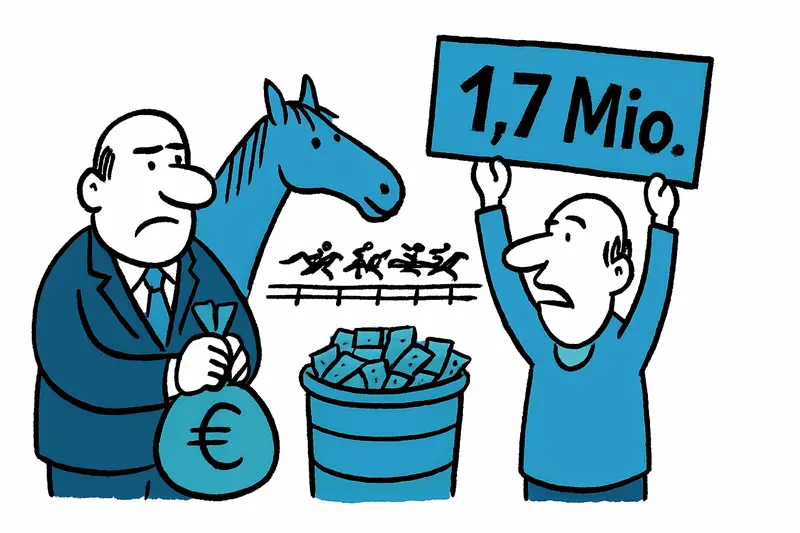
More funding for horse racecourses: sensible investment or questionable priority?
The Consell increases the budget for horse racecourses to €1.7 million – Son Pardo will be renovated for €500,000, and Manacor will receive technical improvements. Good news for equestrian sport, but questions remain about transparency, alternative uses and the public sector's priorities.
More money for racecourses – who really benefits?
The island council has decided: Next year up to €1.7 million will flow into the sports facilities of the Palma and Manacor racecourses. That is 85 percent more than previously planned. Specifically: the Son Pardo racecourse in Palma is to be fully renovated for €500,000, including new lighting and a public address system. In Manacor, improvements to the restaurant – an air conditioning unit – and practical works on stables and boxes are planned, including rainwater gutters. This rise follows other municipal projects such as Palma launches Es Carnatge: €2.2M for first phase – is that enough?.
Key question
Is this increase in public funds a targeted investment in a vibrant sports and cultural offering – or is politics setting the wrong priorities while other municipal needs are left wanting?
Critical analysis
The sum is not small. €1.7 million for two facilities sounds like genuine support for equestrian sport, which has a long tradition on the island. For comparison, nearby projects like Cala Millor invests over €600,000 in sports facilities — opportunities, risks and how it could work show smaller-scale upgrades. At the same time, details are missing in the public record: Is there a breakdown of how much goes to ongoing maintenance and how much to new infrastructure? Who decides on the awarding of the contracts, and how it compares to smaller repairs reported in Palma renews sports facilities: small repairs, big impact - and open questions? And not least: how will the facilities be used in the future when there are no spectators on race days?
The announced measures are tangible – new lighting, loudspeakers, air conditioning, rain gutters. But technology alone does not answer whether the investment creates social or ecological added value. A new loudspeaker system at Son Pardo will make the race atmosphere louder; that's good for events, but it can disturb residents, especially on quiet evenings in the outskirts.
What is missing in the public discourse
Long-term strategies are rarely discussed: How can Son Pardo racecourse be opened to the neighborhood outside race days? How will water and energy consumption be reduced? Whether the rainwater gutters in Manacor are part of a larger sustainability plan remains open. And the often-raised question of alternative uses – youth sports, weekly markets, open-air cinema – is seldom asked, even though such multi-use approaches could increase the value of public spending.
An everyday scene from Palma
Early in the morning, shortly after sunrise, a woman walks her dog along the fence of Son Pardo. The air smells of horse manure and fresh coffee from a mobile stand. Buses roll by, craftsmen open their toolboxes. For these people, the racecourse and its surroundings are part of the daily picture. Small changes – better lighting, more powerful loudspeakers – are felt here first. Whether it is an improvement for them is decided not by technical condition but by how the space is used.
Concrete solutions
1) Transparency: The island council should publish a clear cost plan and timeline, including award criteria and quality standards for the works. 2) Usage plan: A concept should be drawn up for both facilities that links racing operations with community needs – for example regular open days, sports programs for young people, weekly markets or cultural events. 3) Sustainability: Any investment in stables, roofs and technology should be tied to simple environmental standards (water retention, LED lighting, noise protection). 4) Monitoring: An annual report on visitor numbers, costs and secondary uses would make the impact of the funding measurable.
Conclusion
More money for Son Pardo and Manacor can make sense. What matters is that the spending does not only fix facades in the short term but creates long-term value for island society. Those who strengthen equestrian sport should also work to ensure that the facilities benefit neighbors, associations and environmental protection. Without openness and concrete usage plans, much of the public impact remains questionable – and that is a more important question than simply swapping incandescent bulbs for LEDs.
Frequently asked questions
Why is Mallorca spending more money on the Palma and Manacor racecourses?
What changes are planned for the Son Pardo racecourse in Palma?
What improvements are planned for the Manacor racecourse?
Is horse racing in Mallorca just a sporting issue, or also a public spending debate?
Will the racecourses in Mallorca be used for anything besides race days?
Could the new sound system at Son Pardo affect nearby residents in Palma?
What information is still missing about the Mallorca racecourse funding?
How could Mallorca make racecourse spending more sustainable?
Similar News
Almost 70 Euros for Just Under Three Hours of Parking: The Trap at Son Sant Joan
A short work errand at the airport ended with a surprisingly high parking bill. Why the two-hour tariff limit raises so ...
Goodbye Megayachts: Why Palma's Port Is Now Focusing on Small Luxury Liners
Four smaller luxury liners berthed in Palma at the same time recently — around 1,600 passengers on board, plus about 2,0...

Fear in the Sa Teulera Forest: Youth Groups Harass Cruising Zone in Palma
In the wooded area of Sa Teulera, those affected report verbal attacks, property damage and intimidation. How safe is th...
Axa opens first health center in Palma: €3 million, 650 m² and more local access for La Vileta
In the heart of La Vileta, Axa has opened its first own health center in Mallorca. On around 650 square meters and with ...

30 Years of Nit de l'Art: What Palma's Art Night Really Shows — and Conceals
Nit de l'Art celebrated its thirtieth anniversary: full galleries, young visitors — and the quiet tensions between the a...
More to explore
Discover more interesting content

Can Cap de Bou

Townhouse Lleo 72
