
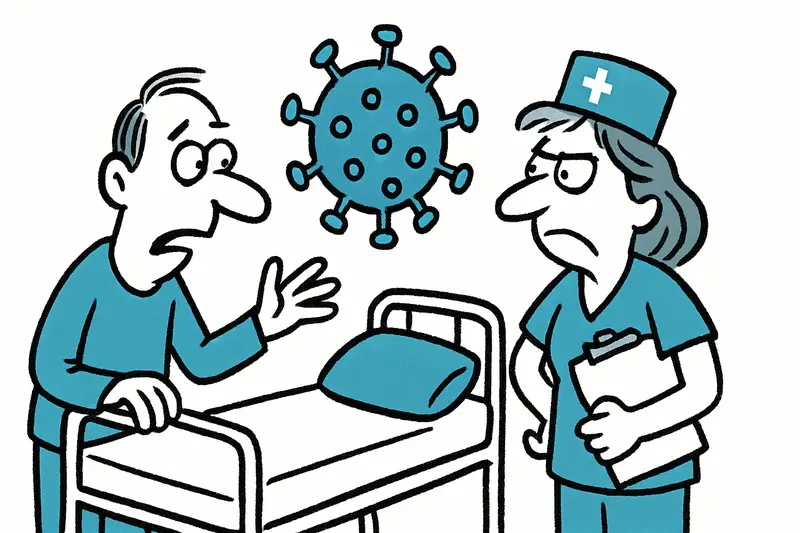
More hospital beds needed because of flu wave — a reality check
More hospital beds needed because of flu wave — a reality check
The Balearic health authority is installing more than 70 additional beds in Son Espases and Son Llàtzer. Why that helps in the short term but is not enough — a critical look from Mallorca.
More hospital beds needed because of flu wave — a reality check
Since 9 January 2026, hospitals on Mallorca have been visibly operating under high pressure: IB-Salut has registered more than 70 additional beds at Son Espases and Son Llàtzer because influenza and other respiratory infections are flooding emergency departments. At times almost 80 patients are waiting at the same time for a free bed; elective surgeries are being postponed. Those are the facts. The question is: Are additional beds enough to really solve the problem?
Clear guiding question
Are beds alone sufficient as a response to a seasonal wave of respiratory illnesses — or does Mallorca need a different, longer-term strategy that also considers staff, prevention and care processes?
Critical analysis
Beds on paper and beds in reality are two different things. A mattress, a monitor and an oxygen supply only help if there are enough nurses, doctors and diagnostic capacities available. The short-term increase in Son Espases and Son Llàtzer is likely to ease the worst bottlenecks: fewer people lying on stretchers in the corridor, faster transfers, a bit of breathing room for the emergency department. But: if staff are lacking or the beds cannot be sustainably staffed, the problem only shifts to other shifts and weeks.
In addition, queues of up to 80 people show that the care chain fails earlier — in clinics, in outpatient diagnostics, and in coordinating nursing homes. Unspectacular but dangerous: when patients remain in the emergency department for too long, the risk of nosocomial infections and chronic deterioration increases.
What is often missing in the public debate
The mere number of additional beds is often presented as a success. What is discussed less often: How are these beds staffed? Where do the short-term nursing and medical teams come from? Who ensures the supply of medication, oxygen and cleaning intervals? Structural questions are sometimes left out as well: How strained is primary care in Palma neighborhoods or in rural municipalities? Are prevention and vaccination offers being communicated in a targeted enough way?
A daily scene from Palma
Early in the morning in front of the entrance to Son Espases, a familiar, slightly worrying sight: a paramedic team pushes a stretcher into the waiting shelter where the wind passes the time. On the opposite side of the street a nurse pulls her coat tighter; she finished a night shift and quickly grabs a coffee from a kiosk on the avenue. Relatives sit wrapped up warm on the benches; someone is nervously on the phone. Rain taps quietly on the windshield of an ambulance. Such scenes are not only images; they are indicators of how everyday care is operating at the limit of its capacity.
Concrete approaches to solutions
If Mallorca does not want to go into alarm mode every year during an infection wave, measures must interlock. In the short term, additional beds help — but only together with:
1) Staffing strategy: Short-term deployments of specialists from less burdened regions, simplified procedures for extending shifts with compensation, but above all a medium- to long-term plan for training and retaining nursing staff in the Balearic Islands.
2) Outpatient relief: Extended opening hours for general practitioner practices during the season of high respiratory infections, mobile clinic teams that specifically visit nursing homes and assisted living communities.
3) Prevention and communication: Local vaccination campaigns with easily accessible offers (marketplaces, municipalities), clear communication about which symptoms warrant a visit to the emergency department and when the family doctor is sufficient.
4) Coordination between hospitals and social services: Faster transfer rules, more short-term care places as a bridge after hospital stays, coordinated protocols with private clinics that can free up capacity.
5) Temporary infrastructure: Quickly erected treatment zones outside the main buildings (modular units, heated tents) to reduce infection risks in emergency departments and triage patients more rapidly.
What we can do locally
As neighbors, employees, a small practice or a municipality, people can contribute: actively reach out to risk groups, communicate vaccination appointments transparently, mobilize volunteer drivers for transport services and involve volunteer organizations. Small measures at the municipal level reduce the burden on emergency departments in the medium term.
Pithy conclusion
The additional 70 beds at Son Espases and Son Llàtzer are right and necessary — but they are not a panacea. Without staff, outpatient relief and coordinated prevention, the island remains vulnerable every winter. Mallorca now needs an honest discussion about resources, not just bed numbers: where is staff missing, how are vaccination offers organized and who ensures coordinated follow-up care? Short-term relief yes, real change preferably yesterday rather than tomorrow.
Frequently asked questions
Why are hospitals in Mallorca under pressure during the flu wave?
Are extra hospital beds enough to solve Mallorca's flu wave problem?
What should I do if I have flu symptoms in Mallorca?
Is it still possible to swim in Mallorca in winter if the weather is mild?
What kind of illnesses are causing pressure on hospitals in Mallorca?
What can Mallorca residents do to help ease pressure on hospitals?
Why are elective surgeries being postponed in Mallorca hospitals?
What is happening at Son Espases and Son Llàtzer during the flu wave?
Similar News
Mistaken identity with fatal consequences: Brutal assault in S'Aranjassa — what's missing in the follow-up?
At S'Aranjassa a visitor to a finca was tied up, beaten and thrown out of a van. Three men have been arrested, including...
High heel slips, car accelerates: accident on Camí de Son Hugo
A woman lost a high-heeled shoe on the forecourt of the sports facility at Camí de Son Hugo. The car accelerated, mounte...
Phone Scam: How Two Hotel Employees at Playa de Palma Lost Thousands of Euros
One morning in September, two reception employees at Playa de Palma were pressured by alleged alarm-company staff — in t...
When the Wallet Becomes a Danger: Attack in Peguera and Lessons for Mallorca
In Peguera, two women are said to have stolen the wallet from a 75-year-old German couple. When the victim intervened, t...
Plata stays Plata: Young people take over, Llonguets remain
A small bar on Carrer de l'Argenteria will continue: Tolo Serra hands the place over to young Mallorcans at the end of t...
More to explore
Discover more interesting content

Can Cap de Bou

Townhouse Lleo 72
