
Red Carpet on the Quay: Why Krill Finds on Mallorca's North Coast Are a Warning Signal
On the piers of Port de Pollença and Alcúdia, red krill particles lay like a carpet. What at first seems curious could be an early warning sign of deeper marine problems. A plea for more measurements, reporting channels and local cooperation.
Red Carpet on the Quay: Why Krill Finds on Mallorca's North Coast Are a Warning Signal
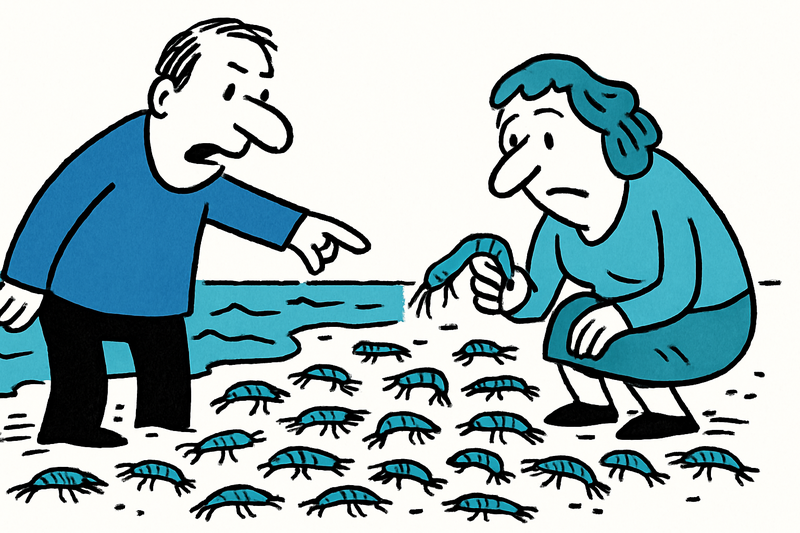
A frosty February morning on the mole of Port de Pollença: diesel smells hang over the hulls, thermal cups steam in the cold air, gulls screech and buoys clack against bollards. On the damp pavement lies a red carpet — tiny krill creatures so dense that the surface looks dusted. Weeks later the same scene in Alcúdia: a waitress pauses in a doorway with trays, retirees on the Plaça whisper, a fisherman with oil‑stained fingers scoops up a handful. For tourists a curious photo opportunity, for researchers a possible alarm signal, as seen in a local report on mysterious crustacean mortality.
Key Question
Is this local mass mortality of krill just a one‑off marine oddity — or an early sign of a larger ecological shift in the western Mediterranean that will soon be felt economically on land?
Critical Assessment
A single find is neither a reason for panic nor for indifference. But krill and other zooplankton are the foundation of the marine food web: they eat phytoplankton, feed small fish and from there gulls, cuttlefish and the catches at our piers. If this base falters, those who depend on the sea feel it first — fishers, restaurant owners, harbour workers.
Laboratory tests so far have provided no clear indication of disease. Physical causes seem more plausible: short‑term oxygen dips, sudden changes in currents, mixing of water layers or localized pollutant inputs and coastal litter that drive swarms to the surface and kill them. Such events are hard to reconstruct when there are almost no monitoring stations along the coast.
Here lies the methodological problem: along the north coast there are no regular sampling points and no continuous plankton counts. What we see are snapshots — attractive or worrying images, but not trend analyses. Without continuous data on temperature profiles, dissolved oxygen, currents and chlorophyll, it remains unclear whether these are natural fluctuations or the start of a trend.
What Is Missing from the Public Debate
On the Plaça de Pollença discussions are quickly dominated by parking, umbrella rules and opening hours. Subsurface processes rarely come up. The connection between red grains on the quay and possible consequences — fewer juvenile fish, altered dolphin sightings or declining bird numbers — is hardly made. Simple reporting channels for harbour workers and recreational fishers, information boards on the piers and a local coordination office to bring fishers, authorities and researchers together are lacking.
Five Pragmatic Steps to Implement Now
First, a local coastal observer network: harbours, volunteers, diving clubs and school classes collect weekly samples with simple plankton nets using a unified protocol. A Secchi disk (see Secchi disk instructions) and basic temperature measurements are enough to start.
Second, an easy reporting platform: a combined phone hotline and a short online form plus standardized dead‑animal reports, and through platforms such as iNaturalist. Harbour workers, fishers and residents should be able to report unusual events without complication.
Third, mobile measuring ocean observing buoys and some fixed sensors along the north coast that provide temperature, dissolved oxygen, salinity and current data in near‑real time. Automatic deviation alarms could notify researchers and harbour authorities immediately.
Fourth, formal cooperation between the university, the Consell de Mallorca, fishing associations and harbour administrations: share data, analyze quickly and communicate findings in a locally understandable way — without endless technical briefs.
Fifth, educational offers: short workshops in schools, information boards on the piers and regular meetings for fishers. Plankton must no longer be "small stuff" but part of everyday knowledge.
Opportunities Instead of Pessimism
Something positive can grow out of a worrying observation. Citizen‑science projects connect professional fishers, pupils and researchers. Measuring buoys make the sea visible — children who attach a probe learn more about currents than from any dry lecture. Better data enable smarter catch limits, targeted protected areas and greater resilience for the coastal economy. Those who invest in monitoring and education now protect jobs in hospitality and fisheries in the medium term, and what visitors appreciate here: lively coasts with full nets and circling gulls.
An Everyday Scene as a Mirror
Imagine the Carrer de la Mar: children run barefoot, a waitress balances plates between umbrellas, a fisherman mends his net. Most people do not connect this with the invisible processes under water — until the nets become emptier or the gulls circle less. Dead finds on the quay are often the only visible reminder: causes lie in currents, temperature fields or chemical reactions — things we do not see if no one measures.
Conclusion
The red grains on the quay are not a nice souvenir for a smartphone, but a wake‑up call. What matters is not just commenting on this moment in the media, but responding structurally: better monitoring, simple reporting channels, more sampling points and real cooperation between authorities, researchers and coastal communities. If we do nothing, we risk missing the next signal — and only notice when the consequences are felt on land: empty nets, fewer birds and changed beach scenes.
Frequently asked questions
Why are krill washes on Mallorca’s north coast a concern?
What could cause krill to die along the Mallorca coast?
Is a krill die-off in Mallorca a sign of larger marine problems?
What should people in Mallorca do if they see dead krill on the quay or beach?
What is missing from coastal monitoring on Mallorca’s north coast?
Does krill on the quay affect fishing and restaurants in Mallorca?
What practical steps could Mallorca take after unusual krill finds?
When is the best time to notice unusual marine changes on Mallorca’s north coast?
Similar News

When the Phone Falls Silent: Concern for Sarah Joelle in Mallorca — and What It Reveals
After days without a response, the TV personality's unreachability in Mallorca sparked concern. Shortly afterwards an al...

Ultraluxury on the Ground: Four Seasons Jet in Palma — a Reality Check for Formentor and the Island
A high-priced flight crosses Mallorca and its guests stay for days at the Formentor resort. What does the island get bes...

Death of a Witness and the Justice Backlog: Why the Kegel Brothers Trial Matters in Mallorca
A witness in the Playa de Palma fire case has died, and the trial against eight German holidaymakers has been delayed un...

Champagne Reception, Red Carpet and Mini Originals: The Pre-Nit del Art at Gallery Mensing
Almost 400 guests, champagne, pop-art feats by Tom Boston and a raffle for the Parkinson's foundation: Gallery Mensing t...

Break-in in Cala Rajada: How Three Tourists Were Robbed in Their Sleep
In the early morning hours a holiday home near Son Moll in Cala Rajada was visited by a burglar. Three German holidaymak...
More to explore
Discover more interesting content

Can Cap de Bou

Townhouse Lleo 72
