
Bomb Alert in Leipzig-Halle: What the Diversion of a Mallorca Flight Reveals
Bomb Alert in Leipzig-Halle: What the Diversion of a Mallorca Flight Reveals
A nighttime security alarm at Leipzig-Halle forced a Marabu flight from Palma to divert. A drone suspected of carrying an explosive on the apron raises questions about airport security and the care of stranded holidaymakers.
Bomb Alert in Leipzig-Halle: What the Diversion of a Mallorca Flight Reveals
Central question: How secure are our airports — and how well are passengers protected when technology fails?
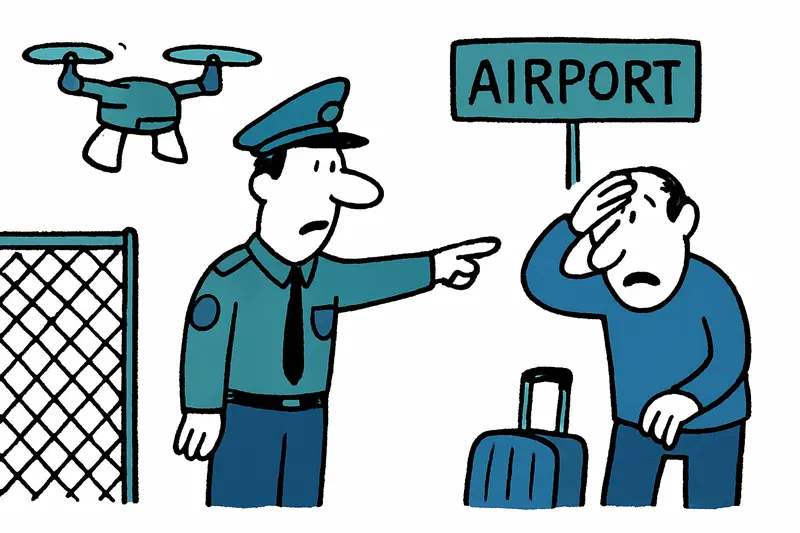
On Wednesday night a security incident at Leipzig-Halle Airport briefly shut down operations and caused considerable frustration for travelers returning from Mallorca. According to flight data, a Marabu flight initially had to divert to Nuremberg before landing in Leipzig in the early morning hours. The cause was the discovery of a drone on the apron that, according to initial reports, contained a detonator or a suspicious package. Authorities launched investigations; flight operations resumed in the morning.
The facts are sparse but clear enough to raise uncomfortable questions. Airports are considered highly protected areas: fenced aprons, cameras, security patrols, checks. And yet a drone apparently managed to approach a cargo aircraft in close proximity. For passengers onboard the diverted plane this meant waiting through the night, extra time in the cabin and chaos with connections both at their holiday destination and at home, as with a Delayed Mallorca–Berlin Flight: Landing in Hanover, Continued by Bus.
What is missing from public discourse so far is a precise chronology: How was the drone discovered in the first place? Who decided to divert the scheduled flight instead of carrying out on-site evacuation or defusing measures? And: which information channels were opened for travelers — or were they left sitting on planes, drowsy and bewildered?
On Mallorca the scene is familiar: in the evenings along the Passeig Mallorca locals and visitors smell the sea, listen to street music and see taxis stopping at petrol stations to pick up holidaymakers. The return trip, planned and routine, suddenly becomes a test of patience in such situations. I have been at Palma airport myself and seen travelers with sunscreen still on their faces and suitcases on the belt looking at each other in confusion — and no one giving clear information. These everyday moments are often missing from official accounts, as local coverage such as Drone over Palma Airport: Guardia Civil Investigates – How Safe Is Our Airspace? shows.
Critical analysis: Technically speaking, drones are a new risk area for airports. They are easy to acquire, mobile and — if fitted with an explosive — can become a real threat. Security concepts often rely on fences, personnel checks and radar solutions optimized for manned aviation, not for small, low-flying UAVs. There are also legal constraints: airports can designate no-fly zones, but enforcement in the surrounding area is difficult. It also remains unclear how well cooperation between civil airport management, aviation authorities and police forces works in real time.
What is missing in passenger protection is a Plan B: clear rules of conduct for diversions, mandatory information duties toward affected persons, emergency accommodation and guaranteed transport in night-time incidents. More often than one thinks, people end up alone on the apron with travel bags and little information — airlines point to “security decisions by the authorities”, authorities refer to investigations. Incidents such as Aborted Takeoff in Basel: Panic on Board – and What It Means for Mallorca Travelers illustrate how passengers can be left in limbo.
Concrete solutions: First, reliable anti-drone technology at all major airports, supplemented by radar and acoustic detection for small UAVs. Second, standardized response protocols: who decides when to divert, evacuate or continue a flight? These protocols must be transparent and guarantee immediate information for passengers. Third, better cooperation between airports and municipalities outside the fence: controls within a radius of several kilometers, surveillance of amateur drone takeoff and landing sites. Fourth, legal tightening: anyone flying a drone into a restricted zone must face significant penalties. Fifth, a minimum level of service for affected passengers — refreshments, accommodation and clear points of contact — should be mandatory, not negotiable. Recent cases such as Hours-long delay at BER – what Mallorca travelers need to know underline the urgency.
Many of the proposals are practically feasible: airports are already investing in anti-UAV technology; municipal authorities could make no-fly zones more visible; airlines and airports should regulate in their terms and emergency plans how affected passengers are looked after. It is important to create transparency: the public has a right to know how such decisions are made and who takes responsibility.
Conclusion: The night-time bomb suspicion in Leipzig-Halle shows that modern airports are vulnerable — and that travel planning today must also include the risk of unexpected night-time diversions. For holidaymakers from Mallorca, this means even more uncertainty during already stressful days. Those responsible must now not only investigate, but also create rules that do not leave people in the dark. Otherwise the conclusion remains: technology may become safer, but the organization behind it does not automatically follow.
Frequently asked questions
When is the best time to visit Mallorca for good weather?
Is the water in Mallorca safe for swimming most of the year?
What should I pack for a Mallorca trip?
What are family-friendly activities in Mallorca?
How can I get around Mallorca?
Do people speak English in Mallorca?
Are beaches in Mallorca suitable for swimming with kids?
What should I know about Mallorca's climate and packing for shoulder seasons?
Similar News

When the Wallet Becomes a Danger: Attack in Peguera and Lessons for Mallorca
In Peguera, two women are said to have stolen the wallet from a 75-year-old German couple. When the victim intervened, t...
Plata stays Plata: Young people take over, Llonguets remain
A small bar on Carrer de l'Argenteria will continue: Tolo Serra hands the place over to young Mallorcans at the end of t...

Unnoticed in the Luggage Compartment: How a Boy Traveled More Than 100 Kilometers in a Team Bus
A minor traveled in the undercarriage of a team bus for more than 100 kilometers until his cries for help were heard. A ...

Cap Vermell Grand: Second Michelin Key – a Gift for the East
The Cap Vermell Grand in Capdepera has been awarded its second Michelin key. For the region this elevates the luxury off...
Eurowings lets four aircraft carry names – a friendly idea that also reaches Mallorca
Eurowings is launching a campaign: four Airbus A320s are to carry the first names of people who help others in everyday ...
More to explore
Discover more interesting content

Can Cap de Bou

Townhouse Lleo 72
