
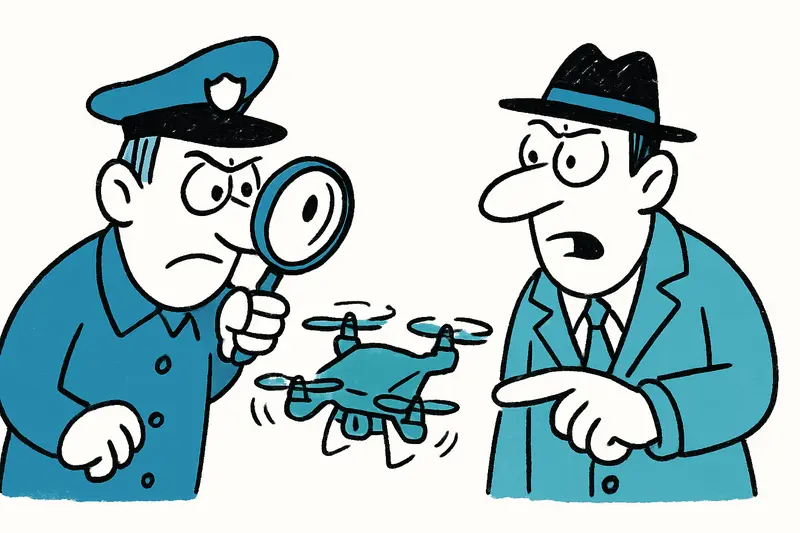
Drone over Palma Airport: Guardia Civil Investigates – How Safe Is Our Airspace?
On Sunday evening a drone flight interrupted operations at Palma Airport for about 35 minutes. The Guardia Civil and the special unit PEGASO are examining video recordings, radar traces and witness reports. Why such incidents are dangerous and how Mallorca should respond.
Drone over Palma Airport causes a halt – investigation underway
A brief moment of silence, then announcements and hurried footsteps: this is how travelers in Terminal A experienced the moment on Sunday evening when an unmanned aircraft entered the restricted airspace of Palma Airport. Flight operations were suspended for about 35 minutes, some flights were delayed, others had to be rerouted, as reported in Drone in the Sky over Palma: Why 35 Minutes of Chaos Aren't the Whole Story. In car park P3 people stood with phones to their ears, looking toward the runway — accompanied by the distant roar of engines and the regular beeping of ground vehicle alerts.
Who is investigating and how is the search conducted?
The Guardia Civil has taken over the investigation, and the airspace security special unit PEGASO is running the operation. Surveillance cameras along the access roads are currently being reviewed, radar and radio logs examined, witnesses interviewed, and social networks scoured for suspicious footage. It's painstaking detective work: drones are small, mobile pilots are often hard to identify, and the time windows are short. More details on the investigation and identified gaps can be found in Drone over Son Sant Joan: Investigations, Gaps and the Question of Effective Prevention.
Eyewitnesses near P3 described a “small, helmet-like device” — a vague recollection that can nevertheless serve as a clue for investigators. Whether the drone belonged to a hobby pilot, a tourist, or possibly a device carried with a rented mask is still unclear.
Why such an incident is more than just an annoyance
Even though there was no collision this time, the danger is real: even small drones can damage sensitive surfaces on impact or distract pilots during critical maneuvers. The consequences could be severe in the worst case — not only for aircraft but also for passengers and ground staff. Past cases have prompted diversions and refuelling stops, see Drone over Palma: Menorca refueling stop and the question of Mallorca's airspace safety. Legally, drones are considered aircraft; anyone entering controlled areas without permission risks hefty fines and criminal charges.
The central question now is: was this the careless act of an individual, or does the incident reveal gaps in surveillance and prevention around Palma Airport?
What is often missing from the public debate
The discussion quickly focuses on assigning blame — and in doing so some more practical issues are often overlooked. First: identifying pilots is difficult when there are no registration details or clear images. Second: many tourists rent drones without knowing local flight bans. Third: technical protection systems, such as radar detection for small UAVs or automatic geofencing warnings, are expensive and not installed everywhere.
All of this makes clear that sanctions alone are not enough. Prevention, education and technology must work together.
Concrete measures and opportunities
A pragmatic mix of measures could make Mallorca safer: increased checks and a visible PEGASO presence on sensitive days; expansion of optical and radar systems along critical sectors; mandatory registration and short training sessions for drone rental providers; clear information boards at beaches, parking areas and tourist centers near the airport.
Manufacturers and platforms could be held more accountable: geofencing standards that physically prevent takeoff in restricted zones should be reliably implemented and regularly tested. At the same time, a local reporting culture helps — residents, airport staff and visitors should be able to report suspicious activity quickly and easily without causing immediate panic.
What travelers and residents should do now
Practically speaking: check the rules before using a drone, keep your distance if unsure, and when in doubt avoid takeoff/landing near the airport. Tourists who rent a drone should ask the provider for a brief briefing. Residents can preserve photos and videos with timestamps and hand them over to the Guardia Civil as evidence — such small details often help investigations more than loud outrage on social media.
An appeal with a local perspective
The airport is both a lifeline and a source of noise: between taxi ranks, bus lines and cafés, Mallorca’s everyday traffic pulses here. The investigators' message is clear — follow the rules, be considerate. A drone over Son Sant Joan might look like a playful sight against a blue sky, but for the people who manage daily life and safety at the airport it is a serious problem.
The Guardia Civil has started its work. Whether they will find the pilot remains to be seen. Until then, it makes sense to stay alert and act sensibly — and to leave the drone on the kitchen table when walking near the airport over the weekend. Mallorca needs clear rules, technology and a sense of community so that air traffic can continue to hum safely.
Frequently asked questions
Is it safe to fly near Palma Airport if a drone was recently seen there?
What should I do if I see a drone near Palma Airport?
Are drones allowed near Mallorca airports?
How long can flights be delayed at Palma Airport because of a drone?
What are the Guardia Civil and PEGASO checking after a drone incident in Palma?
What should tourists know before renting a drone in Mallorca?
Why are drones such a serious problem for Palma Airport?
Can residents help investigate a drone incident in Mallorca?
Similar News

When coercive fines aren't enough: Could holiday rental owners soon face prosecution?
The island administration is stepping up action against unauthorized holiday rentals: high daily coercive fines up to €5...

Palma Airport on an Expansion Course — Who Decides How Much Growth the Island Needs?
Aena and Madrid are planning multi-million euro investments for Son Sant Joan and project higher capacities. Concern is ...
Who Gets Left Out? Why Overbookings Will Hit Many Mallorca Travelers This Summer
On hot check-in days at Son Sant Joan, frustrated travelers pile up. New figures from Reclamador.es show that a large sh...
When the Handyman Came: How an Engagement Ring Disappeared in Mallorca and What It Says About Trust
During a repair in Andratx a highly personal engagement ring went missing — a case that calls not only for punishment bu...
How Burglars Test Fincas in Mallorca — and What You Can Do About It
The Spanish National Police warn of a simple but effective trick: small markings on doors reveal whether a finca is occu...
More to explore
Discover more interesting content

Can Cap de Bou

Townhouse Lleo 72
