
Mystery at Plaça d'Espanya: The Masked Man Who Raises Questions
A man dressed in black, silent and with his face covered, has appeared in recent days at Plaça d'Espanya in Palma. Many passersby were unsettled. What's behind the staging — art, a PR stunt or a security risk?
Mystery at Plaça d'Espanya: The Masked Man Who Raises Questions
Key question: Can an intentionally enigmatic act sow unrest in the heart of Palma, or are rules and transparency more important than surprise?
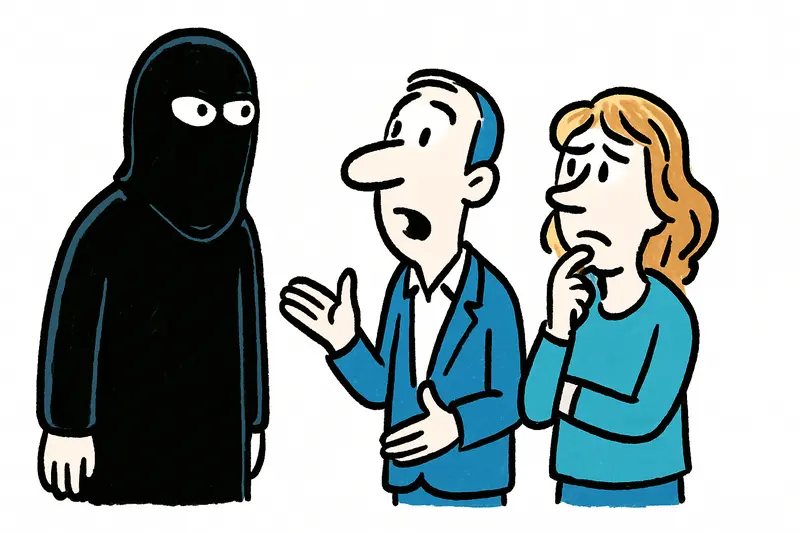
On a cool December morning, as buses braked suddenly at Plaça d'Espanya and taxi drivers looked out of their cabins, a man dressed in black suddenly stood in the middle of the square. His face was covered, a blue streak ran across the mask — no word, no explanation, only presence. To many observers the scene seemed disturbing; some thought the man was a stalker, others speculated about YouTube stunts or street art.
Some details are known: the appearance was not a one-off event, similar sightings followed in the days afterwards. At one of the later appearances the figure handed out envelopes with small prizes, apparently without explanation, which drew passersby closer. The people behind the action stress that they had not expected public attention and deliberately wanted to remain anonymous. The effect: conversations on benches, in cafés and in WhatsApp groups — exactly the talk the initiators apparently wanted to trigger.
That is the moment when the matter becomes critical. Plaça d'Espanya is not a quiet art space but a traffic hub: commuters with shopping bags, tourists with suitcases, elderly people seeking the sun on a bench. When ambiguity meets insecurity, confusion can follow and in the worst case lead to panic. So one must ask: what responsibility do the creators of such actions have toward the public?
From a journalistic perspective it is noticeable that public debate often divides into two camps — awed admirers and alarmed passersby. What is missing is a third element: the perspective of security and the legal framework. Was a permit obtained for performances in this location? Were residents and business owners informed? Such questions usually remain unanswered as soon as the meme spreads too quickly, as in other controversial episodes like Mask scandal: Why the detention of an MP in Mallorca raises more questions than answers.
On a morning at Plaça d'Espanya you can hear the metro announcements, the chug of the buses and the calls of street vendors. It is in this everyday routine that public communication works — visible, reliable and plain. A mysterious figure who appears without notice disrupts that mechanism. For older people with memories of insecure times or for people with anxiety disorders, such a staging is not a harmless joke.
So what is missing in the discourse? First: clear information. The organizers of creative actions tend to praise silence as an artistic device. Understandable. But in public space artistic freedom must be weighed against the need for safety. Second: rules and responsibilities. Who is liable if someone is injured, if a crowd forms, or if someone feels seriously threatened? Third: open dialogue with the neighbourhood — cafés, shops and commuters should be given advance notice that unusual actions will take place on certain days; local incidents such as Brave Intervention at Mercat de l’Olivar: Pickpocketing Prevented — But Where Was the Police? illustrate the thin line between public vigilance and the need for formal coordination.
Concrete proposals can be sketched quickly: the city administration could introduce a simple reporting requirement for performative actions in central areas — no bureaucracy, but a registration that names those responsible and provides an emergency contact. Organizers should be required to provide a short information board or flyers that offer explanatory notes without immediately killing the effect of the action. For larger productions safety officers would be sensible to monitor crowd flow and intervene if necessary; guidance on street performance and its intersection with public safety can inform such rules.
Local police and public order services could also be proactively involved: a brief coordination with the city is often enough to avoid misunderstandings. And for the digital realm a municipal information hub could list unusual actions — a calendar for flash mobs, street theatre and art performances.
From a day-to-day perspective this would be a relief. Someone who picks up their coffee at Plaça d'Espanya in the morning does not want to have to interpret mysterious figures. A shopkeeper does not want to have to explain why customers are nervous; similar trust issues have affected the hospitality sector in cases like Disguised as a Guest: Con-Artist Spree Hits Mallorca's Hotel Industry. A bit of transparency salvages the surprise without killing it.
Of course: art must be allowed to provoke. But provocation and responsibility are not contradictory. A short registration, a clear contact person and a simple notice for uninvolved bystanders would improve the balance — more courage for artists, more safety for everyone else.
Conclusion: the masked man succeeded in sparking conversations. That is legitimate. It becomes problematic when such actors appear in busy traffic areas without notice and without coordination. Those who use public spaces must consider the risk they create for others. The city, organizers and the public should now hold the debate: how much mystery can Palma tolerate without turning the square's routine into a loser?
Frequently asked questions
Why did the masked man at Plaça d'Espanya in Palma cause so much concern?
Are street performances in public places like Plaça d'Espanya in Mallorca allowed without notice?
What should visitors do if something strange happens at Plaça d'Espanya in Palma?
Why does mystery in public spaces feel different in Mallorca than in an art gallery?
Is Plaça d'Espanya in Palma a busy area for commuters and tourists?
How can organisers of street art in Mallorca avoid frightening passersby?
What made the masked figure at Plaça d'Espanya appear more troubling than harmless?
How should Palma handle surprise performances in crowded places?
Similar News
Released with Conditions: The Plus Ultra Suspicion and a Mallorcan Finca as Residence
A Dutch entrepreneur, sought in connection with the Plus Ultra case, was extradited to Spain after his arrest in Germany...

Haute Nuit in Puerto Portals: Fashion, Art and Indulgence by the Water
On October 2 the Lobster Club in Puerto Portals will be transformed into a stage for curated fashion, art and culinary e...
Magaluf: Watchtower Alarm – Lifeguards Pull Unconscious Beachgoer from the Water
After a drama in the late afternoon, two lifeguards at Magaluf beach rescued an unconscious 44-year-old man. He was stab...
Turquoise in the City: How dangerous is the color play of the Sa Riera?
The Sa Riera in Palma suddenly turned turquoise — a pretty motif, but behind the effect lies a discharge of saline waste...

Jeckliner at Sunnesching: Cologne spirit sets sail from Palma
In September 2027 the Mein Schiff 2 briefly becomes a floating carnival stage: four days with Cologne bands, comedy and ...
More to explore
Discover more interesting content

Can Cap de Bou

Townhouse Lleo 72
