
After World Cup exit and resignation: Nagelsmann's Mallorca walk and the question of privacy
After World Cup exit and resignation: Nagelsmann's Mallorca walk and the question of privacy
Julian Nagelsmann was seen with his wife in Puerto Portals on Saturday evening after his resignation as national team coach. The appearance raises questions: Is the island allowed to be a place for recovery — or must the public expect accountability?
After World Cup exit and resignation: Nagelsmann's Mallorca walk and the question of privacy
Why a short stroll along the harbor raises more questions than the photos show
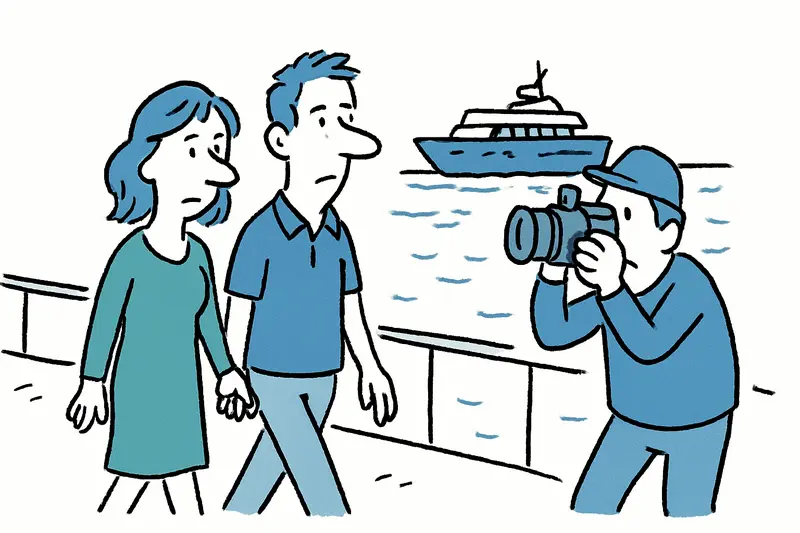
On Saturday evening, as the promenade of Puerto Portals glittered in the warm glow of the harbor lights and small waves lapped against the quay edge, Julian Nagelsmann and his wife were seen walking. According to eyewitnesses, the two strolled hand in hand along the water and withdrew around 11 p.m. Earlier, the DFB team had been knocked out of the tournament after a penalty shootout against Paraguay (3:4) and the coach had announced his resignation. This sequence is fact.
The scene is simple: yachts swaying in rhythm, cutlery and voices clinking from a tapas bar somewhere, cicadas humming in the background. For many, Mallorca is a place where you close the door behind you (see Celebrity Move to Mallorca: Peace or New Controversy at the Golf Course?). For someone who has just experienced the heavy defeat of a nation, that applies even more. Nevertheless, the photos and reports immediately sparked discussions: Does a national coach have to publicly account for his actions after such an event, or is he entitled to recovery?
Key question: Where is the line between legitimate public interest and the right to private withdrawal? This question is not new; it is just rarely as clearly visible as here — a coach, a harbor, paparazzi-like shots taken in a familiar setting, as with From the Pitch to the Seafront: Mats Hummels Recharges in Mallorca.
Critical analysis: There is a public interest in understanding decisions that affect sports organizations and fans. The resignation after an early World Cup exit is such a decision. At the same time, the immediate observation of a private moment is problematic. Often the debate loses nuance in these hours: instead of a factual review of the sporting failure, the staging of those affected dominates. The result is twofold: it hinders honest discussions about mistakes within the team, while at the same time creating public pressure that can exacerbate personal crises.
What is missing in the discourse: concrete rules. There are few binding standards for the time immediately after major sporting defeats — neither for dealing with those affected nor for media and photographers (see Mazón's Resignation: One Year After the Flood — What Matters Now for Mallorca). The question of how associations organize sensitive communication also often remains open. On Mallorca, popularity and tourism quickly mix with curiosity; promenades like that of Puerto Portals are public, but not necessarily free from intrusion.
Everyday scene from Mallorca: A waitress in the small café at the end of the pier, who is just washing glasses, shrugs and says in Mallorcan-German: "Sometimes you see celebrities here, but we just want our after-work time." A fisherman parks next to a luxury boat at the harbor, a moped rider honks, a dog pulls on its leash — and in the middle of it people trying to find normality after a monstrous week, a dynamic also visible in coverage such as Divorce in Mallorca: Ana Ivanović Files the Papers – How the Island Reacts.
Concrete approaches: First, associations like the DFB and organizers could introduce standardized post-match protocols: brief, transparent information on the situation, details of planned steps and a minimum period during which those affected should be left in peace. Second, local authorities and harbor operators should examine whether time-limited protective zones are possible in sensitive areas — not as special treatment, but as protection of privacy after distressing events. Third: modernize media ethics — clearer rules on handling images of vulnerable people, paired with voluntary commitments from major agencies.
Conclusion: That Julian Nagelsmann seeks distance after the World Cup exit is human and understandable. At the same time, the incident shows how thin the line between public interest and privacy has become. Mallorca offers calm, but also publicity; the island is both at once. A bit more procedural certainty — for associations, media and host locations — would help make such situations less loud and conspicuous, without preventing the necessary review of the sporting failure.
Frequently asked questions
When is Mallorca's best time for good weather and outdoor activities?
What should I pack for a trip to Mallorca?
Are Mallorca's beaches suitable for swimming with kids?
How can I get around Mallorca without renting a car?
What is Palma known for and how could I spend a day there?
Are there scenic drives in the Serra de Tramuntana?
Is Sóller a good base for exploring Mallorca?
Where around Alcúdia is good for snorkeling?
Similar News

"Expensive chaos" and many open questions: What clients can do when a lawyer suddenly stops responding
Several clients complain that a well-known German lawyer in Mallorca has been unreachable for months. Key question: What...
TV tip: 'The Last Problem' — Mallorca as the setting of a classic crime
A classic whodunit on Mallorca: A new miniseries set in spring 1959 brings storm, an isolated hotel and a dense web of s...
Nipping Sea Creatures: Why Bathers in Cala Major and Elsewhere Should Be Cautious
In Cala Major, bathers have reported being nipped by small fish. What is behind it, how can problems be avoided — and wh...
Forced eviction in Santa Catalina: When a 65-year-old slept in her car and showered on the beach — a question of responsibility
The story of Pilar López from Santa Catalina represents a problem affecting many Mallorcans: How can an island with a bo...
New traffic rules from October 1: What Mallorca visitors and locals need to know
From October 1, 2026, Spain will implement far-reaching changes to traffic regulations. Important for Mallorca: greater ...
More to explore
Discover more interesting content

Can Cap de Bou

Townhouse Lleo 72
