
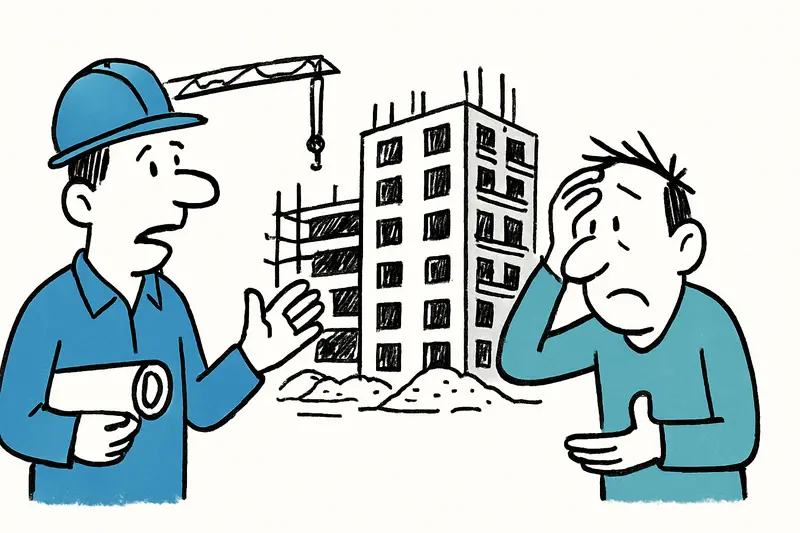
Nearly 10,000 planned flats on the Balearic Islands remain construction sites – who pays for the standstill?
Nearly 10,000 planned flats on the Balearic Islands remain construction sites – who pays for the standstill?
Data from the Spanish housing ministry show: of five large developments with space for around 11,200 units, only just under 15 percent have been completed so far. Why is housing construction stalling — and what is missing from the debate?
Nearly 10,000 planned flats on the Balearic Islands remain construction sites – who pays for the standstill?
Key question: Why are so many projects approved on the islands but not built?
The Spanish housing ministry lists five large developments on the Balearic Islands with a total of around 11,200 planned housing units. So far only about 15 percent have been completed – which means that almost 10,000 flats have been planned but not realized. The numbers are clear. The significance for everyday life and politics on the islands is just as clear.
At first glance, authorities and market participants cite familiar reasons: rising construction costs, lack of financing, bureaucratic hurdles and the aftereffects of the 2008 property crisis. That suffices as an explanation, but it is by no means adequate. It is a good moment to ask deeper questions.
Critical analysis: High material and labor costs often cause projects to fail at the budgeting stage. Banks and investors have become more cautious; the usual credit lines and advance sales no longer work in the same way as a decade ago. At the same time, approval procedures stall – not just because of paperwork, but because many projects are held up by environmental requirements, contamination checks or conflicting local plans. On paper, a neighborhood for 2,000 homes sounds elegant. In reality it collides with infrastructure issues, access roads, sewers, water rights – and all of that causes delays.
There are locations that stand out: Camp de Mar (Andratx), Es Mercadal (Menorca), Palma and Sant Josep (Ibiza) appear in the data as areas with many unfinished projects. On the ground it looks like this: a look along the coastal road at Camp de Mar shows abandoned signs for new developments, building plots overgrown with thistles, and workers who come and go intermittently. In Palma you hear at the Plaça Major the kitchen-table conversations of homeowners’ associations waiting for bought but never completed apartments; the waiting list for social housing in the Balearics highlights growing demand; in Sant Josep there are plots with concrete foundations awaiting further decisions.
What is missing from the public discourse: Two things. First: the question of ownership of vacant building plots. Many sites are owned by large developers or fund companies speculating on higher prices. Second: the perspective of the municipalities. Municipalities face infrastructure costs without immediately seeing revenues from completed homes. This double asymmetry – private risks on financial markets, public burdens on the ground – is rarely discussed openly.
Another often overlooked issue is the quality of demand. On the Balearic Islands short-term tourist rentals, second homes and the need for affordable housing mix together. A project designed solely for holiday apartments ten years ago no longer fits the social reality on the ground today.
Concrete approaches: Small, combinable steps rather than big universal remedies.
- Streamline approval processes: digital portals, clearer deadlines, binding time windows for responses from environmental authorities and municipalities; the proposal for express building permits for social housing highlights the trade-offs.
- Public interim financing: short-term loans or guarantees for projects that include social housing quotas; the Balearic government's recent move to expand publicly managed stock, as in Ibavi grows — 171 new apartments, shows one way to increase supply.
- More flexible use concepts: repurposing planned holiday apartments for social or medium-term housing, modular construction methods that can be adapted later.
- Transparency rules: disclose who owns which plots and what intentions lie behind the projects. Municipalities need an overview to apply tax and planning instruments effectively.
- Regional infrastructure funds: municipalities can pool resources so sewers, water and roads are completed without a single locality bearing high upfront costs alone.
On Mallorca this means concretely: if a new residential area off the Ma-1 or near Portixol becomes stuck, town halls, island councils and regional authorities must coordinate – otherwise plots rot, costs rise and no solution emerges.
An everyday scenario: on a hot morning a retiree sits in the shade of the plane tree in front of the corner café, looks at a fallow construction site and says how her grandchildren can no longer find affordable housing. The waiter clears plates, a construction fence rattles in the wind; nobody really benefits from the standstill, except perhaps speculators on paper.
Pithy conclusion: The bare numbers – nearly 10,000 unbuilt flats – are a symptom of an inefficient tangle of market interests, regulatory problems and a lack of coordinated action. What is needed are fewer platitudes and more binding instruments: clear deadlines, transparent ownership records, targeted public financing and pragmatic repurposing rules. Otherwise today's construction ruins will become tomorrow's social problems.
This debate concerns not only investors and administrations. It is a question of how the islands want to live, work and continue into the future. And it can be tackled – if all actors agree on binding steps instead of continuing to wait for better times.
Frequently asked questions
What is the weather like in Mallorca in early November?
Can you still swim in Mallorca in November?
What should I pack for Mallorca in November?
Is Mallorca a good place for a city break in November?
What is it like in Palma de Mallorca in November?
Is November a busy month in Mallorca?
Can you go hiking in Mallorca in November?
What are the sea and beach conditions like in Mallorca in November?
Similar News

Magaluf: Watchtower Alarm – Lifeguards Pull Unconscious Beachgoer from the Water
After a drama in the late afternoon, two lifeguards at Magaluf beach rescued an unconscious 44-year-old man. He was stab...

Turquoise in the City: How dangerous is the color play of the Sa Riera?
The Sa Riera in Palma suddenly turned turquoise — a pretty motif, but behind the effect lies a discharge of saline waste...

Jeckliner at Sunnesching: Cologne spirit sets sail from Palma
In September 2027 the Mein Schiff 2 briefly becomes a floating carnival stage: four days with Cologne bands, comedy and ...
Finally Home: Mike and Leyla Heiter Buy Villa with Sea View in Mallorca
The reality TV couple Mike and Leyla Heiter have bought a house in Mallorca with a roof terrace and sea view. An Instagr...

Arrest after series in Palma: Who protects apartments from repeat offenders?
The National Police arrested a man in Palma who investigators say may have broken into several apartments. In one incide...
More to explore
Discover more interesting content

Can Cap de Bou

Townhouse Lleo 72
