
Necklace snatched in Palma: Tourist injured – What is missing in the cityscape to prevent necklace thefts?
A German tourist was attacked in a library courtyard in Palma: a man ripped a necklace from her neck, she sustained a neck injury. How safe do we feel in the old town, and what gaps remain in protecting visitors?
Necklace snatched in Palma: Tourist injured – What is missing in the cityscape to prevent necklace thefts?
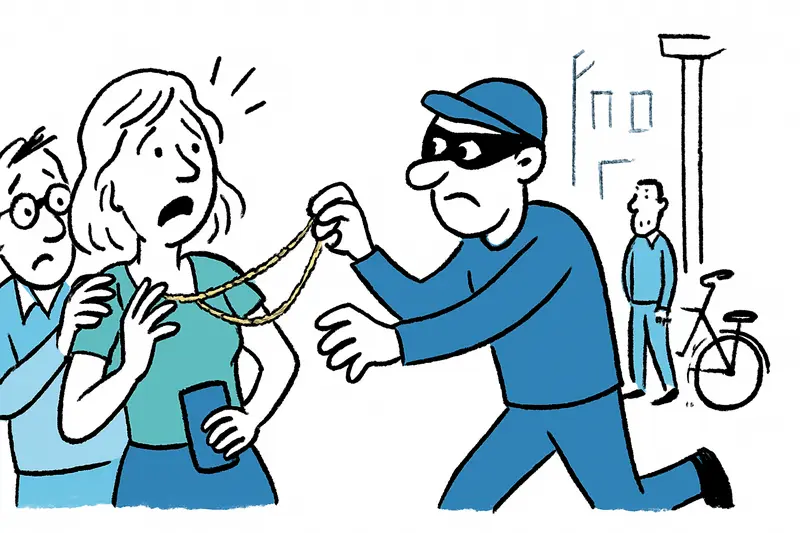
Late on a Tuesday morning last week, a brutal incident occurred in the courtyard of a library in central Palma: a German holidaymaker had a gold necklace ripped from her neck while taking a photo with her phone. The woman suffered a neck injury; bystanders assisted her and library security held the suspected perpetrator until police arrived.
Key question: How vulnerable are pedestrians and tourists in Palma's busy lanes — and who actually protects them?
The facts can be sketched briefly: the attacker reportedly approached from behind, yanked the necklace away and tried to flee on a bicycle. A witness alerted the building's security guards who stopped the man. During the subsequent search, jewelry was found; officers later also discovered another necklace that apparently belonged to the victim. The arrested man is now under investigation on suspicion of robbery.
Brief analysis: the crime scene was not a dark back alley but an inner-city courtyard, visited during daytime and essentially publicly accessible. These are exactly the places where offenders rely on opportunistic attacks — a rapid move, a sudden grab and a possession is gone. The short escape by bicycle points to a tactic of quick getaway routes, favored by Palma's layout and density, as seen in Watch theft in Palma's Old Town: Escape ends in Barcelona – How safe are our streets?.
What remains thin in the public discourse: prevention is often reduced to beach or taxi problems rather than quick street robberies in the old town. The debate about tourist safety frequently narrows to visible police presence, instead of concrete measures in critical micro-locations: library courtyards, narrow alleys, bicycle parking areas in front of cultural sites, a focus similar to concerns raised after the Nighttime Attack on the Paseo Marítimo: How Safe Is Palma’s Party Mile Really?.
An everyday scene: it is a mild morning, church bells in the distance, pigeons hopping over the stones, tourists crowding the curb, someone leans their bicycle against a marble column and goes to take photos. It is in this relaxed atmosphere that attention lapses — and thieves take advantage.
Concrete solutions, not just phrases but actionable:
1) Visible, trained presence: Staff at libraries and museums should be regularly trained in de-escalation and in recognizing pickpocketing and snatch tactics. A brief intervention to block a flight path can be decisive.
2) Secure bicycle parking zones: Bikes parked immediately at entrances provide means for a quick getaway. Municipal racks positioned with a view of the street and clearly visible routes reduce these problems.
3) Rapid information for victims: On-site notices with immediate measures (emergency numbers, first-aid points) and simple reporting channels to security staff should be visible — not only on websites.
4) Data-driven risk map: Authorities and cultural institutions could share anonymized incident statistics so staff and visitors know which streets and times require extra caution.
5) Prevention for visitors: Small, practical tips for travelers — store jewelry securely, wear bags in front, quickly scan the surroundings when taking photos — can significantly reduce risk.
Legally, it is important that such incidents are documented and investigations proceed consistently: the on-site arrest shows that immediate intervention can help, as when a young man was detained over a series of necklace robberies.
At the same time, the discussion must not become black-and-white: many people live and work here, and the causes of street crime are often complex — from poverty to gang organization to opportunism, as highlighted in Trust Damaged in the Old Town: What Palma's Jewelry Theft Reveals About a Larger Problem.
Also missing is open, fact-based communication between security authorities, cultural institutions and tourism bodies. Not to sow panic, but to change everyday routines — lighting, staffing schedules, bicycle parking locations, notices at popular photo spots.
Conclusion: the robbery in a busy library courtyard is both a warning signal and a wake-up call. Palma is not a dangerous city, but certain everyday situations are vulnerable. We need sharper attention to small interventions — a changed order of things that ensures the next tug at the neck does not become a physical injury and the loss of a memory. In short: more on-site attention, better information for visitors and small organizational changes could prevent many of these cases.
If you are walking in the old town: keep your eyes open when taking photos, quickly check your bags and jewelry — and if something happens, bystanders and building staff often step in immediately. That helped in this case.
Frequently asked questions
What measures can Palma implement to protect pedestrians and tourists from quick thefts in busy streets?
What practical tips should visitors in Palma follow to prevent theft of jewelry?
How can Palma's cultural venues contribute to safer visitor experiences?
Why is secure bicycle parking important in Palma's safety plans?
How should Palma authorities communicate safety risks without alarming residents and visitors?
What quick reporting options should be available to people if a theft occurs in Palma?
Are there specific micro-locations in Palma where theft risk is higher?
What everyday routines can visitors in Mallorca’s old town adopt to reduce theft risk?
Similar News

Crackdown on Anchored Boats in Port de Pollenca: Who Pays the Price?
The coastal authority is targeting boats that remain anchored permanently in Port de Pollenca. Nine vessels are under sc...
Leyla Heiter Bets on Majorca: 'Leyöner' Set to Open in 2027
After a failed attempt in Frankfurt, Leyla Heiter announces she will open her döner shop 'Leyöner' on Majorca in spring ...
All Saints' Day in Mallorca: Shops closed — why the exceptions raise questions
On All Saints' Day most shops are closed; cemeteries have extended opening hours and traffic is redirected. Why do large...

170 Meters Above the Abyss: When Social-Media Stunts Put the Tramuntana at Risk
A highline at the Agulla des Frare has sparked debate. Who protects Mallorca's protected slopes from imitators — and fro...

Wood before the windows: Why Palma's shopkeepers are now on alert
Business owners in Palma are boarding up shop windows and considering early closing. Key question: Is that enough, or is...
More to explore
Discover more interesting content

Can Cap de Bou

Townhouse Lleo 72
