
Nervous Reaction at a Traffic Stop: Why Campos Is Not Just a Sniffer-Dog Problem
Nervous Reaction at a Traffic Stop: Why Campos Is Not Just a Sniffer-Dog Problem
At a traffic stop in Campos a 37-year-old German was arrested with a bag full of drugs. Our reality check explains why such finds are becoming more common and what is missing on the ground.
Nervous reaction at a traffic stop: why Campos is not just a sniffer-dog problem
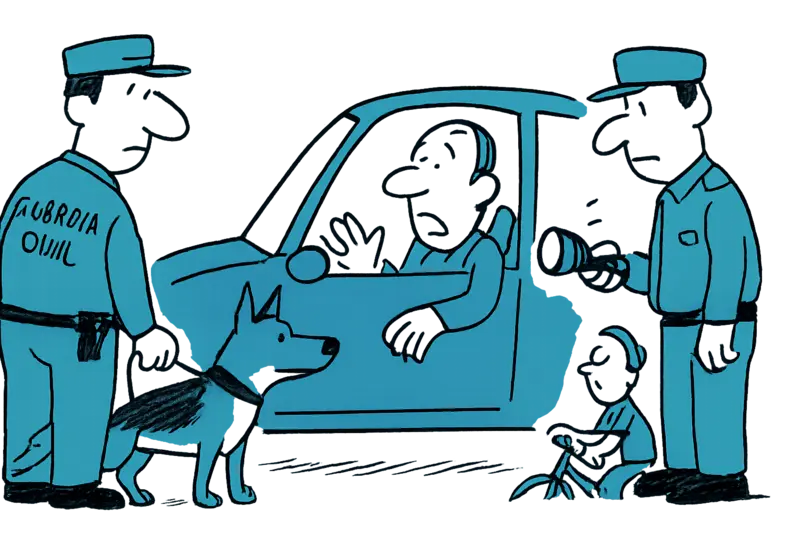
Late on Saturday afternoon, shortly before sunset, officers of the Guardia Civil stopped a Ford Focus at an entrance to Campos. A sniffer dog was present; shortly afterwards a shoulder bag was secured, from which cans of MDMA, ketamine, crystal meth and cocaine were taken out, apparently packaged in retail units. The driver, a 37-year-old German, was arrested and the substances seized. The sober facts are known. But the real question is:
Key question: How deep does the trade reach that such traffic stops only reveal at the surface?
The stop sounds like a routine measure: town entrance, dim light, controlling voices and a dog sniffing the car. Yet every package found is an indication of a network. Such finds do not answer how large the network is, whether it is organized locally, or whether Mallorca serves as a distribution hub for mainland or international trade — similar incidents elsewhere, such as the Traffic stop in Palma: 171 pills, two arrests – how safe are our streets?, draw the same questions. A single arrest stops the flow for hours, not for weeks.
Critical analysis: What we can learn from the operation without speculating: First, the seizure of different substances in one bag shows that this was likely intended for sale, not just personal use; other vehicle stops have even involved large cannabis seizures, for example the Plants in the trunk: Arrest in Colonia de Sant Jordi raises questions. Second, the time and location — a control shortly before sunset at a town entrance — suggest a strategy by the forces to target traffic junctions deliberately. Third, the deployment of a sniffer dog increases the hit rate but is logistically demanding and cannot be a permanent solution.
What is often missing in public debate is the perspective on demand and local structures. Calls for "more police" alone fall short. It is also about: Who are the buyers here in Mallorca? Are they mainly tourists, commuters, the nightlife crowd or local consumer groups? And not least: How does seasonality influence the distribution chains? Without answers, every control remains reacting rather than preventing.
Everyday scene from Mallorca: On the square in front of a bar in Campos two women sit and drink another cup of coffee. Conversations falter as the Civil Guards walk by with flashlights; a dog sniffs at a car door, a boy on a bicycle stops and stares. This is what security looks like here: visible, temporarily reassuring, but also carrying a hint of neighborhood scepticism. People talk about the arrest, as in other cases such as the Quiet raid in Palma: Arrest after neighborhood tips — and what's still missing, glance at passing cars, yet by evening routine returns.
Concrete approaches: 1) Better data collection: More consistent evaluation of discovery locations, times and transport routes can reveal patterns. 2) Networking: Intensify preventive work between municipalities, port authorities and airports, as illustrated by the Drug discovery on a ferry from Barcelona: Three arrests in Palma and the questions that remain. Mallorca's location makes it attractive for transit. 3) Local prevention: Awareness-raising in tourism businesses, clubs and among landlords about risks and legal consequences. 4) Social services: Low-threshold support for consumers, for example via health centres, reduces demand. 5) International cooperation: Exchange with the countries of origin of registered offenders and consumers; this is no substitute for local work but a building block.
A word on law enforcement: Seized quantities and the way items are packaged often allow conclusions about sales volumes. For more sustainable impact, investigations must go beyond the arrest: forensic evidence collection, financial investigations and uncovering links to dealer networks. All this requires resources — personnel, lab time, legal follow-up.
What is often still missing in the debate: an honest assessment of how much capacity the local police really have against organized structures and what role prevention plays. It is comfortable to celebrate individual arrests; in the long term that is not effective. Guidance on prevention strategies from organisations such as the EMCDDA drug prevention resources can help shape local efforts.
Punchy conclusion: The scene in Campos — town entrance, sniffer dog, bag full of cans — is not an isolated image but a symptom. Those who want to protect Mallorca must think on two tracks: more effective police investigations and at the same time more work on causes and demand. Otherwise such operations remain what they often are: good headlines for an evening and little effect for the following weeks.
Frequently asked questions
What is the best time of year to visit Mallorca for warm weather and beach days?
Are there family-friendly beaches in Mallorca?
What are good day trips from Palma to explore Mallorca?
What makes Cap de Formentor a must-see in Mallorca?
Is Palma a good base for exploring Mallorca?
Is Cala Millor suitable for families?
What should I pack for a trip to Mallorca?
Is it safe to swim in Mallorca year-round?
Similar News
Several Days of Rain Approaching: How Well Is Mallorca Prepared?
Aemet says: rain from Thursday until at least Tuesday, especially heavy on Monday. Temperatures remain mild. A reality c...
Cameras Against Illegal Dumping: Porto Cristo Monitors Problem Areas – a Reality Check
Manacor has installed four surveillance cameras at particularly problematic waste spots in Porto Cristo. A local check a...
Reality check: Palma's "white" torrent — harmless salt or neglected warning sign?
White crusts on the Torrent de Sa Riera are causing a stir. Emaya describes them as salt deposits. Our reality check: wh...
When Ryanair's fleet grows: What Mallorca's travelers should know
Ryanair will soon receive 737 Max 10 jets. The larger aircraft offer potential savings — but also new risks for flight o...

Rising fuel and housing costs: Why Mallorca's overland buses are suddenly overcrowded
More and more people are leaving Palma — and boarding TIB buses: Between January and August 2026, the network recorded o...
More to explore
Discover more interesting content

Can Cap de Bou

Townhouse Lleo 72
