
Shortly After Opening: Why Caimari's New Primary School Is Already Leaking
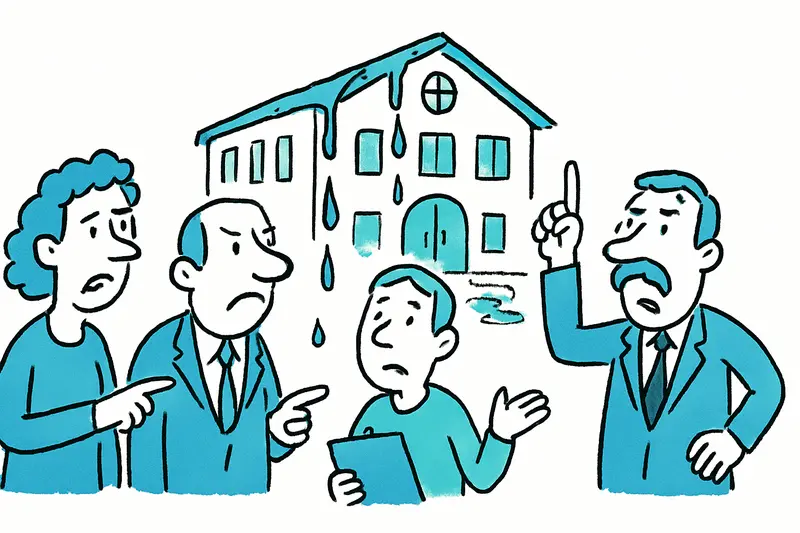
Only days after the ceremonial opening, rainwater accumulated in classrooms at the new primary school in Caimari. Who is responsible — and how quickly will the damage be repaired?
Shortly after inauguration: New primary school in Caimari has water damage – how could this happen?
It sounds like a bad joke: in the photos and videos that circulated through the village this week (see Three days old — and already leaking: New village school in Caimari under scrutiny) you can see puddles near the entrance hall, dark water stains on the ceiling above the library and buckets standing in the corridor. The new primary school in Caimari was only officially opened on Monday, as reported in Poco después de la inauguración: por qué la nueva escuela primaria de Caimari ya tiene filtraciones. The central question is: how can a project that reportedly cost around €4.8 million (reported in Tres días y ya gotea: la nueva escuela de Caimari tiene filtraciones en el techo) already be leaking at the first real rainfall?
In Caimari, where people know the smell of wet stone after a mountain storm and church bells still ring on Sundays in the midday heat, the mood ranges between pride and frustration. Parents, teachers and residents speak of surprise and annoyance — but also of pragmatism: buckets and plastic sheeting have been set up as a temporary measure, teaching materials are being stored elsewhere and some classrooms have been swapped.
Who is responsible — and what often goes wrong?
A known process now formally begins: the education authority has announced a technical inspection. Experts are to examine the building, a report will be produced, and if the defect is due to construction errors or inadequate sealing, the construction company must carry out repairs. In practice, however, this is often where the solution is delayed.
Common causes that become visible in heavy rain are insufficient roof drainage, faulty window connections or problems with external insulation. The crucial point is that such defects usually only become apparent during real weather. Acceptance records can look formally clean — and yet that does not exclude the possibility that small details were overlooked.
What is rarely mentioned in public debate
Apart from the question of blame, there are aspects that are little discussed: how was construction supervision organized? Was there independent quality control during the construction phase? Who signed the final acceptance and on what tests was it based? And not least: how robust are the contractual guarantees and insurances that protect such public construction projects?
Another often overlooked point is changing weather patterns. Extreme rain events are also increasing in Mallorca — an argument for planning drainage, joints and materials in the future not only according to past standards but with more precautionary climate tolerance.
What does this mean concretely for school operations now?
Classes are continuing for the time being, but with restrictions. Some classes have been relocated and teachers are improvising. The municipality is checking alternative rooms — an empty community hall, spaces in neighboring towns or temporary, weather-protected solutions on the schoolyard could be options. Parents are considering keeping children at home on rainy days. This creates uncertainty and places a burden on families.
Concrete steps: fast, transparent, sustainable
To prevent the problem from sinking into endless correspondence, clear measures are needed. Proposals that take effect quickly and also have a lasting impact:
1. Immediate independent assessment: An external forensic engineering team should inspect within a few days and recommend short-term sealing measures.
2. Priority for emergency measures: Temporary sealing at affected points, repair or uncovering of gutters, pumping out and use of drying equipment to prevent mould formation.
3. Contractual enforcement: The municipality must set clear deadlines for the construction company and rigorously apply warranty rights. Public projects must not become a waiting game.
4. Transparent communication: Short, regular updates for parents and staff — what is being worked on, who will be on site and when, which rooms are affected — reassure more than silence.
5. Long-term adaptation to extreme weather: For future projects, drainage and sealing standards should be reviewed and, if necessary, tightened. Independent quality monitoring during construction would be advisable.
Between anger and hope
People in Caimari do not want a political blame game; they want a functioning school where children can learn and play without anyone having to spread towels at the first storm. It is a good sign that the authorities have responded — now speed and transparency matter. After all, wet corridors, buckets in the entrance and parents' worries are not a good start for a modern school building.
In the end the bitter lesson remains: good photos at the opening and a glittering ceremony do not replace reliable construction quality. And when the next church bell rings in Caimari, there should not be drops falling from the ceiling.
Frequently asked questions
Why is the new primary school in Caimari leaking so soon after opening?
What usually causes water leaks in a newly built school in Mallorca?
Can classes continue if a school in Mallorca has water damage?
Who is responsible when a public building in Mallorca leaks after opening?
What should parents in Caimari do if it rains and the school is still affected?
Is this kind of building problem more likely during Mallorca’s heavy rain?
How much did the new school in Caimari reportedly cost?
What happens after a technical inspection of a leaking school in Mallorca?
Similar News

From Deposit to Arson: How a Dispute over Jet Skis in El Molinar Escalated
After a nighttime fire in El Molinar a detainee is in pretrial detention. How could a conflict between a rental company ...
Lying Instead of Standing: How Prone Paddling Is Conquering Mallorca's Waters
On your belly across the sea — prone paddling is bringing fresh energy to Mallorca's watersports. Where to start, which ...
Housing Shortage in Mallorca: Assessment, Questions, Proposals
Over 2,000 new housing units through repurposing and special rules – sounds like a success. But do they really help peop...
Garbage, Stench, Fire Risk: What Is Really Going Wrong in Son Bauló
An apartment ensemble illegally built for years near Son Bauló is falling into disrepair, largely occupied and creating ...

Legat on Mallorca: Between Football Dreams and Political Alarm
The former pro is intervening in German politics from Mallorca – loud, emotional, without much detail. What does that br...
More to explore
Discover more interesting content

Boat Tour with BBQ along Es Trenc Beach

Private transfer from Mallorca Airport (PMI) to Pollensa
