
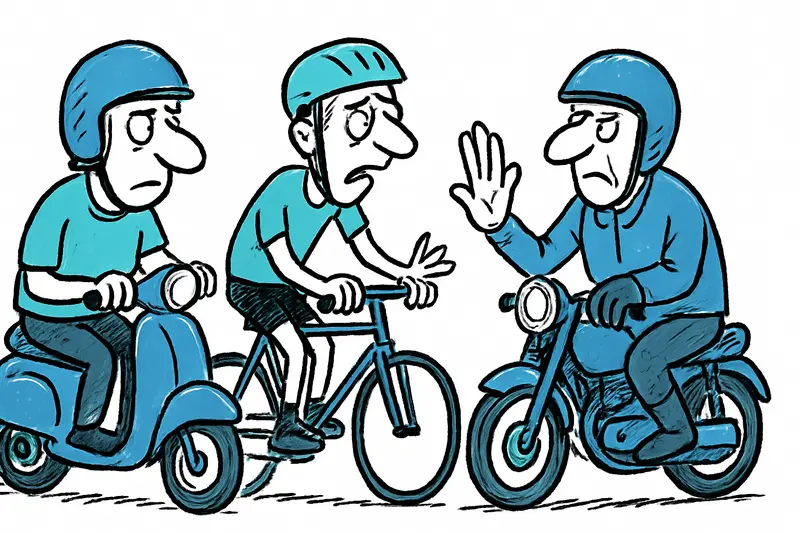
New Traffic Rules in Mallorca: Do They Protect Us — or Create More Confusion?
New Traffic Rules in Mallorca: Do They Protect Us — or Create More Confusion?
Helmet requirement, gloves, minimum age for e-scooters: the new rules are clear — their implementation in Mallorca is less so. A reality check with everyday scenes and concrete suggestions.
New Traffic Rules in Mallorca: Do They Protect Us — or Create More Confusion?
A reality check on helmet requirements, gloves, overtaking rules and the question: how is this supposed to work in practice?
Key question: Do the new regulations for bicycles, e-scooters and motorcycles really protect the more vulnerable road users — or do they simply shift the chaos onto the island's roads?
The facts are simple: the Spanish central government has revised the traffic regulations. New measures include, among other things, a minimum age of 15 for e-scooters, a helmet requirement — not only for scooters but also for cyclists outside built-up areas (see the e-scooter accident in Alcúdia where a helmet hung unused on the handlebar) — the wearing of gloves for motorcyclists and passengers on interurban roads, and an obligation to wear "closed footwear" (sandals on motorcycles are therefore not allowed). When overtaking bicycles, a car driver must reduce their speed by at least 20 km/h compared to the permitted maximum speed; on multi-lane roads a full lane change is required and a lateral distance of 1.5 m must be maintained. In cities cyclists are advised to ride as close to the middle of the lane as possible, and car drivers should keep at least five metres distance to cyclists ahead of them in the same lane. These points are also stated in the communication from the Dirección General de Tráfico (DGT).
It sounds reasonable. On paper. On Mallorca's roads, however, rules collide with local realities. Think of a Tuesday morning in central Palma: delivery vans struggle through the Plaça Major, tourists on e-scooters make sudden U-turns on the Passeig del Born, and at the edge a commuter pushes their road bike over cobblestones toward Camí de Sa Farinera. Who is supposed to reduce their speed by 20 km/h here and when? How does a patrol police measure the lateral distance on a narrow coastal road like the Ma-10, as highlighted in Cruising Safely on Mallorca: What Tourists and Authorities Should Finally Do Differently? These everyday scenes show where law and practice diverge.
Critical analysis from a Mallorcan perspective:
- Age and IDs: Tourists rent e-scooters spontaneously. Who reliably controls the minimum age? Rental companies need practical age-verification methods; random checks by the Guardia Civil are not enough. - Helmet requirement outside built-up areas: Many cycle paths end abruptly. On country roads without a safe shoulder cyclists remain vulnerable, even with a helmet. - Gloves and "closed footwear": Legally sound, but hard to check. A police officer will not inspect footwear and gloves on every country road. - Distance and overtaking rules: 1.5 m lateral distance is often physically impossible on narrow coastal stretches without moving into the oncoming lane — see the discussion on the new supplementary 1.5‑meter sign. The rule provides that on multi-lane roads the lane must be changed; on single-lane rural roads the demand is for a speed reduction — but how often is this consistently measured and sanctioned?
What is missing from the public discourse:
- Concrete implementation plans for traffic enforcement on narrow island roads. - Multilingual information at arrival points (airport, ferry terminals, major hotels). - Guidelines for rental companies on how age checks or helmet provision can be organised in a legally secure way. - A clear staged plan: when rollout, when warnings, when fines?
Concrete, locally viable solutions:
- Three-month warning phase with notices: In the first weeks only warnings instead of fines. This builds acceptance. - Obligation to cooperate with rental companies: identity check when renting, helmets visibly attached to the vehicle, mandatory briefing via video before starting the ride. - Visible information points: Signs in multiple languages at airport exits, the Puerto de Palma and large car parks with short information on the helmet requirement and minimum distance. - Focused controls where it makes sense: Ma-10, Ma-13 and access roads to popular beaches should be spot-checked in the first months. - Infrastructure priority: Small but targeted widenings and safe overtaking spots on interurban roads, clear marking of inner-city bike lanes. - Local social campaigns: Workshops in communities (Calvià, Alcúdia, Manacor) with practical demonstrations — how much 1.5 m really is, how to overtake correctly.
A practical recommendation for cyclists and scooter riders: Wear a well-fitting helmet at all times outside the city. When overtaking is tight, take the lane and, if necessary, stop briefly rather than risk being passed dangerously. For motorcyclists: gloves and closed footwear are not only legal requirements but significantly increase your chances of remaining uninjured, as discussed in Why Mallorca Remains Dangerous for Bikers — and What Could Really Help.
Bottom line: The new rules are a step forward — especially because they place greater focus on the vulnerable. Their value, however, depends on implementation. Without clear procedures, multilingual information at arrival points and a pragmatic staged plan, Mallorca risks becoming a patchwork of rules where neither locals nor visitors know what to expect. The DGT has delivered the rules; the next task lies with local administrations, rental companies and the police. Otherwise one thing remains certain in the end: more signs — and still too many risky overtaking manoeuvres on the beautiful but often narrow island roads.
Frequently asked questions
What are the new traffic rules in Mallorca and who do they affect?
Do cyclists need to wear a helmet in Mallorca outside built-up areas?
How does the 1.5-meter overtaking rule apply on Mallorca's narrow coastal roads?
What are the main enforcement challenges for e-scooter rules in Mallorca?
What practical steps could Mallorca take to implement the new traffic rules?
Where will visitors find multilingual information about the new rules when they arrive in Mallorca?
What practical tips can help cyclists and scooter riders stay safe under Mallorca's new rules?
Do the new rules really reduce road chaos on Mallorca or could they cause more confusion?
Similar News

Cafetería San Siro: A Meeting Place on Schinken Street Since 1966
In the middle of Schinken Street, Cafetería San Siro has been offering Mallorcan hospitality for more than six decades —...
From Ballermann to Prison: What the Verdict Against the Femina Operator Means for Palma
The Munich Regional Court convicted a German operator for subsidy fraud. What does the verdict mean for the Femina Club,...
Underpass Verge de Lluc: 19-year-old fights her way out of flooded car – a warning sign for Palma
A 19-year-old recently escaped swimming from her car after the Verge de Lluc underpass held up to one and a half meters ...

When the Floodgates Open Again: Why Palma's Floods Aren't a Coincidence
A sudden heavy downpour around 5 p.m. brought Palma to a standstill: flooded streets, full basements, panicked commuters...
Playa de Palma: Life-saving at Balneario 11 – Lifeguards Act Quickly
A German holidaymaker suffered cardiac arrest at Playa de Palma. Lifeguards resuscitated her on the beach; emergency ser...
More to explore
Discover more interesting content

Can Cap de Bou

Townhouse Lleo 72
