
Nitrous oxide at Ballermann: Police find canisters and balloons — and more questions than answers
Nitrous oxide at Ballermann: Police find canisters and balloons — and more questions than answers
At Playa de Palma the local police confiscated nitrous oxide canisters, valves and hundreds of balloons. The discovery has caused a stir — but also raised open questions about prevention, sales and enforcement.
Nitrous oxide at Ballermann: Police find canisters and balloons — and more questions than answers
How does Palma respond when party culture threatens to overshadow safety?
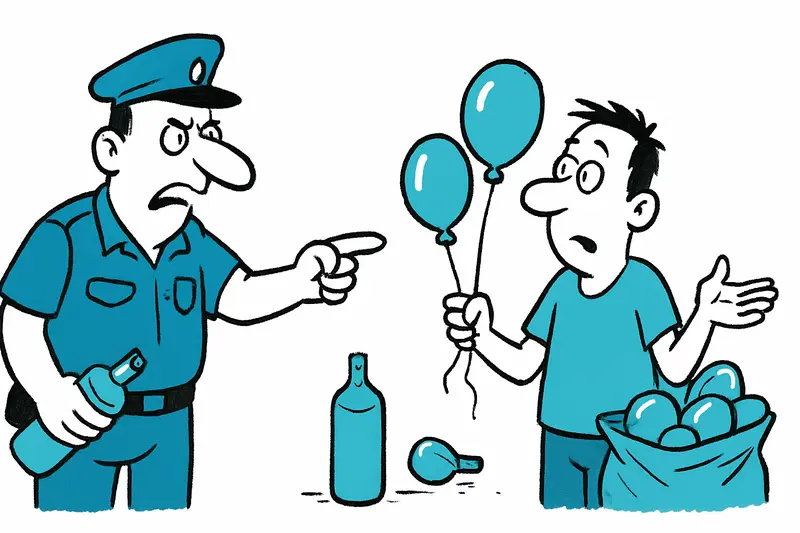
On early Sunday afternoon, when buses arrive at Playa de Palma and the voices of beach vendors drift along the promenade, a special unit of the local police moved into Cartago street. Result: two confiscated nitrous oxide canisters, several plastic valves and bags containing hundreds of balloons, apparently hidden in street furniture, similar to incidents detailed in Night raid at Playa de Palma: assessment, questions and what's missing. Two people were taken in for questioning; several street vendors are also under surveillance. These are the facts — but they raise more questions than they answer.
Key question: How much tolerance can the city allow a scene that endangers health and public order? This question does not automatically mean "zero tolerance"; it requires a balanced but clear response from authorities, hoteliers and the wider community, as seen when police cleared several illegal beach parties at Playa de Palma.
The immediately visible police measure makes sense: seize items, review charges, show presence. But that is only half the story. Who organises and supplies the vendors with gas canisters and valves? Are cartridges sold openly, or do they reach street sellers via intermediaries? The role of intermediaries has been highlighted in other Ballermann crackdowns such as Secret Club at Ballermann: Police Stop Alleged Cannabis Trade in Playa de Palma. As long as the point of distribution remains unclear, the problem stays sticky: short-term raids plug leaks, but the next shipment is already bubbling up elsewhere.
What is missing from the public debate is an honest inventory of supply and demand. Families sit on the promenade between beer drinkers, children play in the sand, older residents seek shade under palm trees. In the evening bars and venues fill up; during the day vendors sell sunglasses, jewellery and party items. No one wants terrace life to be overshadowed by gas inhalation — but that is exactly what happens when valves and canisters disappear into benches and balloons are sold in plastic bags.
From everyday life: on a hot afternoon on the Playa de Palma avenue you hear the rattling of buses, the clatter of sunbed frames and occasionally an offer: "Balones, globos, todo barato." You see police officers patrolling in temporary huts — they are stationed there because the Las Maravillas station is being renovated. This improvised presence conveys security on the one hand, but on the other it makes clear that the issue ties up personnel and logistical resources.
Critical analysis: Purely police measures are not enough. The health risks of nitrous oxide are known — short-term disorientation, breathing problems, cold-related lung injuries, and with repeated use neurological damage due to vitamin B12 disruption. Solely prosecuting offences ignores the demand and prevention side. Coordinated steps are needed from the health authority, city administration and police, complemented by hotels and promenade operators.
Missing aspects in the public discussion are concrete: controls on the sale of cartridges in retail and online, clear sanctions against suppliers, education in hotels and by tour operators — and medical readiness at main beaches. There is also often a lack of low-threshold support for young people and tourists who react to party offers without knowing the risks.
Concrete approaches: 1) Short term: intensified stock checks at known points of sale, targeted controls of digital marketplaces and accelerated proceedings against traders. 2) Medium term: binding rules for the trade in cartridges (minimum quantities, identity checks), fines for illegal street vending, better waste management so canisters and valves do not disappear into benches again. 3) Prevention: information leaflets in multiple languages at hotels, posters at bus stops, cooperation with lifeguards and the Red Cross to inform about acute risks. 4) Health monitoring: documentation of poisoning cases in emergency departments and rapid communication to the public and businesses.
One often-forgotten point: tourism is an economic factor, but it also has a social dimension. Hotels, landlords and organisers cannot only react — they can shape the offer. If organisers and hotel receptions proactively inform about risks and provide alternative evening programmes, demand for dangerous short-lived trends is reduced; visitors to Playa de Palma often wonder How safe is Playa de Palma really?
Conclusion: The police acted at Playa de Palma and made an acute problem visible. But those who want lasting peace and safety must not rely on raids alone. Rules on sale and distribution, better on-site education, controlled presence of health services and a joint strategy by all stakeholders are needed. Otherwise the promenade remains a shifting patchwork of security measures — and the real problem simply moves a few metres down the road.
Frequently asked questions
What happened with nitrous oxide at Ballermann on Playa de Palma?
How is Mallorca addressing safety around nitrous oxide near Ballermann?
What are the health risks of using nitrous oxide around Mallorca’s beaches?
What short- and mid-term steps are proposed to curb nitrous oxide trade on Mallorca?
What role can hotels and promenade operators play in reducing nitrous oxide risks in Mallorca?
Why is on-site health service presence important at Mallorca’s main beaches?
What supply and distribution questions are raised by nitrous oxide issues in Mallorca?
What should visitors do to stay safe during Mallorca’s party season?
Similar News
Plata stays Plata: Young people take over, Llonguets remain
A small bar on Carrer de l'Argenteria will continue: Tolo Serra hands the place over to young Mallorcans at the end of t...
Unnoticed in the Luggage Compartment: How a Boy Traveled More Than 100 Kilometers in a Team Bus
A minor traveled in the undercarriage of a team bus for more than 100 kilometers until his cries for help were heard. A ...

Cap Vermell Grand: Second Michelin Key – a Gift for the East
The Cap Vermell Grand in Capdepera has been awarded its second Michelin key. For the region this elevates the luxury off...
Eurowings lets four aircraft carry names – a friendly idea that also reaches Mallorca
Eurowings is launching a campaign: four Airbus A320s are to carry the first names of people who help others in everyday ...

From the Reality Studio to the Pitch: Aleks Petrovic Makes Mallorca His Base
The former participant in numerous TV shows moves from Dubai to the island and launches a project with FC Germania Mallo...
More to explore
Discover more interesting content

Can Cap de Bou

Townhouse Lleo 72
