
Occupied hotel in s'Arenal: Who protects the neighborhood?
Occupied hotel in s'Arenal: Who protects the neighborhood?
An empty hotel in s'Arenal has been inhabited for weeks. Rubbish by the pool, open access points and fear among residents demand clear answers from owners and the municipality.
Occupied hotel in s'Arenal: Who protects the neighborhood?
Key question: Why does a dilapidated building in the middle of the holiday district remain unsecured for so long — and who must act?
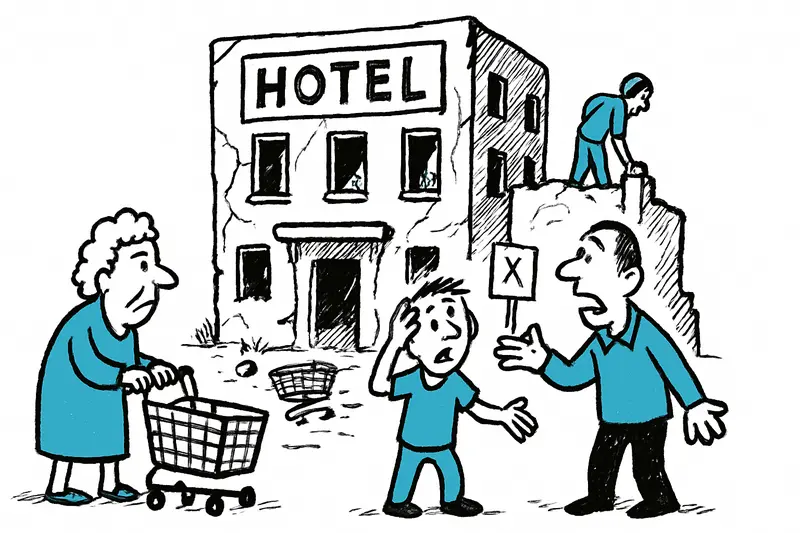
In the sun east of Palma, where scooters race along Girona Street and children walk along the pavement after school, an old hotel has stood open for weeks. From the courtyard drifts the smell of stagnant water and grease; tins, bottles, a shopping cart and an out-of-service elevator lie by the pool; signs with peseta prices recall better days. Residents say that for about a month to one and a half months, people have repeatedly been staying in the empty rooms.
In short: rubbish, noise and insecurity. Similar complaints have seen hoteliers put pressure on the town hall in nearby reports such as Garbage Heaps in s'Arenal: Hoteliers Demand Rapid Help — and Turn Up the Pressure. Laundry hangs openly by the main entrance, there are makeshift side accesses to the facade, and the surrounding streets see security alarm vans, police patrols and mostly baffled passers-by. Residents of the neighborhoods, businesses and employees in hotels and bars demand one thing: that the ruin be closed, secured or repaired.
Critical analysis: The situation is a puzzle of ownership issues, security duties and social urgency. Authorities and police often act only when a criminal offense has occurred or a court order exists. Owners, on the other hand, face long and expensive procedures when they want to evict a property. The result on the ground is a vacuum: a dilapidated building that is neither serviced nor monitored attracts people seeking temporary shelter — and puts neighbors on alert.
What is missing from the public debate: a culture and language of responsibility. Much is said about the presence of people — residents name origin groups — but little about how property law, municipal control and social services could work together to both avert hazards and avoid leaving people to fend for themselves. The role of property management, possible liens, municipal fines for neglect and quick securing measures are also rarely discussed loudly. Residents have even mobilized in Trash Chaos in s'Arenal: Residents Mobilize — Demonstration in Front of the Town Hall.
A typical morning shows the problem in miniature: delivery crates clatter on Girona Street, an elderly woman pushes her shopping trolley past the hotel's fence and stops because someone is shouting loudly at the entrance. Two youngsters climb over a low wall to take a look; a construction sign swings in the wind. Conflicts arise that are not just statistical figures but real insecurity — for the family with a small child next door, for the waitress who must start an early shift, for the teacher who sees her route to school. Similar episodes, such as How an Abandoned Motorhome Became a Persistent Problem for El Arenal, have previously led to protests and police operations.
Concrete approaches: Swift, coordinated action requires several levers at once. First, owners should be held legally and practically accountable: immediate measures such as installing sturdy locks, visual screening and hiring a certified security service are possible and often cheaper than lengthy procedures. Second, the municipality (responsible is the Ayuntamiento of Llucmajor) should inspect the building's condition and consider fines for neglect; a municipal register of vacant buildings would create transparency. Third: social interventions are necessary — mobile social teams should make contact with the people, evaluate offers for emergency accommodation and health care and thus relieve police operations. Fourth: a fast legal route for provisional securing and emergency measures, in which judges, the public order office and police cooperate, would avoid long idle phases. And fifth: neighborhood initiatives in consultation with the municipality can organize regular inspections and reporting points to detect escalations early.
Important: measures must not be only of a police nature. When a house like this stands open, structural risks (no electricity, water, unsafe stairs), hygiene hazards (piled-up waste by the pool) and social problems interact. A purely repressive approach does not solve the overall problem — it only shifts it. Mornings at Playa de Palma have been described as foul-smelling in Foul-Smelling Promenade, Empty Promises: Hoteliers in S'Arenal Put Pressure on Llucmajor.
A concrete proposal for s'Arenal: in the short term, a joint task force from the town hall (Urbanismo), the public order office, the health service and the police to secure the building and carry out an assessment. At the same time, social services must offer alternatives to the occupants. In the medium term, a regional program to register and secure vacant tourist buildings, coupled with sanctions for owners who let their properties decay.
Conclusion: The ruin on Girona Street is more than a nuisance for the immediate neighborhood. It is a visible sign that responsibilities have not yet brought together what belongs together: legal enforceability, municipal control and social support. Anyone who wants to maintain order in a resort like s'Arenal must think in parallel: secure, protect and build social bridges. Otherwise this hotel will remain another monument — and neighbors will continue to stand at their doors with beating hearts.
Frequently asked questions
Who should secure an open hotel in Mallorca's tourist zones like s'Arenal?
How can Mallorca towns speed up securing vacant tourist buildings and prevent hazards?
Are there fast legal routes to secure a vacant building before eviction or repair?
What risks do open, dilapidated buildings pose to neighbors in Mallorca's resort towns?
What steps can residents take if they’re worried about an unsafe building in Mallorca?
When is the best time to visit Mallorca to avoid crowds and issues near construction sites?
How does Llucmajor municipality work with social services to help people staying in vacant Mallorca buildings?
What practical steps should owners take to prevent a vacant Mallorca hotel from becoming a risk?
Similar News

O'zapft is! Island Oktoberfest in Santa Ponca: Ten Days of Bavaria on Mallorca
From October 23 to November 1, Santa Ponca will turn blue and white again: Hofbräu beer, Schuhplatteln, a dirndl contest...
Sudden end at the gate: A 70-year-old dies at Palma airport — what now?
A 70-year-old French tourist collapsed at the gate of Palma airport and died despite resuscitation. Who is responsible f...

Rafa Nadal brings tennis greats to dinner in Port Verd – an evening at Sa Punta
For the anniversary of his academy, Rafa Nadal invited international tennis stars to his favourite restaurant on the eas...

Affordable Haircut on Vacation: Why More Germans Are Going to the Hairdresser in Mallorca
A salon visit in your suitcase: low prices and high quality attract holidaymakers to the island – a small boost for loca...

Pilot fell ill over the sea: Why the return to Liverpool raises more questions than answers
An EasyJet flight bound for Fuerteventura turned back minutes after departure when a pilot suddenly fell ill. What happe...
More to explore
Discover more interesting content

Can Cap de Bou

Townhouse Lleo 72
