
Off-duty police officers stop thieves at Ballermann – a reality check
Two off-duty police officers observed on Playa de Palma how two men stole a tourist's phone and wallet. What does the incident reveal about safety at Ballermann? A critical look with practical everyday tips and solution ideas.
Off-duty police officers stop thieves at Ballermann – a reality check
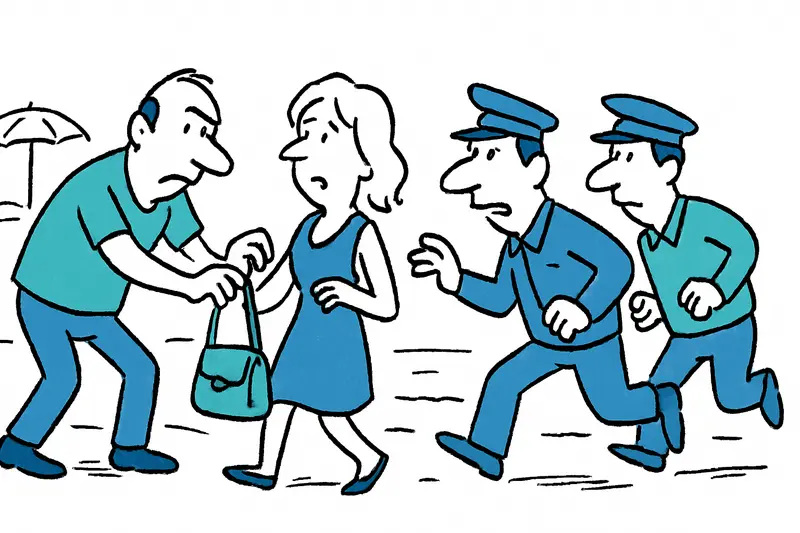
Late afternoon on the Playa de Palma: beach bars are blasting music, sunbeds are being rearranged, a street vendor calls out about textiles, and between glasses of sangría a holidaymaker's phone disappears from a shoulder bag. Two police officers, who were off duty at the time, witness the scene, follow the suspects into a supermarket and recover the phone and the wallet. The alleged perpetrators are handed over to a uniformed patrol.
Key question
How safe is the Playa de Palma really for holidaymakers when pickpockets operate so deliberately and police interventions often happen only by chance?
Critical analysis
The incident shows several things at once. First: criminals exploit the dense crowds and the inattention of tourists. Second: presence alone is not enough; the perpetrators apparently planned briefly and efficiently, quickly passed stolen items to an accomplice and tried to hinder pursuit by changing clothes rapidly. Third: the recovery succeeded only because two experienced officers happened to be on site and knew the suspects. That is not a sustainable security concept.
Important: the description of the crime – dispossession of phone and wallet, a short flight into a shop, clothing change as a tactic – matches known patterns of pickpocketing in busy tourist areas. Such thieves deliberately choose interior spaces with many distractions and hope that victims and witnesses react too late or that items have already been passed on.
What is often missing from the public debate
One often hears calls for "more police", but rarely differentiated proposals that combine everyday practicality and prevention. It is not just about more uniformed presence, but also about visible prevention: attractive, well-placed storage options on the beach, clear notices in several languages, trained staff in venues who can recognise suspicious handovers. In addition, responsibility is often discussed unclearly between tourists, municipalities, hoteliers and the police: everyone must contribute, but responsibilities should be named concretely.
Everyday island scene
Anyone who walks along the promenade at Playa de Palma at midday knows the mix of music, the smell of frying oil, tourists with sun hats and phone cameras. Families push strollers, retirees sit on benches, and delivery vans manoeuvre at bar entrances. In this soundscape, a quick hand into a bag hardly stands out. When the heat picks up around 4 p.m., many people lose concentration – an ideal environment for opportunistic thieves.
Concrete solution approaches
1) On-site prevention: operators of beach bars and large hotels should offer simple, free lockers or cooperate with nearby luggage storage services. Highly visible signs in German, English and Spanish could regularly remind visitors to stay alert.
2) Training for civil society and businesses: waiters, vendors and supermarket staff should be able to recognise what a handover looks like and know how to intervene de-escalatingly or alert the police. Regular short training sessions would be useful.
3) Police strategy: in addition to uniformed patrols, plainclothes units at hotspots are helpful. Mobile displays for immediate theft information at bus stops or via local apps can shorten reaction times.
4) Technical measures: CCTV cameras at critical points, better lighting in the evening hours, and information boards with behaviour tips. Holiday rental hosts should prepare info sheets for guests: carry your bag in front, do not leave valuables openly near the beach, keep backups of passport and payment data.
5) Individual precautions: travellers should back up documents digitally, keep cards in the hotel safe and secure phones with a visible case or a short leash. It also helps to carry only small amounts of cash.
Conclusion
The quick success of the two off-duty officers is reassuring, but it is no permanent substitute for a well-thought-out security strategy. The Playa de Palma remains a lively place with brightness, noise and moments of inattention – ideal conditions for pickpockets. If authorities, businesses and visitors implement simple, practical measures together, the risk can be significantly reduced. The task is not solely policing; it is a community responsibility on the island where small everyday changes can make a big difference.
Concrete tip for the weekend: Bag closed, phone worn at the front, hotel key in the safe – and stay alert on the promenade, even if the sangría is tempting.
Frequently asked questions
How safe is Playa de Palma for tourists in light of pickpocket risks?
What signs indicate a potential pickpocket handover in Mallorca's crowded beaches?
What can travelers do to protect belongings on Mallorca's beaches?
What safety measures should bars and hotels in Mallorca implement to reduce theft?
How can visitors stay safe in Ballermann party areas on Mallorca?
What kind of training could help the public and businesses in Mallorca prevent theft?
Are hotel safes and digital backups worth using when traveling to Mallorca?
What practical steps can travelers take on Mallorca's promenades to reduce theft risk?
Similar News

Who Pays the Price? Why Holidaymakers in Mallorca Are Now Skimping on Excursions and Taxis
Several bus companies report idle capacity, and taxi drivers notice more cautious guests. Our guiding question: How deep...
Two Children on a Windowsill: A Nightmare Raising Questions About Supervision Duty in Mallorca
In Palma, two minors balanced on a narrow third-floor windowsill while the grandfather responsible for supervision slept...
Lightning Strike Ignites Brush Fire Between Alaró and Consell: A Reality Check
A lightning bolt sparked a fire on Saturday afternoon near Es Putxet. 2.1 hectares burned; six aircraft and 34 personnel...
Plaza of Biniaraix: When a Party Overshadows the Village Fair
In Biniaraix a private party on the central village square during the patron saint's day substantially disrupted the off...

Chromed Jaguar on the Bow: the "Kismet" Appears off Palma
The 122-metre superyacht "Kismet" of industrialist Shahid Khan is anchored off Mallorca. A look at the technology, luxur...
More to explore
Discover more interesting content

Boat Tour with BBQ along Es Trenc Beach
Private transfer from Mallorca Airport (PMI) to Pollensa
