
One and a half months without paying: How a tourist stiffed the hotel chain for 19,000 euros — and what's missing now
One and a half months without paying: How a tourist stiffed the hotel chain for 19,000 euros — and what's missing now
A British guest is said to have stayed in Calvià for one and a half months and left without paying. He was shortly afterwards arrested in Palma. How could this happen — and what must hotels and authorities change?
One and a half months without paying: Hotel chain in Calvià loses 19,000 euros
Arrest in Palma after attempt to check into a sister hotel — a chance for better protection mechanisms
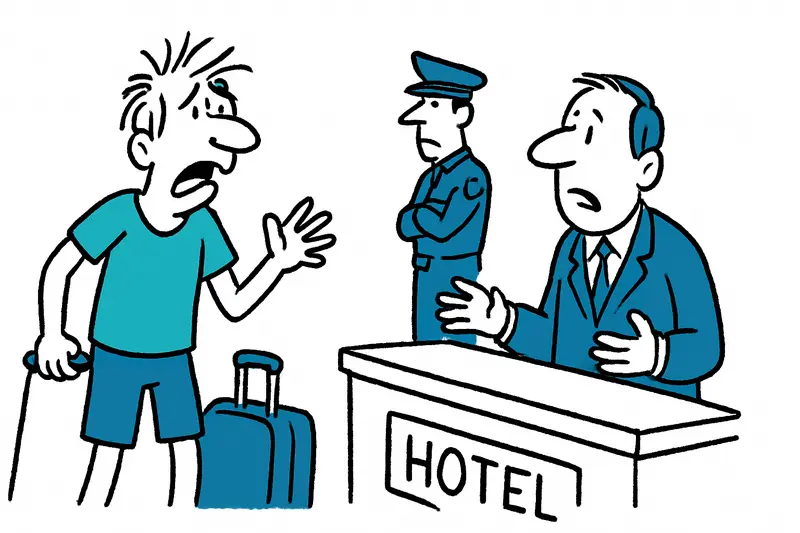
How is it possible that a guest can sleep, eat and stay in a hotel complex for more than six weeks and then not settle the bill? That is the central question raised after the arrest of a British holidaymaker in Palma, reported in Mes y medio sin pagar: cómo un turista estafó a la cadena hotelera por 19.000 euros — y qué falta ahora. The National Police were called after staff at a hotel in the island capital responded to his attempt to check in with a warning: the same person had previously stayed at a property of the same chain in Calvià and apparently left there without paying. The outstanding amount: around 19,000 euros.
Brief chronology: According to the information, the man stayed at the Calvià property for about one and a half months. The day before the intervention he had left the complex without paying; shortly afterwards he tried to find accommodation in Palma. Hotel staff reported the incident to the Citizen Protection Group (GAC) of the National Police, the man was identified and arrested in the lobby. He is accused of fraud and must answer to a court.
Sound like an isolated case? Unfortunately not. Similar incidents are repeatedly recorded in the Balearics — most recently there was a case on Ibiza with a comparable amount of damage, details appear in Disguised as a Guest: Con-Artist Spree Hits Mallorca's Hotel Industry. Such cases show that the system is vulnerable in several places: at check-in, in payment security and in communication between properties.
What is often missing in the public debate is a look at the everyday routine at the reception desk. Imagine a hotel lobby in Palma: the glow of the lights on the counter, a small heater by the window, guests with suitcases, the clicking of card terminals and the smell of coffee. In these moments, receptionists decide in seconds whether to pre-authorize a payment, check an ID or rely on a booking confirmation. Errors in these processes make it possible to exploit weaknesses — and lead to heavy losses for small and medium-sized businesses.
Critical analysis: Many mid-range and chain hotels operate with standard procedures based on trust and credit card authorizations. If a card is not available, a booking is via a third party, or guests announce cash payments, controls are often relaxed — especially in low season when fewer staff are on the desk, an issue explored in Suddenly Without a Finca — Payments Missing: Who Is Liable, Who Pays?. In addition, there is no unified, industry-wide database that quickly and legally transmits verified incidents to other properties. The warning in this case points to internal communication within the chain, but not every accommodation is networked or receives such notices in time.
Also often overlooked in the discussion is the legal range: an offence can be classified as fraud, and the penalty depends on the amount of damage and other circumstances. For the affected hotels, such a loss means not only direct financial damage but also administrative effort, potentially higher insurance premiums and a loss of trust with suppliers.
Concrete solutions that could be implemented quickly in Palma and Calvià: first, binding pre-authorizations on arrival, which are also regularly checked for longer stays. Second, strengthen identity and payment checks — for example through standardized checklists at reception and mandatory electronic proof of payment for longer bookings. Third, better networking within hotel chains and with the responsible authorities: an internal reporting office that documents suspected cases in a legally secure way and forwards them to other properties without violating data protection rules. Fourth, staff training so employees can spot and react to unusual booking combinations more quickly.
At the state level, authorities could provide guidelines: how to deal with outstanding claims, how quickly criminal complaints are sensible and how cooperation between police and the hotel industry can be improved without turning into private reporting obligations. Preventive notices to travellers would also be helpful — for example during online check-in or in the booking confirmation, stating that for longer stays a fixed payment guarantee may be required.
For guests the simple rule applies: prove the ability to pay, keep receipts and complete the check-out process when leaving the accommodation. For family-run hotels this usually means: better a transparent extra hurdle than to suffer a five-figure loss at the end.
Conclusion: The case in Palma is not a curious slip-up but an example of how everyday processes in the hotel industry can be abused. Pragmatic changes are needed at reception as well as better interfaces between businesses and authorities. On the street in front of the hotel you can see it immediately: travellers with suitcases, a taxi honks, a staff member at the desk types data into the screen. It is exactly there, at that screen, that it can be prevented that 19,000 euros eventually become an open case.
Frequently asked questions
Can a hotel guest in Mallorca stay for weeks without paying?
What should hotels in Mallorca check at reception to avoid unpaid stays?
What happened to the British tourist arrested in Palma?
Why are hotel chains in Mallorca vulnerable to this kind of fraud?
Is fraud at hotels in Mallorca usually treated as a criminal case?
What can smaller hotels in Mallorca do to prevent payment losses?
What does a long hotel stay in Mallorca usually require from guests?
What can hotel guests do in Mallorca to avoid problems at checkout?
Similar News
Fear in the Sa Teulera Forest: Youth Groups Harass Cruising Zone in Palma
In the wooded area of Sa Teulera, those affected report verbal attacks, property damage and intimidation. How safe is th...
Axa opens first health center in Palma: €3 million, 650 m² and more local access for La Vileta
In the heart of La Vileta, Axa has opened its first own health center in Mallorca. On around 650 square meters and with ...
30 Years of Nit de l'Art: What Palma's Art Night Really Shows — and Conceals
Nit de l'Art celebrated its thirtieth anniversary: full galleries, young visitors — and the quiet tensions between the a...
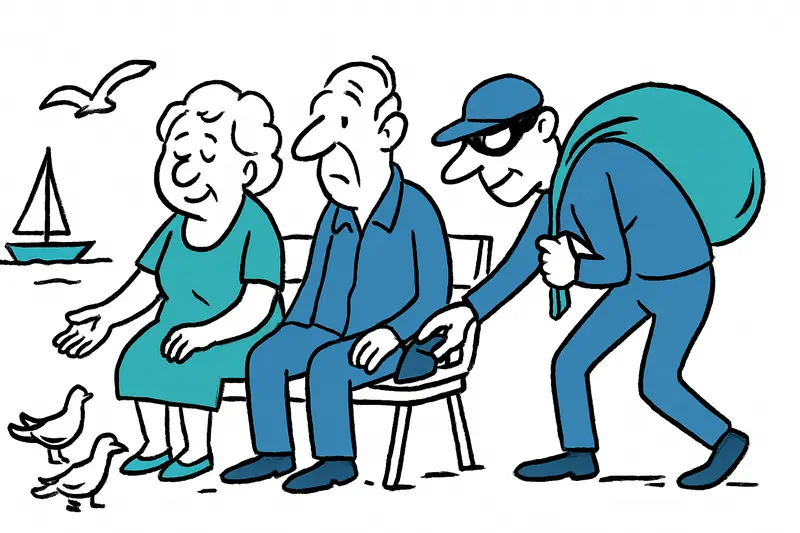
Hunt for Older Holidaymakers: Arrests after Suspected Pickpocketing in Port d'Andratx and Bellver
Five suspects were arrested after investigators accuse them of targeted pickpocketing of elderly tourists in Port d'Andr...
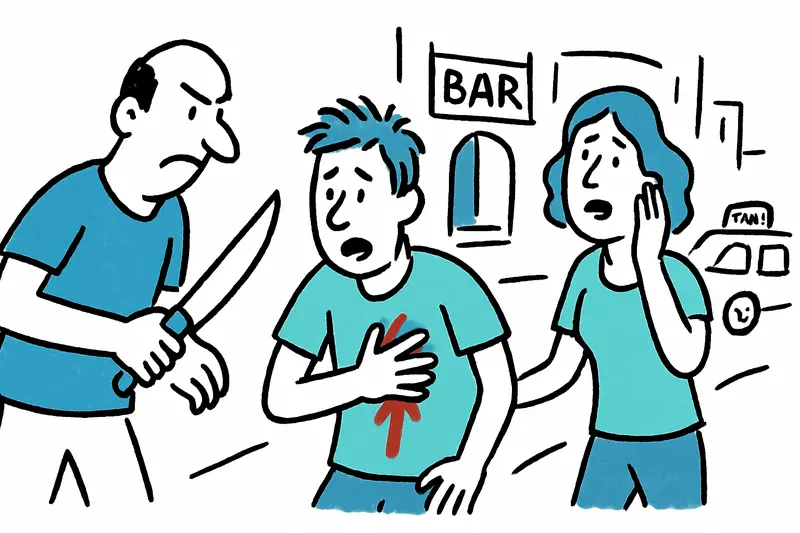
Knife stabbing in Magaluf: Why it must not remain an isolated incident
A 21-year-old tourist was stabbed in the chest in Magaluf and is in life-threatening condition. A reality check: what's ...
More to explore
Discover more interesting content

Can Cap de Bou

Townhouse Lleo 72
