
Over 100 Emergency Responses After Storms in the Balearic Islands – What Matters Now for Mallorca
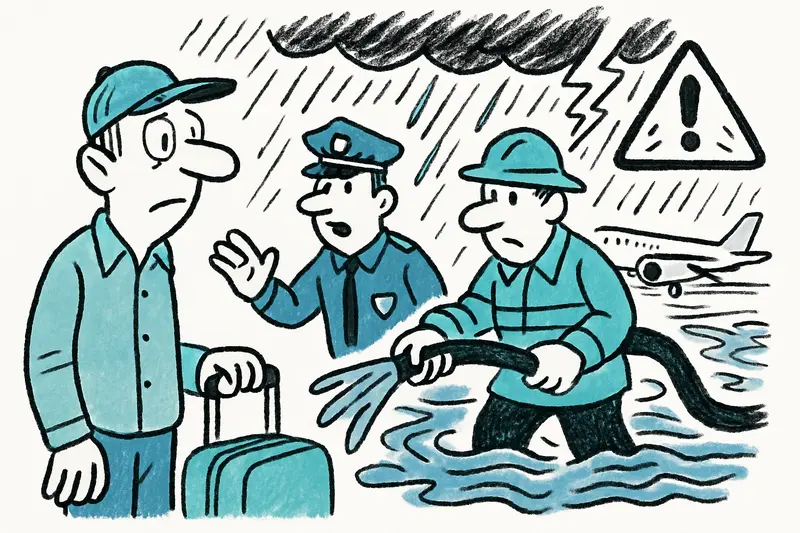
After a severe storm, police, fire and rescue services were dispatched to more than 100 incidents. Power outages on Formentera, flooded roads on Mallorca and dozens of flight cancellations show that the islands are vulnerable — and that there are urgent lessons to learn.
More than 100 emergency responses in one night – initial assessment and a central question
The thunderstorm overnight did more than make the Balearic Islands wet; it left work to do: more than 100 responses across different municipalities, some road closures lasting hours and service interruptions. The key question that remains is: Are our islands adequately prepared for such extreme events, or are we merely seeing the harbingers of larger problems? For more information on preparations, see our article Night Storm Hits Andratx and Calvià – Are We Really Prepared?.
Specific damage: power, roads, flights
The scale was particularly visible on Formentera and in eastern Mallorca. On Formentera a lightning strike hit an overhead line, leaving around 576 households temporarily without power. In Porto Cristo water stood on the streets, basements filled, and smaller streams briefly turned into raging rivulets. Palma Airport reported about 20 canceled flights, and roughly 24 connections were lost on Ibiza. Long lines formed in front of the terminals and staff improvised at check-in. For further details on the storm's impacts, read our article After the Thunderstorm: Flooded Streets, Mudslides and the Big Question About Mallorca's Preparedness.
The new mobile warning: progress with a question mark
New was the wide distribution of an official emergency message to mobile phones for parts of Mallorca. On my device, a shrill alert sounded shortly after two o'clock with text and a location hint. Such systems are clearly a step forward — but they also raise questions: How precise is the targeting? Why do local contextual details or guidance to safe assembly points often go missing? An audible warning only helps if clear actions follow. More information on warning systems can be found in Thunderstorms over Mallorca: Streets Flooded, Parks Closed — Are We Prepared?.
What is discussed too little so far
Public reports often focus on images of flooded streets and flight cancellations. But structural causes receive less attention: a partly outdated overhead line network, lack of maintenance of drainage alongside rural roads, and the limited robustness of some local networks against lightning strikes. The social perspective is also too shortchanged: older residents in peripheral areas, people in poorly insured rental housing and seasonal workers who have no safe retreat are particularly vulnerable. A deeper look at water volumes is provided in our article Storm alert: Is Mallorca prepared for the volumes of water?.
Practical lessons and concrete proposals
Vague appeals are not enough. Concrete steps could include:
1. Prioritized protection of critical infrastructure: Transformers, water pumps and important overhead lines should be placed on risk lists and receive priority during power outages. Mobile emergency generators at strategic points can cushion outages.
2. Local drainage checks and retention areas: Municipalities should inspect drains, clear street gutters and create targeted retention areas at critical locations to slow sudden volumes of water.
3. More precise warning messages: Emergency messages should include short action steps in several languages (e.g. “Safe assembly point: Cala Millor sports hall”). Targeted audience selection — not only blanket alerts — reduces false alarms and increases acceptance.
4. Critically review overhead lines and, in the long term, partially relocate them: It is not possible to place everything underground everywhere, but especially lightning-prone sections and areas with high footfall should be prioritized.
5. Strengthen neighborhood initiatives: Formal neighborhood teams that can provide immediate help in emergencies — lend pumps, evacuate affected people, activate radio chains — can shorten response times.
A morning in Cala Millor – personal impression
In the morning I briefly visited Cala Millor: the sky gray, the smell of wet asphalt and freshly washed streets, occasional birds audible again. Small shops had closed, municipal workers were clearing drains and running pumps. These are scenes familiar here — but not with this frequency.
Why this matters now
Cleanup will take days; that is clear. But even more important than short-term aid is the question of how we become more resilient in the long term. More technology alone is not enough: better coordinated services, clearer warning channels and locally anchored assistance can make the difference. On the islands, where weather and visitor numbers fluctuate strongly, this means: invest rather than improvise.
We will keep you updated and report closures and assistance offers as soon as the information is available. Until then: check official updates, secure electrical devices and avoid flooded or muddy roads.
Frequently asked questions
What should people in Mallorca do after a heavy thunderstorm?
Can storms in Mallorca cause flight cancellations at Palma Airport?
Why do some parts of Mallorca lose power during storms?
Is the new emergency alert on mobile phones in Mallorca reliable?
Why are Eastern Mallorca towns like Porto Cristo often affected by flooding?
What was the situation like in Cala Millor after the storm?
What should drivers in Mallorca avoid after heavy rain?
What can Mallorca municipalities do to reduce storm damage in the future?
Similar News
Dana 'Adam': Why the Spanish mainland was hit harder — and what Mallorca must learn
Four dead, flooded towns and locked-down municipalities: Why did Dana 'Adam' cause more damage on the mainland than in M...
Pollution in Nou Llevant: When the Bus Stop Becomes an Island of Concern
Residents of Calle Caracas complain about rubbish, improvised furniture and nightly encampments at an EMT bus stop near ...
Magaluf: Hand at the Toilet – Fist and Doubt in the Night
An incident in a bar in Magaluf raises more than just questions for those involved: How safe are women in party-zone toi...

Germania Mallorca sweeps Son Sardina 6-0 off the pitch – Legat praises the squad, concerns remain
In a loud home match, Thorsten Legat's FC Germania Mallorca wins 6:0 against AD Son Sardina. Three goals from a substitu...
Discovery in Es Carnatge: A Dead Body in the Bush — Many Questions, Few Answers
On Sunday afternoon a body was discovered in the bushes near the dog beach at Es Carnatge. Local and national police and...
More to explore
Discover more interesting content

Can Cap de Bou

Townhouse Lleo 72
