
Ownership change at Playa de Muro: Return on investment or short-term flip?
The four-star hotel at Playa de Muro has changed hands again. What does the quick resale reveal about Mallorca's hotel landscape — and who will be affected?
Ownership change at Playa de Muro: Return on investment or short-term flip?
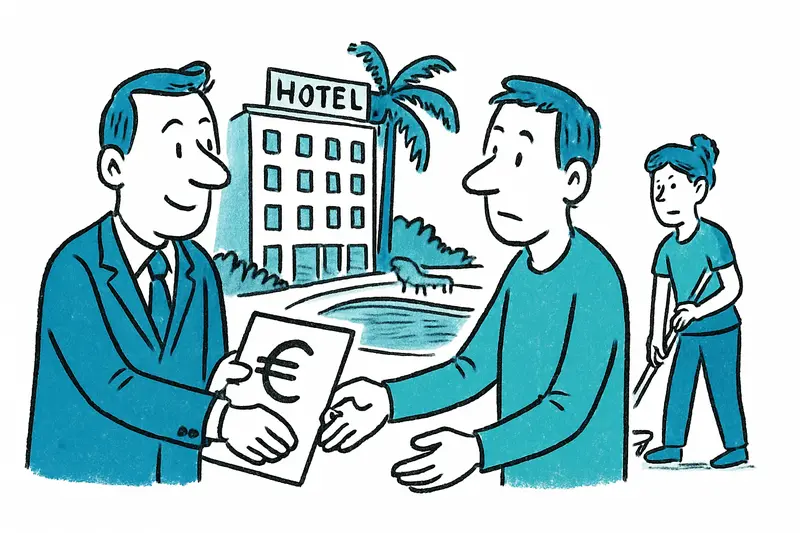
A hotel with 132 rooms, palm trees by the pool and a long history of ownership changes – the Garden Saladina at Playa de Muro has now been sold for €13 million. That a property in this price range changes owner is not, in itself, sensational. The question that remains: What does the deal mean for the neighborhood, for the staff and for the local market?
Key question
Is there a viable business model for investors hidden behind the quick resale – or does this practice undermine stability on site?
Critical analysis
The transaction followed the familiar pattern: acquisition, renovation, reopening and resale. The previous owner had taken over the property in 2021 and later carried out extensive modernisation; after reopening it operated under a new name. Sale proceeds: roughly four million euros above the purchase price. On paper, that looks like a profit. However, purchase price, renovation costs, financing, taxes, broker and lawyer fees as well as ongoing operating expenses are factors that mean the sale price alone does not equal net profit. Without insight into these figures, any claim about the return is speculative.
For employees and guests, little changes for the time being: the operating company remains in place, supported by a long-term lease agreement with fixed terms. Such lease agreements are common in Mallorca and provide short-term planning security. In the longer term, however, frequent ownership changes can influence willingness to invest, maintenance cycles and personnel policies – depending on how the new owner seeks to secure their return.
What is missing in the public debate
In conversations on site, people often hear only the headline with the sale amount. Less attention is paid to how such deals are financed, whether loans from banks or private funds are used and which clauses in the lease agreement create real reliability. Also rare is a transparent portrayal of the consequences for suppliers, seasonal staff and the municipality of Muro. The discussion revolves too much around numbers and too little around operational and social issues.
A slice of everyday life from the beach
Early in the morning, when the fishing boats still rock in the harbour of Alcúdia and the first cleaning vehicles sweep the promenade, the cafés on the seafront are already opening. A cleaner we meet on the way to the hotel talks about flexible shifts, uncertain contract renewals and the pressure to serve more guests with the same staff. Such voices easily fall into the background when investor returns are at stake.
Concrete proposals
1) Transparency requirements: For future sales of accommodation businesses, the public should at least be informed about basic financial data (e.g. investment volumes, lease durations, number of social-security-covered jobs). That creates predictability for municipalities and employees.
2) Social clauses in lease agreements: Municipalities could attach stronger incentives or requirements to permits to maintain employment standards – for example minimum durations for collective bargaining agreements.
3) Local participation models: Cooperative or municipally supported participations in hotel properties can help slow down decision-making and prioritise sustainability over quick returns.
4) Control mechanisms: An independent register of ownership changes for larger accommodation businesses would provide a better overview of market movements.
Conclusion
The sale to a local private investor is not an isolated fate but a piece of a larger puzzle: capital flows create movement in Mallorca's hotel market. In the short term operations remain stable, but in the medium term the new owner's strategy will decide whether renovation, staff retention or new return obligations dominate. For guests little will change; for those who work on the beach every morning, it can mean a lot. Anyone who wants to keep the island liveable should not only look at the price in such transactions, but also at the conditions behind it.
Observed on site between pines and promenade noise: a sales contract is a sheet of paper — life behind it keeps writing itself.
Frequently asked questions
How do ownership changes in Mallorca hotels impact staff and job security?
Is a high sale price in Mallorca hotels a reliable measure of profitability?
What role do long-term lease agreements play in Mallorca hotel stability during ownership transitions?
What is the common pattern of hotel investment and resale seen in Mallorca?
Why is transparency important in Mallorca hotel sales and what data should be shared?
What kinds of policy ideas can help Mallorca balance investor returns with worker protections?
How might a hotel sale in Mallorca affect guests in the near term?
What should communities around Playa de Muro consider beyond the sale price?
Similar News

Between Drama and a Season Decider: What the Dismissal of Thorsten Legat Means for Germania Mallorca
A coaching change, loud accusations and an interim coach under pressure: how a scandal is disrupting FC Germania Mallorc...

Children Clear Up: Colorful Parade in s'Arenal Makes Litter Visible and Wakes Neighbours
In s'Arenal children and environmental groups sent a clear signal against litter: with decorated pedal wagons, drums and...

Riot night in Palma: a reality check before Halloween
Checks, arrests, boarded shop windows: Palma faced a tense Halloween night. How can the city prevent costumes from becom...

Train accident near Toledo: A Mallorcan woman dead — Who bears responsibility?
After the collision of two high-speed trains near Urda the worst fear is confirmed: a 26-year-old woman from Inca has di...

Bronze Age at Ballermann? Excavations at Es Velar and Son Sunyer Yield Surprising Clues
Not far from the noisy promenade, archaeologists have uncovered traces from the Bronze Age. What this means for Mallorca...
More to explore
Discover more interesting content

Can Cap de Bou

Townhouse Lleo 72
