
Sudden Collapse in Palma: An 88-Year-Old Dies on Calle Berenguer de Tornamira
Sudden Collapse in Palma: An 88-Year-Old Dies on Calle Berenguer de Tornamira
Morning walk ends tragically: An 88-year-old man collapsed on Calle Berenguer de Tornamira. Emergency services were quick to respond but could not save him. A reality check on emergency preparedness in Palma.
Sudden collapse in Palma: An 88-year-old dies on Calle Berenguer de Tornamira
The man was out with his wife and daughter; Samu-061 paramedics were unable to resuscitate him
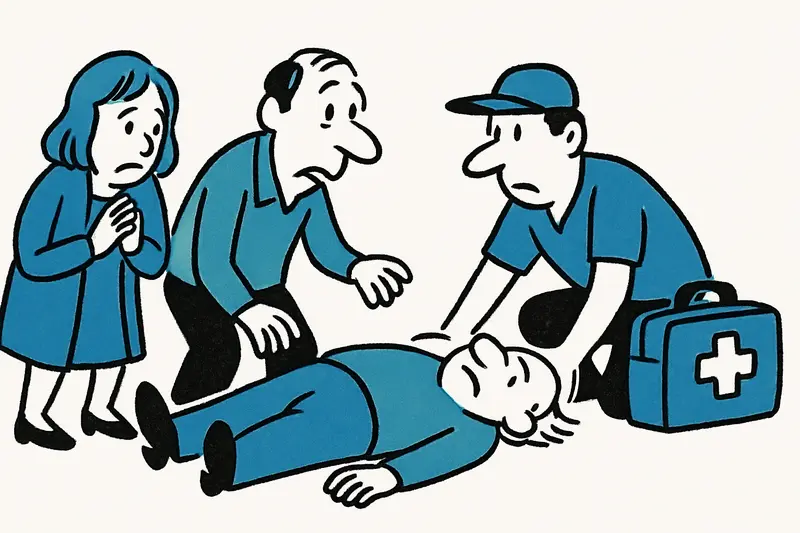
On Thursday at around 11:55 a.m., an 88-year-old man suffered a serious medical emergency on Calle Berenguer de Tornamira, a quiet parallel street to Jaume III, and died at the scene. He was walking there with his wife and daughter when he suddenly collapsed. Relatives and neighbors immediately alerted the emergency services.
Only minutes after the call, the local police rapid response unit arrived; three ambulances and a rapid intervention vehicle from the Servei d'Atenció Mèdica Urgent (Samu-061) were also dispatched. Crews closed the street so paramedics could work undisturbed. Despite all measures, they were unable to save the man's life.
The scene was one all too familiar in Palma: residents stopped, windows opened, and the clinking of coffee cups drifted from cafés on nearby Jaume III. People in jackets watched the rescuers at work, phone calls were made, and relatives arrived on the scene, visibly distressed. Similar cases have been reported elsewhere, such as Sudden drama on Paseo Mallorca: a death in the rain – and the questions that remain.
Key question: Are we doing enough to give people who suffer sudden cardiac arrest on Mallorca's streets a real chance? Who provides first aid on site, how quickly an automated external defibrillator (AED) is available, and how clear emergency call procedures are often determine life or death.
Critical analysis: The ambulances arrived quickly, indicating a functioning emergency system. But speed alone is not always enough. In sudden cardiac arrest, every minute counts for chest compressions and early use of an AED. Public defibrillators are unevenly distributed in Palma; some shopping streets have visible units while residential neighborhoods lack them. Likewise, bystanders' willingness to perform resuscitation varies — not everyone feels able to intervene.
What's missing from public debate: Beyond major weather events and celebrity news, everyday emergencies receive little attention. It often remains hidden how frequently elderly people collapse on the street during the day and how small, simple measures could greatly improve survival chances. Discussion about the visibility and maintenance of public AEDs is also too rare at the municipal level. Other reports, like Accidente mortal en la Playa de Palma: un turista muere a pesar de la reanimación, underline this trend.
A concrete everyday scene: I strolled along Calle Berenguer de Tornamira on a Tuesday. The smell of freshly brewed coffee mixed with delivery trucks' motor oil, couriers set down boxes, and two older women played boules in a side street. It is precisely here, where people of all ages move about, that help should be able to start immediately. Incidents in different settings, such as falls, are also part of the wider problem, as seen in Fall in Palma: An elderly man, a balcony and many unanswered questions.
Concrete solutions: First, more publicly accessible AED stations at high-footfall locations, clearly signed and regularly maintained. Second, a municipal training offer — short, free first-aid workshops in neighborhood centers and senior clubs, including AED use. Third, a map of AED locations accessible via city apps and posted on buses and train stations. Fourth, shop owners along key routes should be encouraged to train staff and keep a small emergency kit on hand. Fifth, coordination between police, municipal enforcement services and Samu-061 could be improved through standardized routes and training scenarios so that delays from road closures or obstacles are minimized.
Practical tips for bystanders: Call 112 immediately, start chest compressions if the person is not breathing, look for an AED, and follow the instructions of the emergency operator. For official information on the emergency number, see EU 112 emergency number guidance. Every minute without chest compressions significantly reduces the chances of survival.
Pointed conclusion: The tragic death of the 88-year-old on Calle Berenguer de Tornamira is not an isolated case but a wake-up call. Palma has the professionals, the resources and motivated volunteers — what is missing is comprehensive organization and visibility of lifesaving equipment in everyday life. Small investments in training and devices can make a big difference. If neighborhoods pull together more, the next tragedy could become a saved life.
The street remained closed for the operation while rescuers worked and residents talked after the incident. Grief and bewilderment mingle with a practical question: How do we do better next time?
Frequently asked questions
What should you do first if someone collapses suddenly in Palma?
How quickly do emergency services usually arrive in Palma?
Are public defibrillators easy to find in Palma?
Can anyone start CPR before an ambulance arrives in Mallorca?
Where is Calle Berenguer de Tornamira in Palma?
Why are sudden collapses on Palma streets so serious?
What first-aid training is useful for residents of Mallorca?
What is the emergency number in Mallorca for a medical emergency?
Similar News

Are the Balearic Islands the Southern Border of Europe? A Reality Check on Immigration
The Balearic Islands are again calling for EU aid after a sharp rise in arrivals by sea. Conflicting priorities between ...

"Expensive chaos" and many open questions: What clients can do when a lawyer suddenly stops responding
Several clients complain that a well-known German lawyer in Mallorca has been unreachable for months. Key question: What...

TV tip: 'The Last Problem' — Mallorca as the setting of a classic crime
A classic whodunit on Mallorca: A new miniseries set in spring 1959 brings storm, an isolated hotel and a dense web of s...
Nipping Sea Creatures: Why Bathers in Cala Major and Elsewhere Should Be Cautious
In Cala Major, bathers have reported being nipped by small fish. What is behind it, how can problems be avoided — and wh...
Forced eviction in Santa Catalina: When a 65-year-old slept in her car and showered on the beach — a question of responsibility
The story of Pilar López from Santa Catalina represents a problem affecting many Mallorcans: How can an island with a bo...
More to explore
Discover more interesting content

Can Cap de Bou

Townhouse Lleo 72
