
Palma a Punt continues in 2026 – municipal cleaning begins annual rounds
Palma a Punt continues in 2026 – municipal cleaning begins annual rounds
The cleaning initiative 'Palma a Punt' enters a new season: teams work year-round in over 80 neighborhoods — from graffiti removal to summer water-spraying.
Palma a Punt continues in 2026 – municipal cleaning begins annual rounds
Teams in over 80 neighborhoods, graffiti removed, rubbish collected, water-spraying in summer
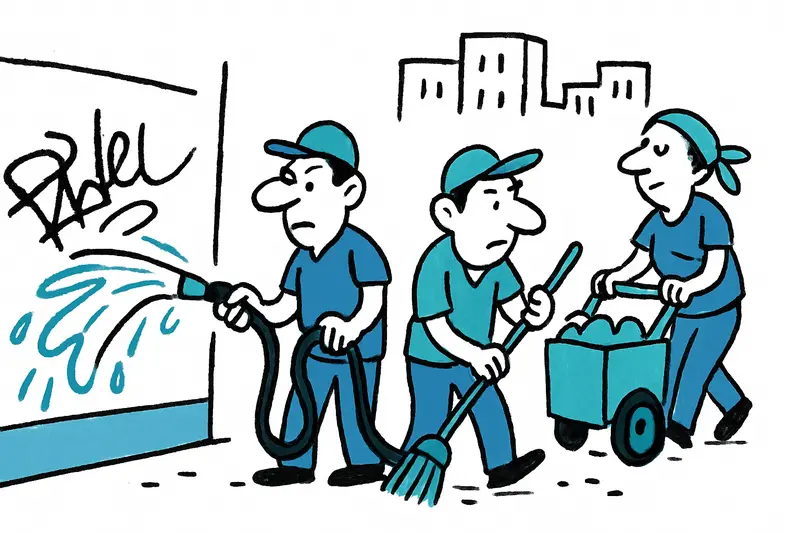
Early in the morning, when the scent of freshly brewed café con leche drifts down Carrer de Sant Miquel and market sellers at Mercat de l'Olivar set up their stalls, you often see them first: the orange vests, brooms, handcarts and the small caterpillar of the water tanker slowly chugging along Passeig del Born. That is today's picture of Palma: men and women doing what one expects in a lively city – keeping the streets clean.
'Palma a Punt' sent a clear signal in 2023: after an unfavorable survey the city responded and put additional teams on the streets. Three years later, in 2026, the program continues. The facts are simple and direct: the reinforcements work year-round in more than 80 neighborhoods in addition to regular cleaning. Activities include removing graffiti, emptying bins, collecting illegally dumped waste – and intensive street cleaning with water in the warm season.
It sounds less dramatic in theory than in reality, because cleanliness is part of everyday life. If you stroll through the La Lonja neighborhood, you've often heard the rush of water and the clatter of buckets in recent weeks. In Portixol the pizza baker greets the cleaning crews, and on the Paseo Marítimo the park bench stays cleaner for longer. Small things, but they change the feel of a city.
The benefits for Palma become obvious quickly: visitors prefer to walk through well-kept plazas, and residents complain less about rubbish piles on corners. Clean streets are not just pleasant to look at; they also reduce hygiene problems, remove food sources for rats and decrease illegal dumping because the signal 'someone cares here' is stronger. There's also a psychological effect: if people see that an authority cares, they are less likely to drop litter themselves.
Of course not everything is solved. A broom alone is not a cure-all for careless behavior or complex social problems. But 'Palma a Punt' is not a one-off clean-up; it's a continuous presence signal. In some parts of the city – narrow alleys in the old town maze, courtyards in industrial areas – challenges are greater. There you regularly find bulky waste items or wild dumps. The teams work on these, but they cannot solve everything by themselves.
What could still be missing is greater neighborhood involvement. In a small scene I recently observed at Plaça del Mercat, a café owner did more than wipe his windows: he hung a handwritten sign asking people to avoid littering. Such local initiatives, combined with the city's efforts, have impact. Schools could also integrate topics like waste separation and respect for public space more strongly into daily routines.
Concrete ideas that could add impact in the coming months include: more visible waste bins at tourist hotspots, simple signage in multiple languages, regular neighborhood and hotel volunteer 'clean-up' days, and an improved reporting system for illegal dumps via an app or WhatsApp. Small pilot projects in particularly affected neighborhoods would show what works and what doesn't.
In the end there remains a feeling you can't measure: respect. Respect for public space, for neighbors and for visitors. 'Palma a Punt' is not a show program but everyday work – the teams are there early in the morning and later in the evening, in rain and heat. When the water pump sprays the promenade in summer and the seagulls briefly scatter, it's a good moment: Palma looks tidier, and that is contagious.
My tip to readers: on your next walk, take an extra bag and carry your rubbish with you instead of leaving it. A small step that means a lot for the neighborhood. And if you see the team? A smile or a 'gracias' costs nothing but helps keep spirits up – overall that may be the most important support for a program that will continue in 2026.
A look into the streets shows: it is not big politics alone that makes a city cleaner, but everyday solidarity. And a little water from the tanker doesn't hurt either.
Frequently asked questions
What is Palma a Punt in Mallorca and what does it do?
Does Palma get extra street cleaning all year round?
Why is Palma’s streets cleaner in summer?
Can tourists swim and walk around Portixol and the Paseo Marítimo in Palma?
What happens to graffiti and illegal dumping in Palma?
What should I do with rubbish when walking around Palma?
Is La Lonja in Palma regularly cleaned?
How can residents help keep Palma cleaner?
Similar News

"Expensive chaos" and many open questions: What clients can do when a lawyer suddenly stops responding
Several clients complain that a well-known German lawyer in Mallorca has been unreachable for months. Key question: What...

TV tip: 'The Last Problem' — Mallorca as the setting of a classic crime
A classic whodunit on Mallorca: A new miniseries set in spring 1959 brings storm, an isolated hotel and a dense web of s...
Nipping Sea Creatures: Why Bathers in Cala Major and Elsewhere Should Be Cautious
In Cala Major, bathers have reported being nipped by small fish. What is behind it, how can problems be avoided — and wh...
Forced eviction in Santa Catalina: When a 65-year-old slept in her car and showered on the beach — a question of responsibility
The story of Pilar López from Santa Catalina represents a problem affecting many Mallorcans: How can an island with a bo...
New traffic rules from October 1: What Mallorca visitors and locals need to know
From October 1, 2026, Spain will implement far-reaching changes to traffic regulations. Important for Mallorca: greater ...
More to explore
Discover more interesting content

Can Cap de Bou

Townhouse Lleo 72
