
Palma on the Travel Pulse: Why the Airport Is Overcrowded on the First Holiday — and What It Means for Us
Palma on the Travel Pulse: Why the Airport Is Overcrowded on the First Holiday — and What It Means for Us
Around 360 takeoffs and landings in one day, about 207 of them domestic flights: Palma is experiencing the busiest day of the Christmas holidays. A reality check between the arrivals hall, taxi queues and the consequences for residents and infrastructure.
Palma on the Travel Pulse: Why the Airport Is Overcrowded on the First Holiday — and What It Means for Us
Key question: How well is Palma really prepared for the busiest day of the Christmas holidays — and who feels the effects on the ground?
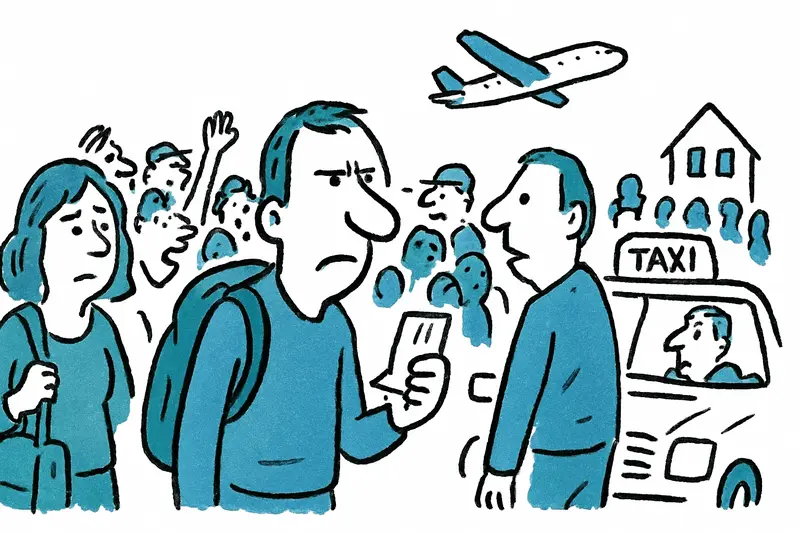
Today, Palma airport records around 360 movements — takeoffs and landings combined. About 207 of these are domestic connections, many bringing students and families to and from the Spanish mainland. Added to that are flights from metropolises like London, Paris, Amsterdam and Frankfurt. On paper that is a number; in the arrivals hall it becomes crowds, conveyor belts, tired faces and long taxi queues.
Critical analysis: The numbers alone say little about the strain on infrastructure, staff and residents. An airport can "handle" 360 movements, but bottlenecks arise at interfaces: shuttle services, access roads, car parks and border and security checkpoints. When many flights are scheduled close together, delays follow; and small delays multiply faster than you think on a day with so much traffic, a pattern explained in why Palma Airport is experiencing more delays right now.
What is often missing from the discussion: the perspective of the neighbourhood and everyday logistics. When more taxis queue toward the airport on the Autovía de Levante in the morning, it affects not only travellers. Commuters, delivery drivers and scheduled buses lose time. Also rarely foregrounded: the ecological footprint of this peak volume — short domestic flights are efficient for travellers, but not always for the island's overall balance.
Everyday scene: Whoever lands at the airport today hears the rattle of suitcase wheels across the terrazzo, sees students with backpacks, families with parcels and elderly relatives waiting on a cafe chair by the arrivals door sipping an espresso. In front of the terminal taxi lines form, a bus driver mutters about delays, police officers direct traffic. The smell of freshly brewed coffee mixes with the scent of kerosene — a familiar but ambivalent soundscape for Majorcans during the holidays.
Concrete problem points on site: information gaps for travellers during delays, limited shared-taxi capacity in the evenings, full citizen service parking lots near the airport and noise peaks for residents in adjacent neighbourhoods. All these are factors that shape the travel climate on the island — and that are often underrepresented in public debate.
Concrete solutions: better coordination of flight schedules to spread peak times, as illustrated by reports of fewer takeoffs and more seats in December; expanded overnight parking and storage areas for rental cars with shuttle connections; a discounted shuttle ticket for returning students to reduce parking pressure; increased security staffing capacity during seasonal peaks; and, in the short term, better live information at all transfer points — not only on the airport website, but in real time at bus stops and car parks.
Long-term point: more visible investment in public transport to the airport would relieve paying and non-paying users alike. A reliable regular service, coordinated luggage facilities for through-passengers and clearer rules for rental car returns could also ease pressure on the system.
Why this matters: Mallorca lives off tourism — but the island is also home to residents. If on peak days like today we talk not only about flight movements but about daily stress points, we open up solutions that help travellers, businesses and residents.
Punchy conclusion: 360 movements are more than a statistic; they are a stress test for operations, roads and neighbourhoods. We don't need a moral cudgel against travellers — we need smart planning, realistic capacities and better information. Then the espresso in the arrivals hall can be enjoyed more peacefully — for guests and for us.
Frequently asked questions
Why is Palma Airport so busy on the first holiday day in Mallorca?
What causes delays at Palma Airport during busy holiday periods?
How early should I get to Palma Airport at Christmas or holiday peak times?
Is it hard to get a taxi from Palma Airport when many flights land at once?
How does Palma Airport traffic affect people living near the airport?
What practical problems do travellers face at Palma Airport during the holidays?
Why are domestic flights so important at Palma Airport?
What would help Palma Airport run more smoothly during peak season?
Similar News
Released with Conditions: The Plus Ultra Suspicion and a Mallorcan Finca as Residence
A Dutch entrepreneur, sought in connection with the Plus Ultra case, was extradited to Spain after his arrest in Germany...

Haute Nuit in Puerto Portals: Fashion, Art and Indulgence by the Water
On October 2 the Lobster Club in Puerto Portals will be transformed into a stage for curated fashion, art and culinary e...

Magaluf: Watchtower Alarm – Lifeguards Pull Unconscious Beachgoer from the Water
After a drama in the late afternoon, two lifeguards at Magaluf beach rescued an unconscious 44-year-old man. He was stab...

Turquoise in the City: How dangerous is the color play of the Sa Riera?
The Sa Riera in Palma suddenly turned turquoise — a pretty motif, but behind the effect lies a discharge of saline waste...

Jeckliner at Sunnesching: Cologne spirit sets sail from Palma
In September 2027 the Mein Schiff 2 briefly becomes a floating carnival stage: four days with Cologne bands, comedy and ...
More to explore
Discover more interesting content

Can Cap de Bou

Townhouse Lleo 72
