
Alcohol at the wheel in Palma: Almost four per mille — what does that say about our streets?
Alcohol at the wheel in Palma: Almost four per mille — what does that say about our streets?
A 75-year-old was involved in a serious collision at the Valldemossa/Sant Vicenç de Paül junction. Breath alcohol 0.98 mg/l, car totaled — no one seriously injured. A reality check on what Mallorca lacks and what could help.
Alcohol at the wheel in Palma: Almost four per mille — what does that say about our streets?
An evening crash at the Valldemossa/Sant Vicenç de Paül junction brings an old vehicle, questionable controls and many open questions to light.
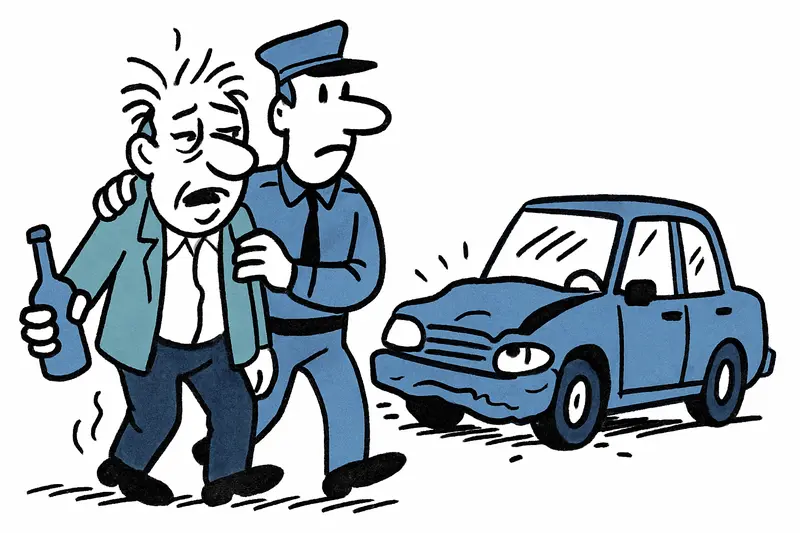
On the evening of April 4, a car in Palma crashed at the junction of the Valldemossa country road with Sant Vicenç de Paül into another vehicle. The driver: 75 years old. Police found him staggering beside the wreck, so disoriented that officers had to support him to get him out of the car. A breathalyzer test showed 0.98 milligrams of alcohol per liter of breath — a value well above the legal limit in Spain. The man refused a second blood or breath sample at a health center. The car was towed away; according to first findings, nobody was seriously injured. Investigations into a possible offense against road safety are ongoing, and the accused initially remained free, a reminder that similar nighttime incidents have been reported elsewhere such as Drunk driving in Palma – 61-year-old stopped after wrong-way drive.
Key question: Why do scenes like this keep recurring on our roads — and why is the problem often reduced to the individual "misstep" instead of examining the deeper causes?
Critical analysis. At first glance this is a clear criminal offense: driving heavily intoxicated, causing an accident, legal proceedings, high-profile cases also show different patterns, for example Palma: Accident involving a drunk female driver — despite a license previously revoked. But several layers lie behind it that are rarely considered together. First, the age group: at 75 people in Mallorca remain very mobile, but age-related problems — reduced night vision, slower reaction times, multiple medications — are rarely included in discussions about road safety when alcohol is involved. Second, alcohol among older people is socially judged differently. The glass after dinner, the regulars' table — these are rituals. When these turn into trips that end dangerously, we too quickly call it an "isolated case."
Third, note that refusing a second measurement is not unusual — it complicates the evidence but also shows that some affected people cannot or will not cooperate. Fourth: infrastructure. At 9 p.m. some neighborhoods, especially along connecting roads like the one to Valldemossa, are less well served by public transport. Those who want to stay mobile in the evening reach for the car — even when they would be better off switching to other means of transport.
What is missing from public debate. There is a lack of honest debate about older drivers and alcohol. Instead of relying solely on legal proceedings, public authorities rarely talk about preventive, socially acceptable solutions: regular, age-appropriate driving fitness tests, low-threshold counseling services on alcohol, family-level awareness work and better night services in rural and suburban areas. Health personnel, neighborhood associations and pharmacies could raise the alarm earlier, before an accident happens — at the moment we too often react only after something is broken.
Everyday scene from Palma. Imagine the evening mood: lamplight over the country road, a few tables outside the bar, soft voices and the clinking of glasses drifting over. At the junction a traffic light blinks, a moped hums by, and then that crash. Moments like these change the neighborhood; they become topics of conversation in cafés on the Passeig and at the bus stop in Son Espanyolet. Everyone knows someone who "still drives" even though people worry.
Concrete approaches to solutions. There are pragmatic steps that local authorities, communities and families can take now:
- Make regular, age-oriented fitness-to-drive checks more visible and facilitate medical consultations. Not as punishment, but as a service: short check-ups in health centers or mobile testing units.
- Expand night and late bus lines specifically, especially along key connecting roads like the route to Valldemossa. An affordable, simple alternative to the car reduces the risk of drunk driving.
- Local awareness campaigns tailored to seniors. Language and channels must fit: the pharmacy, the community library, town meetings — places where older people accept information.
- Mandatory sensitization for relatives: how to address the topic of driving ability? Communities could offer information evenings with doctors and social workers so families know how to respond and organize help.
- Strategic police controls: mobile checks at times and places that carry higher risk, as in Alcohol al volante en Palma: detenido un hombre de 61 años tras circular en sentido contrario. In coordination with social services, measures act more preventively than fines alone.
Concise conclusion. The accident at the Valldemossa/Sant Vicenç de Paül junction is more than an isolated act. It is a symptom. Do we have enough systems to notice before it crashes? Not yet. We need less moral outrage and more forward-looking work: better options for nighttime mobility, age-appropriate tests and public spaces where families and doctors can openly discuss driving ability. Otherwise we will only swap one headline for the next — and that is a luxury our roads cannot afford.
Frequently asked questions
What is the alcohol limit for driving in Spain and Mallorca?
What happens after a suspected drink-driving crash in Palma?
Can older drivers in Mallorca be a higher road-safety risk at night?
Why do drink-driving incidents keep happening on Mallorca roads?
Is public transport in the Valldemossa area of Mallorca enough at night?
What should families do if they worry an older relative in Mallorca should not drive anymore?
Where can older drivers in Mallorca get advice about whether they are still fit to drive?
What can Mallorca do to reduce drink-driving at night?
Similar News
From Deposit to Arson: How a Dispute over Jet Skis in El Molinar Escalated
After a nighttime fire in El Molinar a detainee is in pretrial detention. How could a conflict between a rental company ...

Lying Instead of Standing: How Prone Paddling Is Conquering Mallorca's Waters
On your belly across the sea — prone paddling is bringing fresh energy to Mallorca's watersports. Where to start, which ...
Housing Shortage in Mallorca: Assessment, Questions, Proposals
Over 2,000 new housing units through repurposing and special rules – sounds like a success. But do they really help peop...
Garbage, Stench, Fire Risk: What Is Really Going Wrong in Son Bauló
An apartment ensemble illegally built for years near Son Bauló is falling into disrepair, largely occupied and creating ...

Legat on Mallorca: Between Football Dreams and Political Alarm
The former pro is intervening in German politics from Mallorca – loud, emotional, without much detail. What does that br...
More to explore
Discover more interesting content

Boat Tour with BBQ along Es Trenc Beach
Private transfer from Mallorca Airport (PMI) to Pollensa
